
Ye Gas. Chanter. Lake Sebu.

The first time I saw and heard Ye Gas sing was in 2010, at Punta Isla at Lake Sebu.
Her raspy voice filled the air, and I followed it to its source. I came upon her and a child in mid-song and dance, welcoming visitors to the lakeside resort. It was impossible to miss her.
I was lost in the performance.
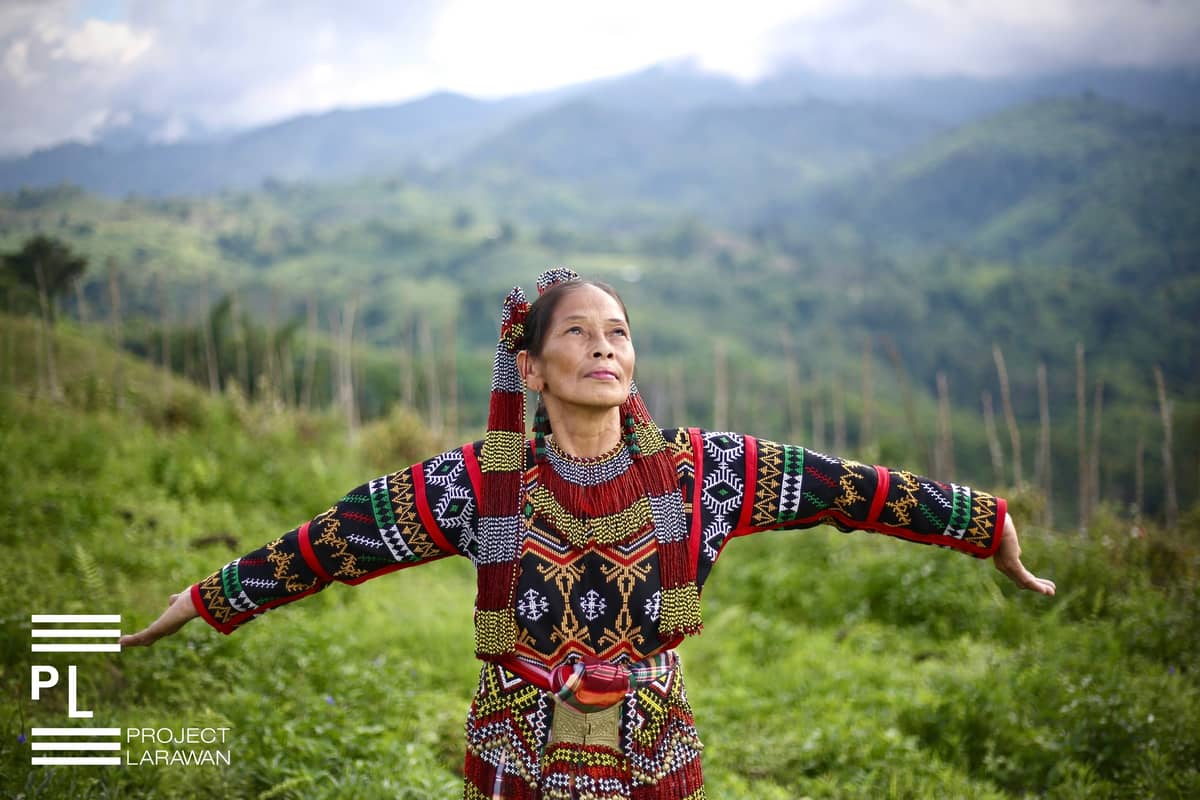
TRADITION, talent, and the timeless beauty of ancestral artistry.
The beat was muted, originating from the taut deerskin of an understated drum, gently pounded by the soft hands of Ye Gas, the T’boli woman. The child with her, perhaps not yet 10 years old, bounced from one foot to another, spinning leisurely around as she did, but firmly transfixed in one spot. Bright, colorful beads dangled from the child’s hair and created a monotonic swish, not unlike the sound of rice hurled into space then caught in an abaca basket. Her small hands and arms sliced the air in deliberate and precisely choreographed movements. I wasn’t certain whether she followed the rhythm or, in reality, dictated the pulse.
But it was Ye Gas’ voice that was mesmerizing.

THE rhythm of culture, painted in sound and color.
Her performance was pure and effortless, emanating from a place of happiness as well as of deep longing. Her sentiments, both profound and whimsical, were universal, not merely binary. She sang as if summoning nature to participate and bidding the world to be still. Her songs were not just words on a melody but narratives of her people; her chants were more a chronicling of events and personal journeys, her every utterance fortified by truth. She conjured up the lyrics and melodies as she performed, a complete creative demonstration, from composing to execution. The truth conveyed was universal, but the words she used and how she delivered them were all hers. She played her life in song.
Ye Gas was garbed in ancestral dress, a signature blend of colors and intricate patterns seemingly pulled out from a prism and exhibited on woven T’nalak cloth, oftentimes further adorned with an elaborate yet controlled mayhem of rings, necklaces, bells, and anklets.
This was T’boli culture in full display.
—————
Sixteen years after that initial encounter, I found her in her abode, a traditional house perched on the mountain’s edge in Baranggay Tasiman, withdrawn from the attention and praise that came with her gift. Over time, she retreated to her own corner, and her public appearances have decreased, depriving the world of her skills and voice.
So much of life has happened since I first met Ye Gas. But after all those fateful years, hearing her again captivated me once more.
#ProjectLarawan. Profiles of the Filipino. One portrait at a time.
Project Larawan is an initiative of Gabriel “Gabby” Malvar, a documentary filmmaker, writer and photographer, whose narratives are nuanced with unique, inventive perspectives to provoke an inquisitive look at his favorite subject, the Philippines. Become a part of Filipino identity every other Saturday on the DAILY TRIBUNE.