
Trump administration removes slavery memorial in Philadelphia


The National Park Service (NPS) removed slavery exhibits on Thursday, 22 January 2026, from the President’s House site at Independence National Historical Park, prompting the City of Philadelphia to file a federal lawsuit against the Trump administration. The displays honored nine people enslaved by President George Washington and explored the role of slavery in early U.S. history.
The exhibit, Freedom and Slavery in the Making of a New Nation, opened in 2010 and honored nine enslaved individuals who lived in Washington’s household: Austin, Christopher Sheels, Giles, Hercules, Joe Richardson, Moll, Oney Judge, Paris, and Richmond. It included biographies, historical context, and panels highlighting the contradictions of the early republic, where ideals of freedom coexisted with the reality of slavery.
The removal comes amid a federal review directed by President Donald Trump’s March 2025 executive order, Restoring Truth and Sanity to American History, which instructs the Interior Secretary to review national parks, memorials, and museums for content deemed to “inappropriately disparage Americans past or living.” The order specifically mentions Independence National Historical Park and directs that “parks, monuments, memorials, statues, markers and similar properties” be restored to reflect a version of history consistent with the administration’s view.
Video from local outlets showed NPS workers dismantling outdoor panels at the site. City officials immediately announced legal action. The lawsuit, filed in federal court, seeks a preliminary injunction to restore the removed panels, saying the interpretive displays were “an integral part of the exhibit” and that their removal was “arbitrary and capricious.”
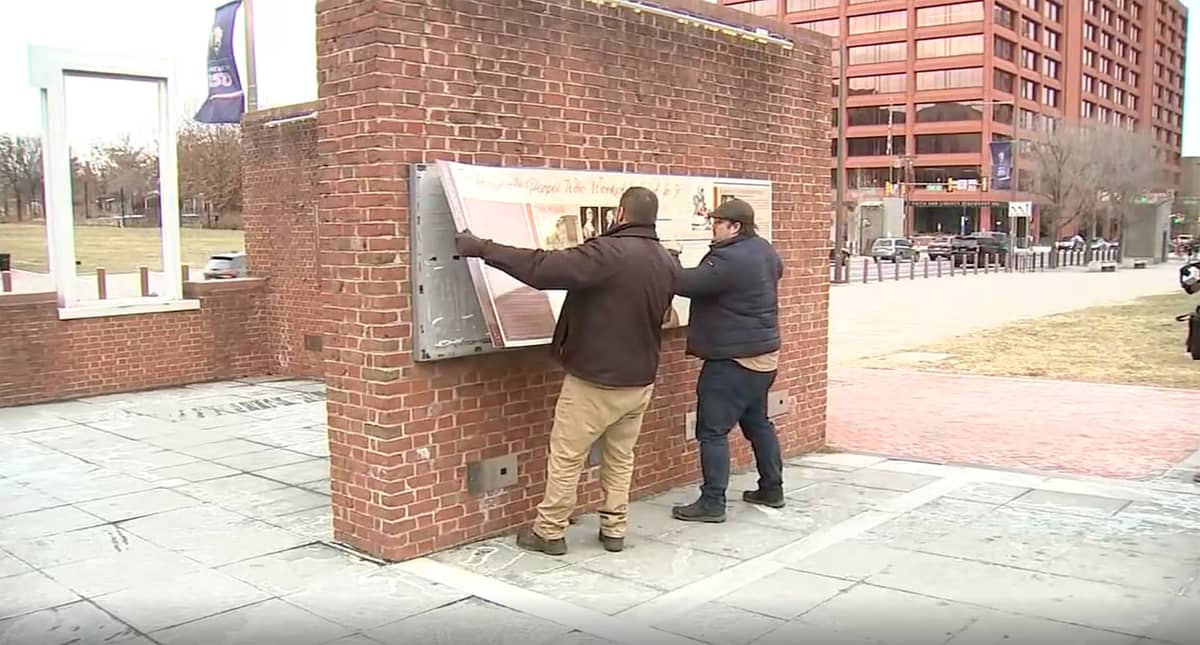
National Park Service staff remove panels from the "Freedom and Slavery in the Making of a New Nation" exhibit at the President's House in Philadelphia.
Photo from WPVI.
Philadelphia City Council President Kenyatta Johnson criticized the removal: “Removing the exhibits is an effort to whitewash American history. History cannot be erased simply because it is uncomfortable. Removing items from the President’s House merely changes the landscape, not the historical record.”
Pennsylvania Governor Josh Shapiro also condemned the action on social media: “Donald Trump will take any opportunity to rewrite and whitewash our history. But he picked the wrong city, and he sure as hell picked the wrong Commonwealth. We learn from our history in Pennsylvania… even when it’s painful.”
Michael Coard, founder of the Avenging the Ancestors Coalition, which helped advocate for the memorial’s creation, said his group anticipated the removal and has plans to respond, calling the action a threat to the site’s legacy.
Philadelphia Mayor Cherelle Parker’s administration is reviewing a 2006 cooperative agreement with the federal government that requires consultation before changes to park exhibits, exploring options in response to the removal.
The President’s House site, where Washington and John Adams once lived, and the broader park have been under scrutiny since Trump’s executive order. NPS has not commented publicly on whether the exhibit’s removal was directly ordered under that directive.
Independence National Historical Park is preparing for the nation’s 250th anniversary, and Independence Hall has been closed for preservation work since November 2025.
Observers note that the Trump administration has taken similar actions at other cultural and historical sites, including reviewing Smithsonian museum exhibits, removing slavery and race-related displays, and dismantling a WWII cemetery display in the Netherlands honoring African American soldiers. Critics say these moves reflect a broader effort to reshape historical narratives.
Supporters of the lawsuit argue that preserving all aspects of the historical record, including painful ones, is essential as the country approaches a milestone anniversary.