




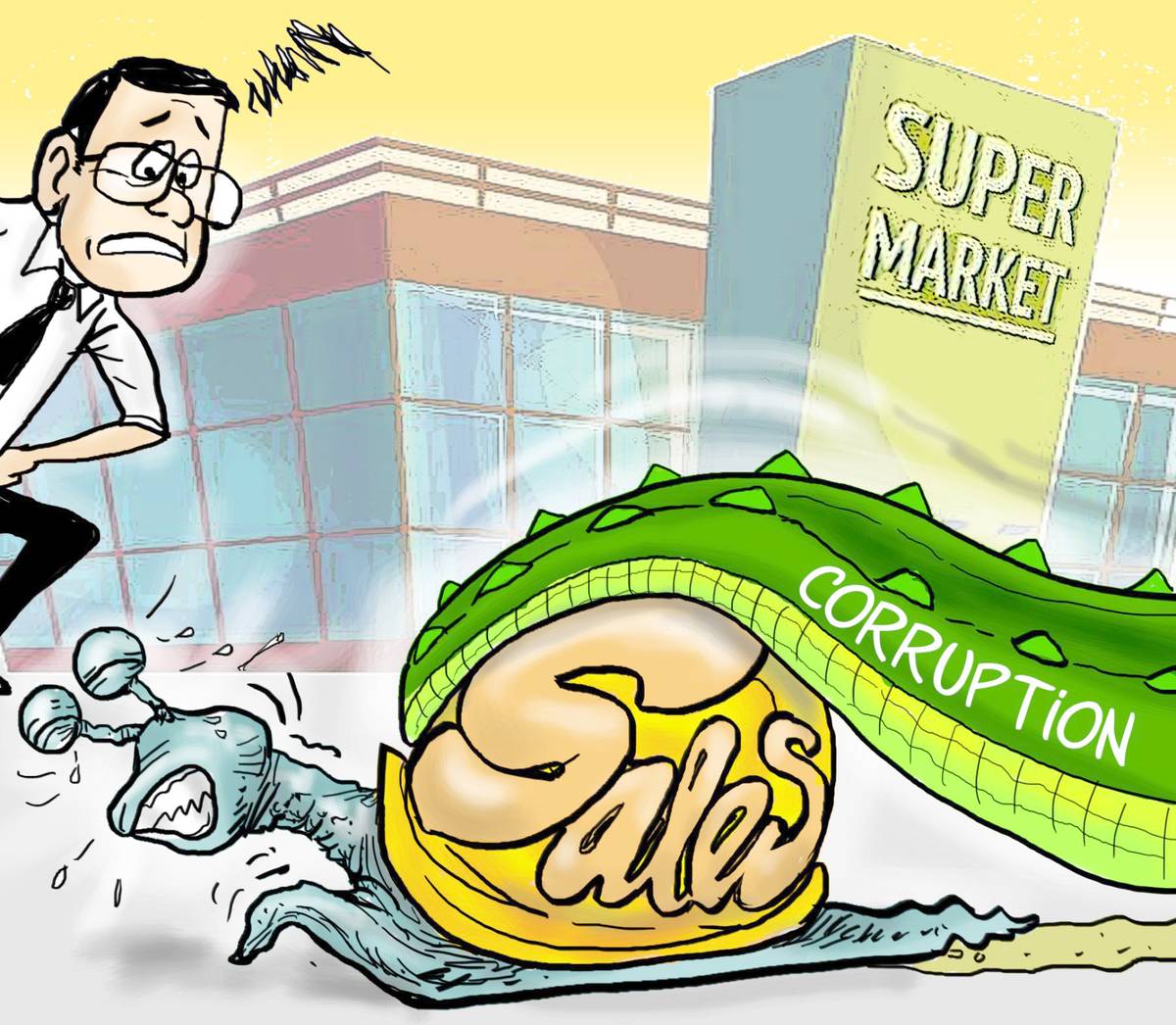
Corruption takes toll on retailers


Text size
Three decades after the Marcopper mining disaster devastated Marinduque’s waterways, the province is again pressing the…
Housing is probably the biggest issue affecting people the world over.
Malacañang on Monday called for a more thorough investigation into the questioned flood control projects in Taguig…
The defense on Monday backed the move by senator-judges to exclude a prosecution witness who testified on the firearms…
Retailers endured a bruising holiday season, weighed down in part by the corruption scandal that peaked during the Christmas period.
Nosy Tarsee learned from a veteran supermarket executive that holiday spending in 2025 was notably subdued, marked by a sharply compressed peak sales window of just three to four days — far shorter than the customary two-week pre-Christmas buying spree.
The slump was attributed to economic uncertainty, the rise of new formats such as minimarts, and the ongoing corruption probes.
While the shorter peak sales window has existed for seven years, the weak holiday spending trend has extended to different retail formats like supermarkets, department stores and specialty stores.
The latest TransUnion Consumer Pulse Study reported that Filipino household spending growth remained stable, expanding but at a slower pace than in the past two years.
Against this backdrop, Filipinos remain cautious — budgeting with intent, keeping staples a priority, while cutting back on discretionary spend such as dining and travel.
Based on the view of the global group unit Maybank Research, essentials-based consumption remains a key growth engine for retailers.
The study describes Filipino consumers as resilient yet intentional: actively participating in the economy, such as expecting income growth and steady finances, but with “greater financial intent” and restraint on non-essentials.
This suggests spending is not contracting but growing more slowly as households prioritize essentials and adapt to a high-cost environment.
The massive flood control corruption scandal, alleging billions in misappropriated funds, dominated the headlines and public discourse from November into December 2025, with large-scale protests, a presidential pledge of pre-Christmas arrests, and ongoing probes.
Experts directly linked this to the subdued holiday sentiment, citing the “lingering concerns surrounding the ongoing probes into anomalous flood control projects” as a factor dampening consumer and business confidence.
In summary, the 2025 holiday season was indeed rough for retailers, with the combination of structural caution and the timing of the high-profile corruption scandal contributing to a more restrained, last-minute spending pattern.
This underscores the Philippines’ vulnerability as a consumer-driven economy, where public trust and sentiment play a significant role in seasonal booms.
