
PCG’s Tarriela brushes off China protest over social media posts

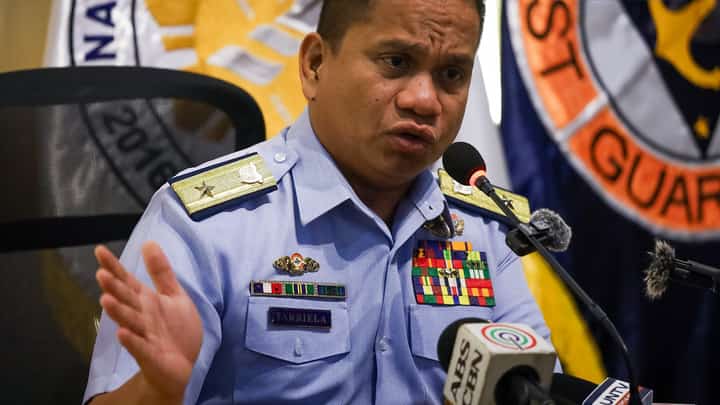
PCG spokesperson Jay Tarriela rejects China’s diplomatic protest over his social media posts, saying there is no need to explain or apologize, as tensions persist in the West Philippine Sea.
Photo by John Carlo Magallon for DAILY TRIBUNE
Philippine Coast Guard (PCG) spokesperson for the West Philippine Sea Jay Tarriela on Saturday downplayed China’s diplomatic protest over his social media posts, saying there was no need for him to explain or apologize to the Chinese Embassy.
Speaking at a news forum, Tarriela dismissed Beijing’s call for accountability after the Chinese Embassy in Manila accused him of posting images online that allegedly “attacked and smeared Chinese leaders.”
“There’s no authority for the Chinese Embassy to ask us to explain,” Tarriela said. “I don’t think there’s a need for me to apologize to the Chinese Embassy.”
On Friday, the embassy said Tarriela’s posts constituted “a serious violation of China’s political dignity and a blatant political provocation,” claiming they had crossed a “red line.”
The Chinese Embassy said it had lodged “solemn representations” with Malacañang, the Department of Foreign Affairs, and the Philippine Coast Guard.
Tarriela, however, maintained that the diplomatic protest was not his concern as a uniformed officer.
“It’s a DFA concern,” he said. “Diplomatic relations are not our concern.”
The PCG official earlier pushed back against the allegations, stressing that his posts were not “smears” or “slanders” but factual accounts supported by video footage, photographs, official PCG reports, and third-party observations.
“My role as spokesperson for the West Philippine Sea is to transparently communicate these realities to the Filipino people and the world, in full alignment with our government’s commitment to a rules-based order and international law,” Tarriela said.
He added that objections from the Chinese Embassy only underscore unease over the public exposure of alleged violations.
“If the Chinese Embassy objects to images or expressions that highlight these violations—often through legitimate public discourse or even satire—it only underscores discomfort with the truth being exposed,” he said.
The dispute followed a social media exchange on Thursday, when Tarriela responded to remarks by Chinese Embassy deputy spokesperson Guo Wei, who accused him of making what Beijing described as fallacious statements on the South China Sea issue.
Tensions remain high in the region as China continues to claim nearly the entirety of the South China Sea.
Several countries, including the Philippines, Vietnam, Indonesia, Malaysia, and Brunei, have overlapping claims in the area.
Maritime zones within Philippine jurisdiction have been officially designated by the government as the West Philippine Sea, covering waters west of the Philippine archipelago, including the Luzon Sea, the waters around the Kalayaan Island Group, and Bajo de Masinloc.
In 2016, the Permanent Court of Arbitration ruled in favor of the Philippines, declaring that China’s expansive claims had “no legal basis,” a decision Beijing continues to reject.