
Quiapo Church, home of the Filipinos’ beloved Nazareno
The image of the Nazarene, which has withstood numerous calamities, has since been replicated and distributed across the country and abroad.


THE Quiapo Church, blessed by Pope Pius VII in 1900 and recognized by Pope John Paull II in 1987 as the Minor Basilica of the Black Nazarene.
Photograph courtesy of Quiapo Church
What is Manila without Quiapo Church?
For many Filipinos, Quiapo is a bustling marketplace filled with crowds and known for snatchers. But for Catholics, Quiapo, particularly its church — holds an enduring divine grace that rises above human affliction.
The Philippines recently witnessed a record-breaking 31-hour Traslacion from 9 to 10 January, making it the slowest procession in history and surpassing the 22-hour record set in 2017 and 2018.
Nuestro Padre Jesús Nazareno is one of the three images dearest to Filipino Catholics, longside the Santo Niño and the Sacred Heart of Jesus, according to the Catechism for Filipino Catholics issued by the Catholic Bishops’ Conference of the Philippines.
The statue is a dark image of Christ, depicted kneeling on one knee while carrying a large wooden cross. Believed to have originated from Mexico, the image is thought to have arrived in the Philippines in 1609, though the exact date remains undetermined. Its dark complexion reflects the native tradition of Mexican religious sculpture.
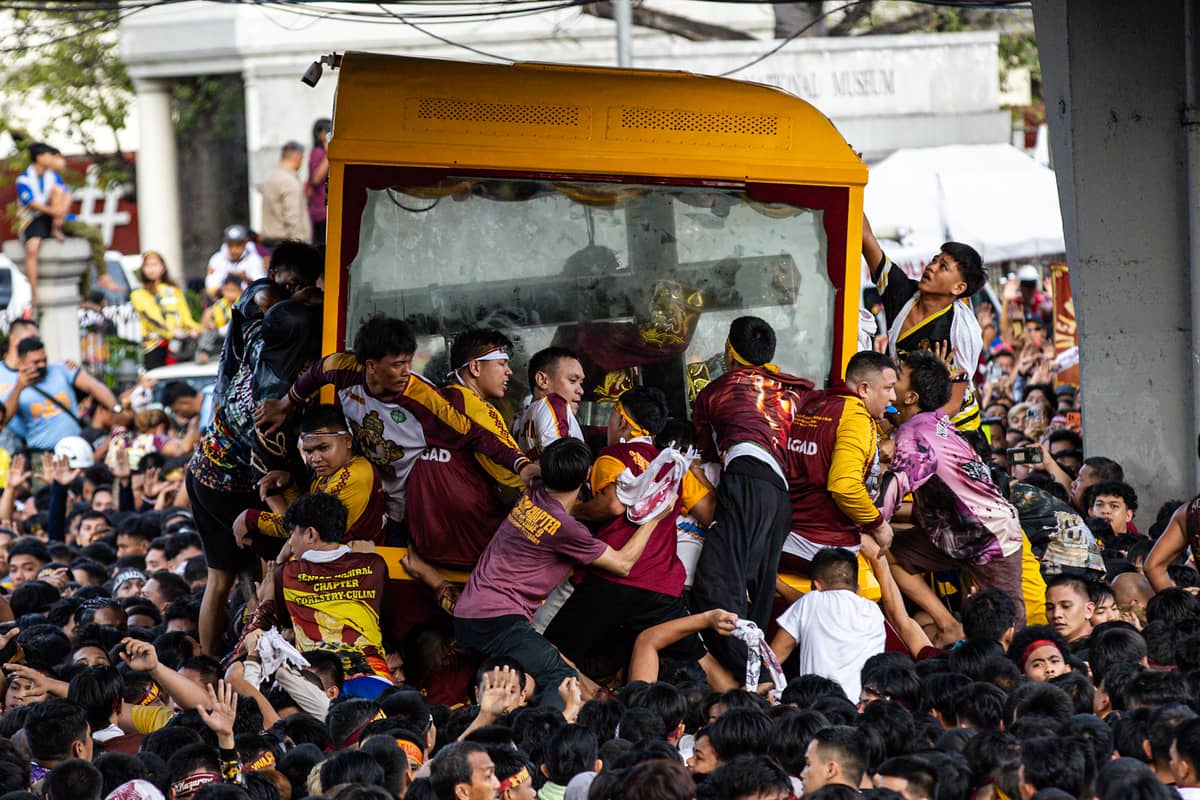
MILLIONS of devotees flocked during the historic 31-hour 2026 traslacion.
The church of hope
The Quiapo parish was established in 1588, with Fr. Antonio de Nombella as its first pastor and St. John the Baptist as its patron saint.
The first church, built of nipa and bamboo in 1603, was destroyed by fire during the Chinese Rebellion. In 1645, the church was again damaged by a strong earthquake. Similar calamities struck in 1791 and 1863.
Between 1767 and 1787, numerous accounts of miracles attributed to the image of the Black Nazarene began to grow. In 1900, the image was historically blessed by Pope Pius VII, after which it was placed above the high altar of Quiapo Church.
Another major fire razed the church in 1929. It was reconstructed in 1933 with concrete walls designed by National Artist Juan Nakpil, and reconstruction was completed in 1935.
During World War II, particularly in February 1945, when Manila was declared a battlefield between American and Japanese forces, the church miraculously survived heavy bombardment.
Manila later named one of the most devastated cities after the war, but Quiapo Church subsequently became a symbol of hope, drawing even more devotees who flocked to pray and venerate the image of the Nazarene. This growing devotion led to the expansion of the church in 1984 under the supervision of National Artist Jose Ma. Zaragoza and Engr. Eduardo Santiago.
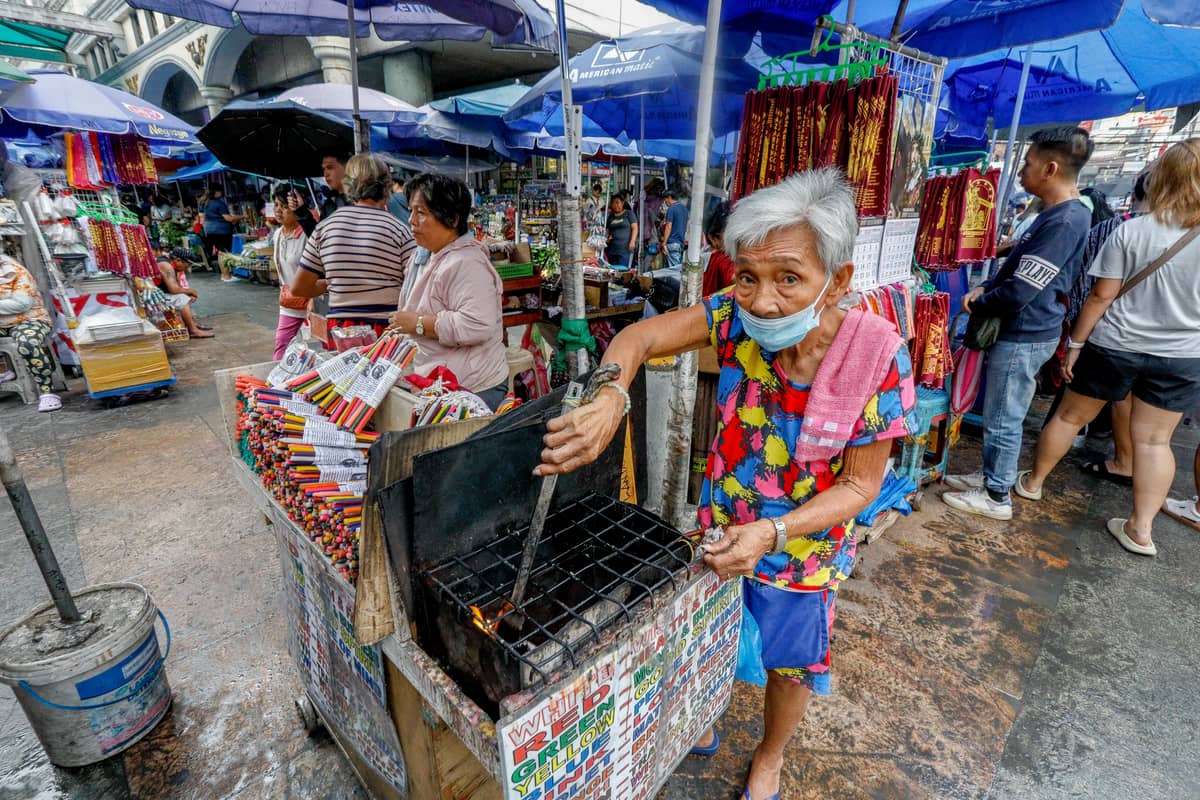
MANILA'S heart beats in Quiapo.
DAILY TRIBUNE'S IMAGES
On 11 December 1987, Pope John Paul II elevated the church to the status of Minor Basilica of the Black Nazarene.
In 2009, Msgr. Jose Clemente Ignacio institutionalized the Traslacion route from Luneta back to Quiapo, where millions of devotees now gather annually for the “pahalik”, Mass at the Quirino Grandstand, and the procession.
The image of the Nazarene, which has withstood numerous calamities, has since been replicated and distributed across the country and abroad, including in Israel, the United Arab Emirates, Singapore, Hong Kong, London, Canada and the United States. There are now 30 official replicas of the image of Jesus Nazareno.