
Cinema at a crossroads
Cinema will continue. It will simply find new platforms. Vertical viewing may become common, as many films are now shot that way. With busy schedules, people often watch movies on their phones while multitasking.

The Metro Manila Film Festival (MMFF) finally ended last Wednesday, 14 January. It was the longest-running edition in the 51-year history of the MMFF.
The filmfest traditionally started on Christmas Day and ended on 3 January. About 10 years ago, however, the Metro Manila Development Authority (MMDA), which runs the festival, began extending it until 7 January of the following year. Apparently, ticket sales were already low even a decade back — thus the extension.
The box-office performance of the entries in the most recent MMFF was obviously so bad that the MMDA deemed it necessary to extend the festival for yet another week. Sadly, the extension didn’t help. The 51st edition of the MMFF was truly a disappointment.
There are now calls to lower movie ticket prices. Many believe the cost of watching a movie these days has become prohibitive. That is true, of course. But is lowering admission prices really the solution to the slackening attendance?
A Werewolf Boy, a local adaptation of the 2012 Korean film, tried charging less — P275 per ticket — when it opened in theaters in the middle of the week. Receipts were not yet available as of press time, so no one knows if this strategy worked.
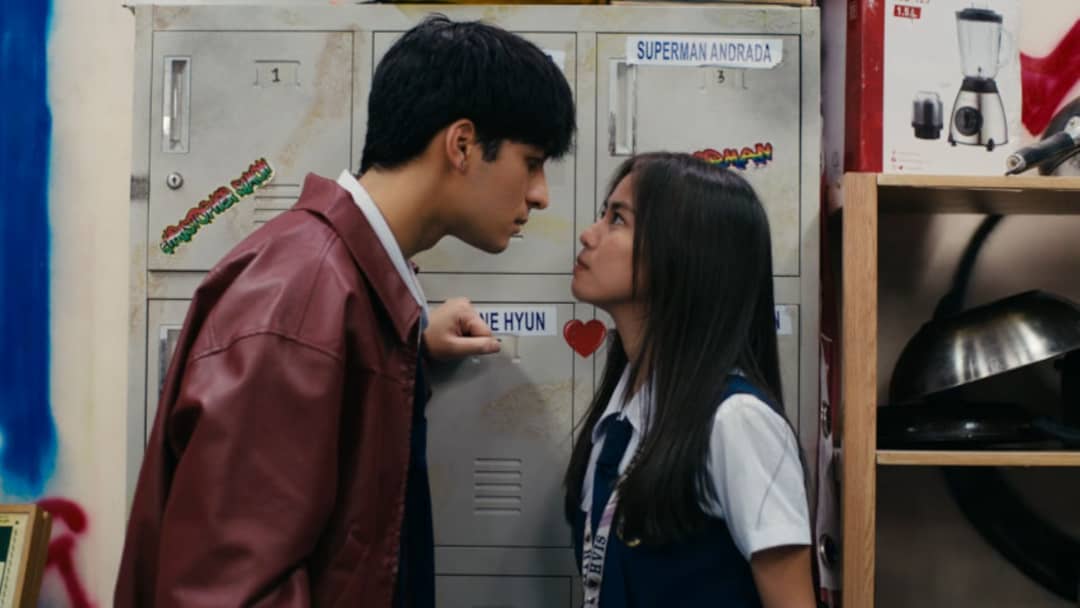
ANDRES Muhlach and Ashtine Olviga in ‘Ang Mutya ng Section E.’
Photograph courtesy of Viva One
The movie could perhaps charge less because its stars, Rabin Angeles and Angela Muji, are not yet established names. Both lead performers, however, are popular among Gen Zs as part of the hit series Ang Mutya ng Section E.
Most movie houses charged P400 during the MMFF. The ticket price for A Werewolf Boy was lowered to P275. Is there much difference? Let’s wait and see if reducing admission prices really works.
A majority of industry practitioners believe the cost of making movies has become so high that lowering ticket prices would prevent producers from recovering their investments. Those pushing for cheaper admission rates hope production companies would make money through volume sales.
But why is it so expensive to watch movies nowadays? Perhaps we can compare how people went to the movies then and how films are watched today.
The way it was
After the era of sound arrived in local cinema, moviegoing habits hardly changed for about 70 years. Before the Japanese Occupation, some theaters opened at 9 a.m., while others started as early as 7:30 a.m. The last full show was at 9 p.m.
Filmmaking came to a halt during the war because film stock was imported from the United States, Japan’s chief enemy. Local actors, directors and writers turned to the stage. Movie houses were converted into venues for live drama, comedy presentations and musical revues.
When moviemaking returned after Liberation, theaters operated as if the war had never happened. They opened at 9 a.m. and closed before midnight.
In those decades, movie patrons could stay inside the theater the whole day. During the brownout era of the early 1990s, residents of Project 7 in Quezon City walked to SM City during power outages and napped inside the cinema.
Another movie-viewing practice that Gen Zs may find strange today was that patrons were allowed to enter in the middle of a screening. They often saw the ending first before watching the beginning.
Standing Room Only (SRO) was also allowed for decades. The city of Manila tried to ban this practice as early as 1965 for safety reasons, but producers fought for its retention since it meant more income.
Moviegoing habits changed drastically when shopping malls began mushrooming across the metropolis in the mid-1980s. When theaters were still stand-alone, moviegoers ate at home before heading to the cinema. People cooked their meals and did not rely on food delivery. Only two items were commonly delivered: lechon for parties and Magnolia ice cream cakes.
Inside theaters, patrons snacked on unshelled peanuts. After the last screening, janitors had to sweep tons of peanut shells from the floor. Today, only food bought near the cinema may be consumed inside.
In the days of double features, families brought adobo and ate lunch inside the theater. A whole caldero of rice accompanied the meal, cooked dry to avoid spillage. People did not use plastic yet and ate from porcelain plates placed on their laps.
There were no picnic hampers then. Pots and plates were packed in native baskets used for market days. Drinking glasses were breakable, and tap water was brought in reused glass bottles. Families with extra budget bought Coca-Cola from the theater canteen — only in small bottles with paper straws.
Watching movies was economical decades ago. Tickets stayed at P1.20 for the orchestra section for a long time. Super roadshow presentations were priced at P2.25.
After the movie, people went straight home. There were no nightcaps, and establishments were closed after the last show.
Evolution
Today, going to the movies has become a ritual. Families eat at fast-food chains before the screening and buy overpriced popcorn and soda. After the movie, there’s often ice cream at another outlet, plus parking fees.
Do you still wonder why watching movies has become prohibitive?
A more economical alternative is subscribing to Netflix and other streaming services. Watching at home removes inconveniences such as dressing up, traffic, parking and commuting. There is no doubt streaming services are a major reason for dwindling theater attendance. At the same time, they provide additional revenue for producers after theatrical runs.
Are we seeing the end of cinema? Not yet. Television was once considered a threat in the 1950s, but the two eventually coexisted. TV even became a safety net, providing work through made-for-TV movies.
Cinema will continue. It will simply find new platforms. Vertical viewing may become common, as many films are now shot that way. With busy schedules, people often watch movies on their phones while multitasking.
Cinema lives on — but it will never stop evolving.