
Cabral files revenge?


The Department of Energy (DoE) has airtight reasons for canceling practically the entire business of Solar Philippines controlled by Batangas Rep. Lean Leviste, but the feeling that this involves political pressure is so pervading.
Solar faces about P24 billion in financial, contractual and administrative penalties, including performance bonds that the DoE wants to collect.
“We will pursue this obligation, and this is the first time the DoE would really pursue the imposition of this penalty,” Garin said.
Based on the latest government data, the DoE terminated 93 power projects totaling 8,604.14 megawatts (MW) under the Green Energy Auction (GEA) program in 2025 to clear stalled projects and make capacity available to new developers. This followed the cancellation of 70 contracts totaling 9,299.88 MW in 2024.
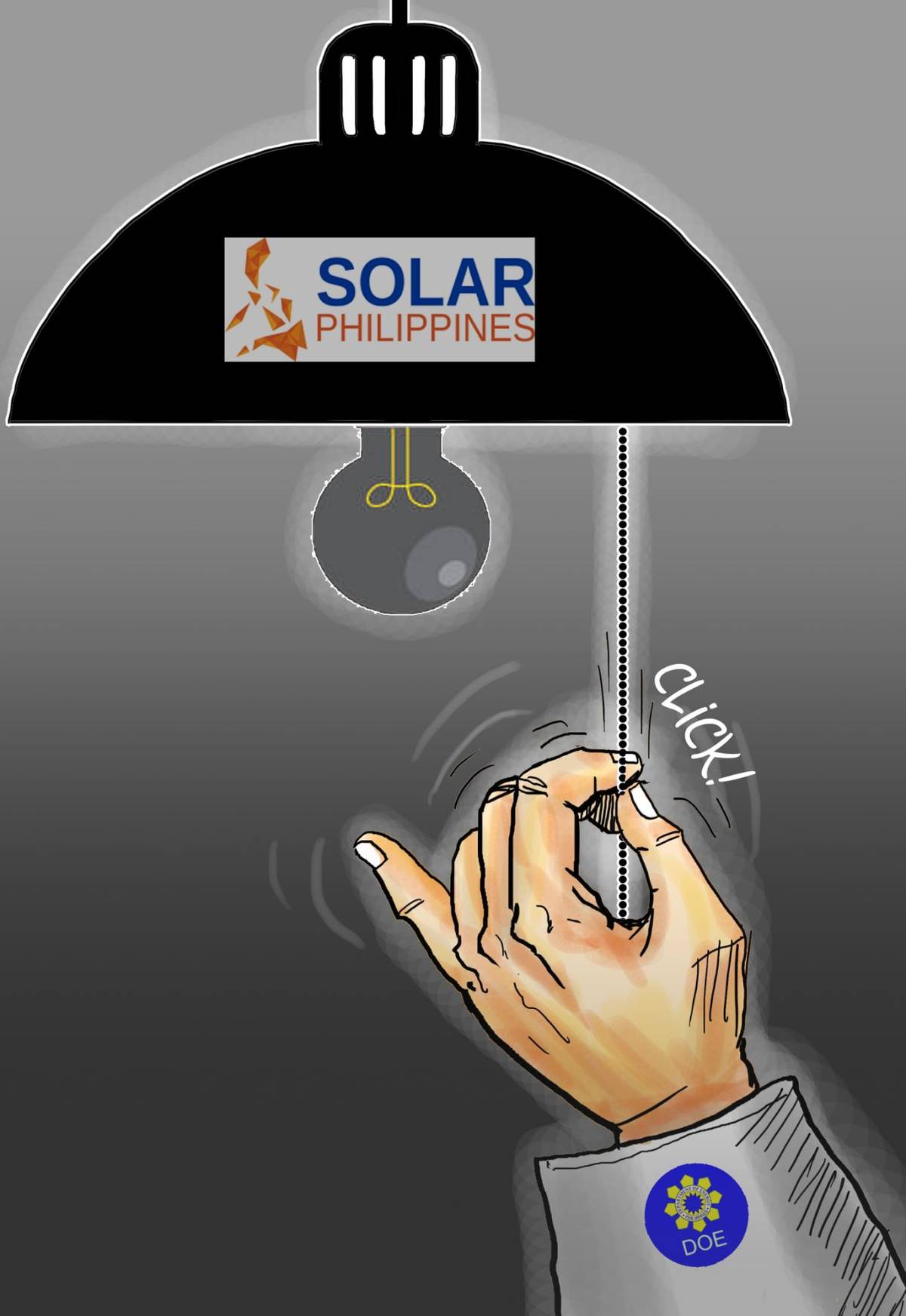
Energy Secretary Sharon Garin said contracts totaling 17,904 MW under the GEA program in the last two years were terminated with Solar shouldering the largest share of 11,427 MW, or roughly 64 percent of the canceled projects.
All of that power should have been delivered by December 2025. Garin said the delay meant the power supply was thin while demand continued to rise. With thin supply and rising demand, prices had no way to go but up, she explained.
“That’s why we canceled them — because they were no longer reliable. We need to free up those areas so more reliable developers can come in,” Garin said.
She, however, conceded that this was the first time the DoE was running after GEA contract holders.
Referring to the green energy firms, including Solar, she said that what they held were contracts, not just memoranda of agreement.
“The government based its projections on your commitment. When you fail, the government’s projections collapse,” she pointed out.
For Solar Philippines’ 28 contracts, the estimated liability initially is P24 billion or about 20 percent of project costs.
Additionally, failure to follow the work plan or deliver can result in the project cost being charged. “We will pursue collection,” Garin gave notice.
She hinted at speculation in Leviste’s projects.
“They reserve areas, sit on contracts, and wait for buyers. So we coordinated with all agencies on legal remedies. These amounts are huge, but they signed these contracts and committed to deliver. There are penalties,” she said.
Some would do nothing for five or 10 years, then sell the contracts to foreign investors. No capital, just flipping contracts, taking advantage of the Philippines being a prime destination for renewable energy investments.
The question being asked by the public is whether this is connected to the Cabral files.