Investment on future
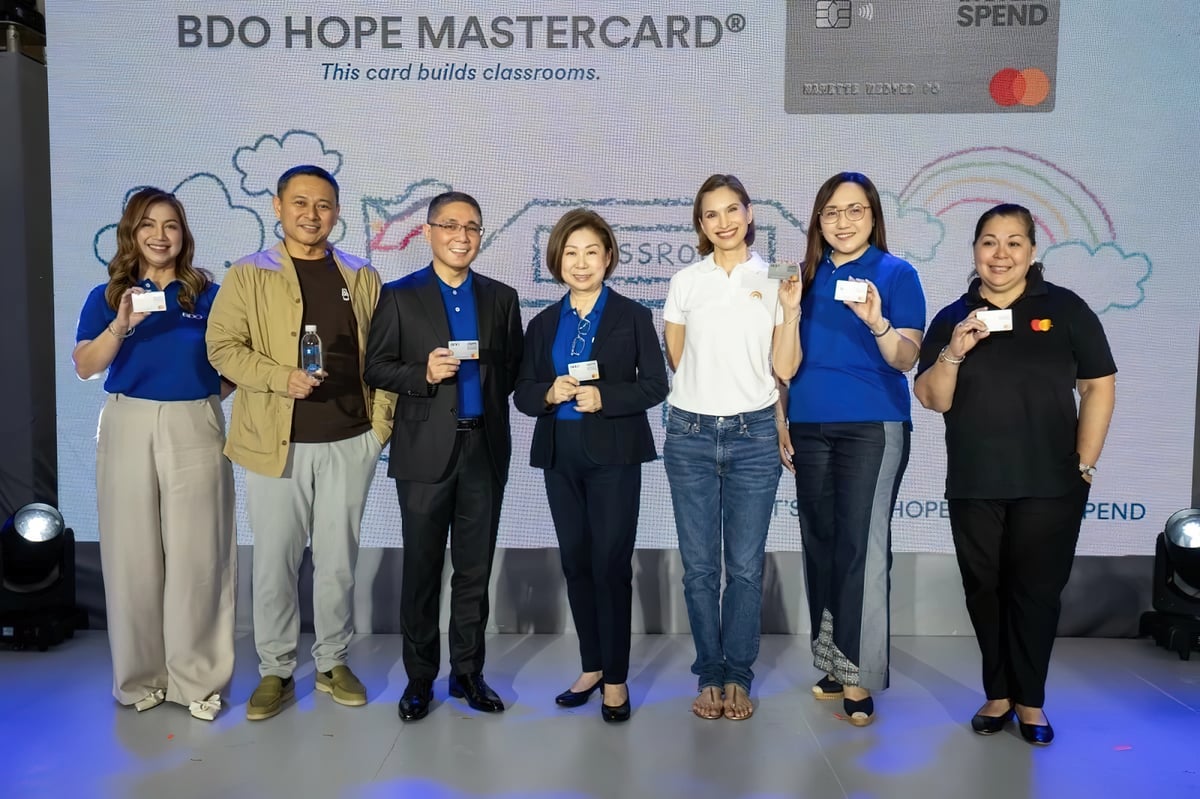
“Here in BDO, we believe in investing in every Filipino child’s education,” Regala said at the program’s launch.
“Every spend contributes to building more public classrooms for the Filipino youth. Through this partnership, we look forward to empowering more communities and spreading HOPE in every spend.”
It is a shift in tone from the cadence of typical banking campaigns. Rather than centering the product, Regala explained that the initiative focuses on the spaces where learning takes place, a subtle but deliberate pivot that positions the card not merely as a financial tool but as a mechanism to address a long-standing public service gap.
Regala’s earlier work foreshadowed this direction. She helped drive BDO’s financial literacy outreach, which brought practical guidance on borrowing, budgeting, and responsible credit use to communities, schools and OFW groups.
More understated than major product launches, the effort reflected an expanding view of what consumer banking communication can accomplish: not just selling products, but building knowledge and confidence among Filipinos navigating the financial system.
HOPE Mastercard reinforces that trajectory. Its launch comes at a time when the public-school system faces a backlog of roughly 150,000 classrooms with only 60 completed in 2025.
Against this backdrop, marketing becomes a form of bridgework. Regala’s task is not simply to introduce a product, but to connect institutional capability with public need, translating corporate mechanisms into tangible social impact.
“We all know we need a lot of classrooms,” she said. “We have to be able to contribute to the education of our children because that’s where it all starts.”
For BDO, the partnership provides a path for the private sector to act meaningfully on a structural crisis.
For every P1,000 in qualified cardholder spend, BDO donates P5 to HOPE, directing funds toward the construction of public-school classrooms nationwide.
For Regala, the program exemplifies how marketing leadership can shape more than a brand — it can help define how large institutions participate in the work of nation-building.
As early as the 2010s, the Department of Education (DepEd) reported shortages exceeding 100,000 classrooms, but the shortfall intensified in the 2020s due to a combination of factors.
By 2022, the shortage stood at approximately 91,000 classrooms, driven by a growing student population and inadequate infrastructure expansion.
This figure increased to approximately 165,000 by 2025, reflecting a compounding crisis affecting millions of learners, particularly in densely populated regions such as the National Capital Region and other key areas.
Projections indicate that, without accelerated interventions, the country could still face a deficit of 58,000 to 81,000 classrooms by 2040, even with ongoing efforts.
Total approach
The program directly targets the backlog by crowdsourcing funds from millions of BDO cardholders, potentially generating significant resources without relying solely on taxes.
The 2026 government target is to build 25,000 classrooms, thereby indirectly reducing dropout rates through improved access.
Early adoption, promoted through media and social channels, shows promise, with funds already supporting new builds in regions such as Bicol.
Overall, it exemplifies how private innovation can complement public efforts, fostering “hope in every spend” amid ongoing skepticism on government spending.