
House leader blasts Marcos over UA misuse
Files petition challenging constitutionality before SC
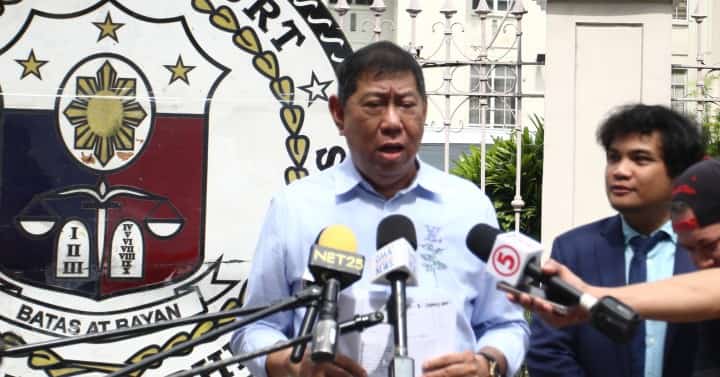
A House leader has criticized President Ferdinand Marcos Jr. and his Cabinet for allegedly allowing members of Congress to strip funds from flagship projects and move them to Unprogrammed Appropriations (UA) in the national budget, saying their silence suggested their complicity in making room for lawmakers’ so-called “insertions.”
House Senior Deputy Minority Leader Edgar Erice made the scathing remarks as he prepared to file a petition on Thursday seeking to challenge before the Supreme Court the constitutionality of the controversial Unprogrammed Appropriations.
Erice said the Unprogrammed Appropriations — which budget watchdogs have branded as a conduit for corruption — became the dumping ground where lawmakers allegedly moved the administration’s priority projects from the programmed funds to make room for their own insertions, particularly questionable flood control, solar street light, and other infrastructure projects where kickbacks are easy to obtain.
This was evident in the 2023, 2024 and 2025 General Appropriations Act, where congressional insertions and diversions reached as high as P1.45 trillion, according to Erice.
“In 2023, P280 billion was removed from his (Marcos’) budget and was replaced with the nonsense projects (of lawmakers). He didn’t react, his Cabinet didn’t say a word either, as if they were complicit,” Erice said in an interview on ANC’s Headstart.
“P1.45 trillion (in insertions) in three years is unprecedented. That means you changed the President’s budget and turned it into a congressional budget. Worse, the executive department allowed it,” he added.
The opposition lawmaker said this same pattern was repeated in 2024 and 2025, with projects totaling over P500 billion and P473 billion, respectively, shifted to Unprogrammed Appropriations rather than being clearly itemized in the programmed funds with defined sources of financing.
Unlike the programmed funds, the UA serves as a standby fund outside the annual budget, and the projects listed would only be funded when there are excess revenue collections, savings, or additional borrowings from foreign governments.
Ultimately, it is the executive branch that releases the funds to bankroll these programs, particularly during emergencies or when infrastructure projects, social aid, and other government initiatives are deemed necessary.
Flagship programs that were hit the hardest due to a lack of funding and excess revenues were the Metro Manila Subway and the expansion of the Philippine National Railways, also known as the North-South Commuter Railway. These projects were supposed to be co-funded with foreign governments.
Erice alleged that P399 billion of the Philippines’ equity originally allocated to fund these railway projects in 2024 and 2025 was transferred to the UA to clear space for flood control projects and other pet projects of lawmakers.
“So why did this happen? He cannot say he didn’t know. It’s his duty, it’s his responsibility to know this,” Erice stressed, referring to Marcos.
He said the funds could have been used to ease the enormous classroom backlog, which had reached roughly 165,000 rooms as of 2025. Education Secretary Sonny Angara warned that, given the government’s limited fiscal space, it could take as long as 55 years — more than half a century — to clear the backlog.
As a result, the nearly five-year delay in the subway and PNR projects, which are supposed to be completed before 2030, will cost the government an additional P260 billion in commitment fees, labor, and materials, Erice said.
Following the mounting backlash across all sectors, Marcos vetoed P92.5 billion, or about 62 percent, of the P243 billion in the UA in the 2026 GAA.
The vetoed amount constituted seven of the 10 projects listed in the UA. Only three projects were retained, namely, the support for foreign-assisted projects (P97 billion), military modernization (P50 billion), and risk management related to private-public partnership projects (P3.6 billion).
Erice noted, however, that the veto, while substantial, left a huge chunk of roughly P151 billion in “unconstitutional” funds intact.
During the House deliberations on the 2026 national budget last October, it was revealed that the Office of the President had released P214.4 billion in Unprogrammed Appropriations to the DPWH to fund some 3,700 infrastructure projects — including for flood control, roads, bridges and multi-purpose buildings — across 2023 and 2024.
ACT Teachers Rep. Antonio Tinio, another member of the minority, earlier said that the President — despite exposing the corruption in the flood control projects — shared the blame for the anomalies for “approving” the release of the UA.
He cited a provision in Book VI, Chapter 5, Section 35 of the Administrative Code of 1987 (Executive Order 292) providing that a lump-sum appropriation for any department must be “made in accordance with a special budget to be approved by the President.”
However, the Office of the President’s budget sponsor, Bataan Rep. Albert Garcia, countered that the UA is not a lump-sum fund under Malacañang’s sole discretion, hence, it had nothing to do with the President.
Since 2023 — President Marcos’ first full year in office — Unprogrammed Appropriations had ballooned to unprecedented levels, reaching nearly P2 trillion, according to Tinio.
Garcia claimed that P168.2 billion was vetoed in the 2025 budget. For context, President Marcos actually vetoed P194 billion in line items from the P6.352-trillion 2025 budget, including P16.7 billion earmarked for flood control projects.
The 2025 GAA has been criticized as the “most corrupt” budget ever, allegedly inflated with bloated Unprogrammed Appropriations and discretionary funds, while allocations to the Department of Education and subsidies for the state health insurer PhilHealth were deeply cut.
Opposition lawmakers said the Department of Budget and Management was equally culpable for the budget blunders, suggesting that the agency may have been complicit with the DPWH, which has been embroiled in allegations of corruption and complicity with members of Congress, Cabinet officials, and private contractors involving anomalous multibillion-peso flood control projects.
Like the 2026 budget, the legality of the 2025 GAA is being contested before the SC and the high court has yet to rule on the matter.