
PH manufacturing resilience hinges on reforms, stable demand — FPI
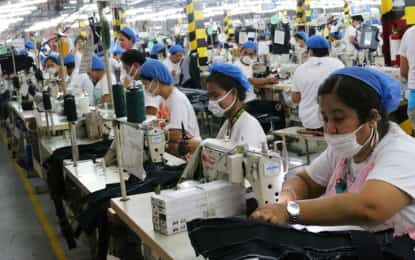
The challenge and opportunity now are to turn this recovery into lasting industrial strength by investing in innovation, diversification, and resilience, according to Federation of Philippine Industries chairperson Beth Lee.
PNA
Federation of Philippine Industries (FPI) said it is banking on reforms under the Marcos Jr. administration and stabilizing domestic demand to keep the country’s manufacturing sector resilient and competitive.
The group, led by chairperson Beth Lee, was reacting to the latest Purchasing Managers’ Index (PMI) released by S&P Global, which climbed to 50.2 in December 2025 from November’s four-year low of 47.4. The rebound returned the sector to expansionary territory and marked a 2.8-point increase, equivalent to a 5.9 percent jump month on month.
Lee said holiday seasonality was not a major factor, noting that the PMI is seasonally adjusted.
She said the December rebound reflected genuine stabilization rather than Christmas-driven restocking, with most manufacturers seeing conditions stabilize after November’s sharp contraction.
“The PMI shows we are back in positive territory—a clear sign of resilience. The challenge and opportunity now are to turn this recovery into lasting industrial strength by investing in innovation, diversification, and resilience,” Lee said.
According to Lee, the improvement was driven by several factors, including the normalization of manufacturing operations following typhoon disruptions in November that had severely affected production and deliveries.
She added that new orders expanded for the first time since August, ending a three-month contraction and signaling firmer domestic demand.
At the same time, firms cautiously resumed purchasing activity in anticipation of future output growth, despite lingering supply chain challenges. The rebound, however, was largely domestically driven, as export orders remained subdued toward the end of 2025.
“Looking ahead, export growth in 2026 could provide a stronger external tailwind, particularly in electronics, which account for nearly half of Philippine exports. If realized, this export momentum will help sustain PMI readings above 50, signaling broader expansion in the manufacturing sector,” she said.
Lee said sustained growth in 2026 will depend on improving resilience against climate-related disruptions and supply chain shocks, diversifying manufacturing beyond the current dual structure of food processing—which accounts for nearly half of domestic output—and electronics, which comprise almost half of exports. She also stressed the need to strengthen mid-complexity industries such as machinery, chemicals, and wood products to reduce volatility and expand employment opportunities.
The manufacturing sector currently contributes about 15.7 percent of the country’s gross domestic product, well below the ASEAN average of 22 to 27 percent. Lee said this underperformance highlights the urgency of Tatak Pinoy reforms to diversify and deepen industrial capacity and make manufacturing a stronger engine of national growth.
“For policymakers, the message is clear: December’s rebound is a welcome sign of resilience and a foundation to build upon. To sustain this momentum, the sector must strengthen its defenses against climate disruptions, diversify beyond its current reliance on food and electronics, and expand into mid-complexity industries such as machinery and chemicals,” Lee said.
Initiatives such as Tatak Pinoy, the country’s industrial strategy under Republic Act No. 11981, will provide the roadmap, Lee added.
“By investing in innovation, skills, and industrial upgrading, Tatak Pinoy can elevate the country’s manufacturing complexity and competitiveness—ensuring that growth is not only cyclical but enduring, inclusive, and proudly Filipino,” she said.
“December’s rebound is more than just a number—it is a signal that Philippine manufacturing can recover quickly when demand stabilizes. We are optimistic for this year 2026, banking on the expansion and implementation of real reforms that affect businesses, together with the strengthening of initiatives like Tatak Pinoy that can build long-term resilience for the country’s manufacturing base,” Lee added.