
Transactional budget
The emerging reality is that this budget will be devoid of the promised reforms after the massive corruption that perverted the past three Marcos General Appropriations Acts.

According to Chinese astrologists, the Year of the Fire Horse will be marked by the most intense and dynamic transformation.
It presages political and social upheaval, the breakdown of old systems, rapid reforms, protests, power shifts and a push toward modernization, all at a cost.
The addiction to the pork barrel, manifesting itself in the proposed P6.793-trillion 2026 national budget, has sparked new explosive corruption scandals, debates and partisan theatrics.
Congress ratified the budget amid much fanfare, and it now awaits President Ferdinand Marcos Jr.’s signature.
The emerging reality is that this budget will be devoid of the promised reforms after the massive corruption that perverted the past three Marcos General Appropriations Acts.
Congress vowed to make the 2026 budget transparent and free from opportunities for legislated theft, notably realigning the Department of Public Works and Highways’ flood control projects, which had been the source of hundreds of billions of pesos in slush funds.
Education received a historic boost, with allocations reaching around P1.35 trillion, hailed as a move to prioritize human capital, but these adjustments are considered cosmetic tweaks.
The pork barrel persisted in disguised forms such as the massive hikes in patronage-prone programs like Assistance to Individuals in Crisis Situations (AICS) at P63.9 billion, Medical Assistance to Indigent Patients (MAIFIP) at P51.6 billion, Tulong Panghanapbuhay sa Ating Disadvantaged/Displaced Workers (TUPAD) at P22.4 billion and aid for farmers and fisherfolk at P10 billion.
The 2026 budget featured a radical shift to “soft pork,” or what a senator described as “giniling pork,” which are discretionary largesse redistributed for political gain.
Farm-to-market roads were transferred to the Department of Agriculture, leaving no risk of misuse.
The budget, after the Bicameral Conference Committee mutated it, thus perpetuates a consumption-led, patronage-driven model that sidelines productive sectors with its focus on “ayuda” or social aid.
Agriculture’s share of the gross domestic product (GDP) hovers at around nine percent, manufacturing near 18 to 19 percent, reflecting an ongoing decline under the Marcos administration.
Since mid-2022, poverty has afflicted millions more families, with self-rated hunger surging from 2.9 million families to over seven million by early 2025, per Social Weather Stations and Ibon Foundation surveys.
Joblessness, adjusted for underemployment, has worsened, rooted in collapsing farm and factory output.
Without sustained follow-through, linkages to industrialization, or employment strategies, the education sector risks producing skilled graduates for overseas jobs rather than domestic ones. Investments remain fragmented, prioritizing populist salary increases over transformative infrastructure, research and technical upgrades.
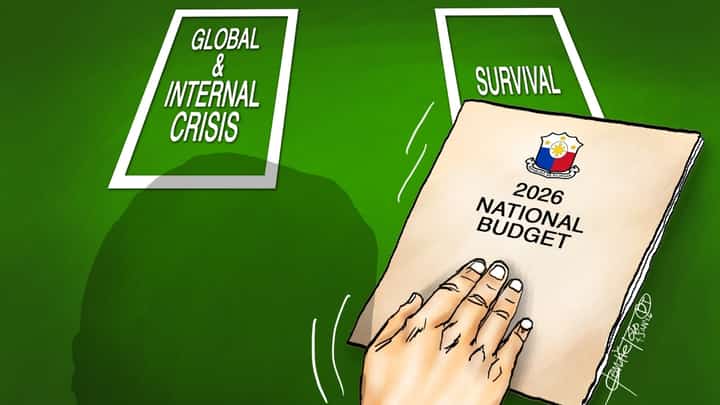
The budget is intended to secure alliances for short-term stability ahead of the 2028 elections, while ignoring chronic food insecurity, rural stagnation, industrial hollowing and rising informality.
When the President signs this budget into law, likely with token vetoes, it will be another functional budget for patronage, not progress.
It will reinforce structural weaknesses such as dependency, inequality, and shallow growth. In giving way to political expediency over development, the administration invites more public discontent, economic drift and turbulence.
This budget has strayed from addressing the internal and global crises head-on, seeking instead to support the survival of a floundering regime.