
Zero out UA
For 2026, P250 billion in UA has been proposed, which watchdogs have linked to anomalous projects that prioritize vested interests over essential services like health and education.

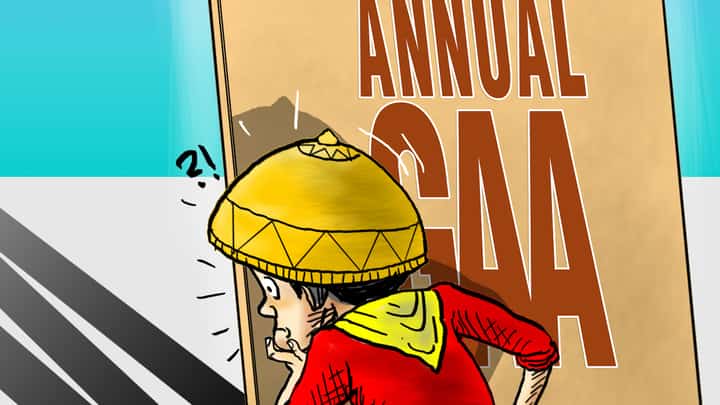
Nothing will change with the pork barrel still in the annual budget, with the ingenuity of members of Congress when it comes to creating and maintaining conduits for discretionary funds that circumvent the Supreme Court prohibition.
The 2013 Supreme Court ruling that voided the Priority Development Assistance Fund (PDAF) held that all practices that authorize legislators, individually or through committees, to intervene in the post-enactment stages of the budget — such as project identification, fund realignment and modification — are unconstitutional.
The Unprogrammed Appropriations (UA) — the allocation of funds before the drafting of the National Expenditure Program — and allocables and insertions made during the Bicameral Conference Committee (Bicam) are ingenious schemes to circumvent the SC ruling.
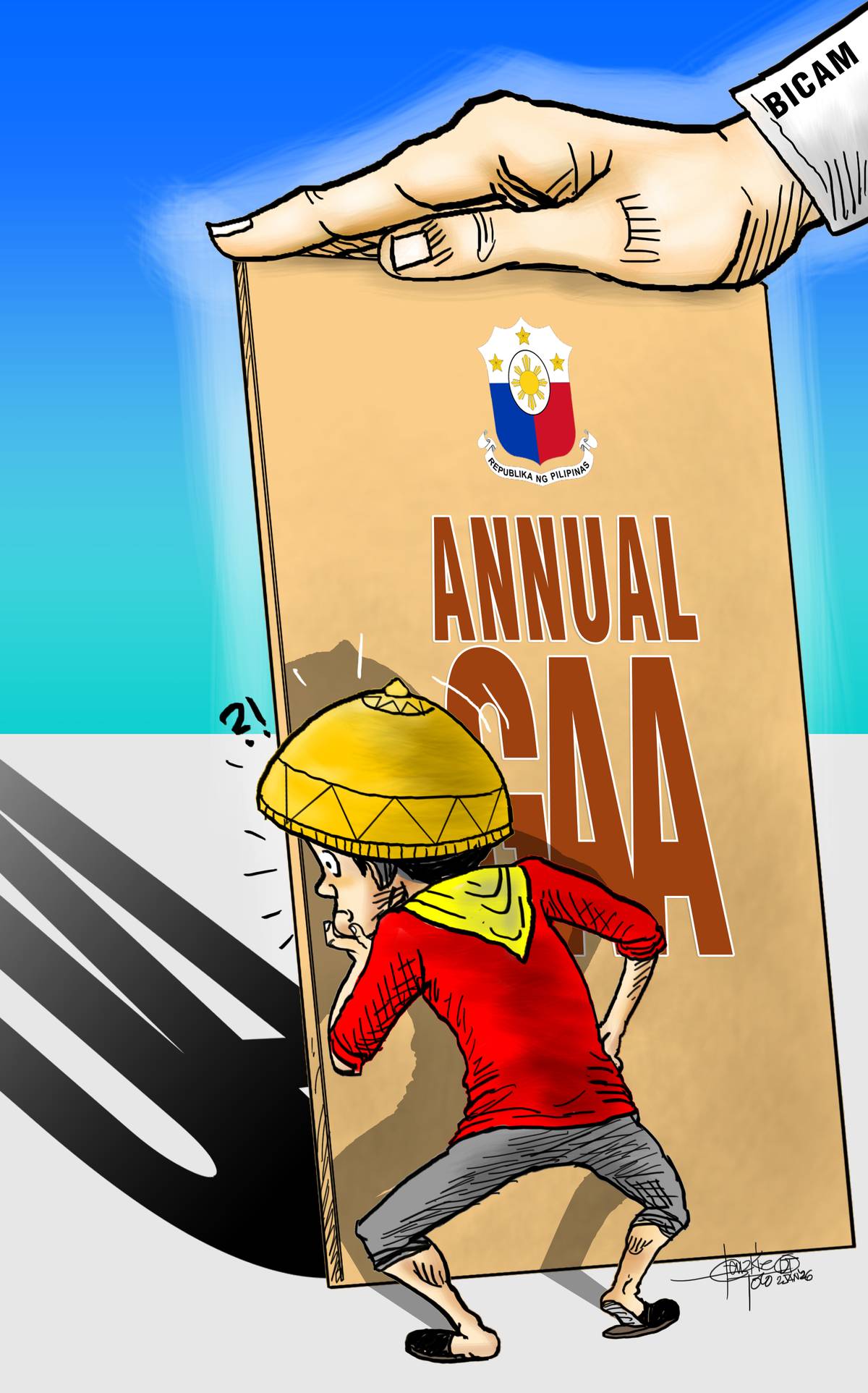
The UA is the most notorious of such wicked creativity, since it was converted into a receptacle for regular budget items, including essential flagship projects displaced by pet projects of legislators.
It was also used for “backdoor insertions of nonstrategic, politically expedient projects,” including programs for medical assistance, livelihoods, and local government support that operate like pork.
The UA was initially intended for contingencies, but was transformed by the geniuses in Congress into a parallel budget that undermines fiscal planning and credibility without adequate oversight.
The UA was bloated over the years — from P251.6 billion in 2022 to P807.2 billion in 2023 — before declining to P731.4 billion in 2024 and P531.7 billion in 2025.
For 2026, P250 billion in UA has been proposed, which watchdogs have linked to anomalous projects that prioritize vested interests over essential services like health and education.
The UA can only be released under specific conditions, such as excess revenue collections, new revenue sources, or approved foreign loans.
However, it now operates as a “shadow budget” outside the regular General Appropriations Act (GAA), with revenue certifications by the Bureau of the Treasury not publicly accessible, thereby enabling an opaque process. The UA is in contrast to programmed funds, which undergo detailed congressional review.
The perpetuation of the pork barrel is achieved through a collusion between the executive and the Department of Budget and Management (DBM) via the piecemeal release of funds.
Special provisions in the 2024 and 2025 GAAs permitted modifications and the use of unconventional sources such as government-owned and controlled corporations’ “excess funds,” including PhilHealth’s P89 billion in 2024, thereby violating the Universal Health Care Act.
The “Floodgate” scandal involving “ghost” projects and billions in alleged irregularities has been tied to UA releases of P213 billion to 274 billion in 2024.
Watchdog groups and economists describe the use of the UA as distorting national priorities, crowding out essential spending, and generating opportunities for embezzlement and overpricing.
Although not yet unconstitutional, due to a pending Supreme Court challenge, UA provisions were branded as “riders” in the GAA, potentially violating the separation of powers and the congressional power of the purse.
A 2025 Supreme Court opinion in the PhilHealth funds case criticized the UA for creating corruption-prone discretion, though the Court stopped short of invalidating it entirely.
Removing the UA, mandating complete transparency, and enacting strict guidelines are necessary to safeguard the budget.
Ongoing scandals involving discretionary budget funds have prompted calls for their abolition. Instead, the pork barrel has been resurrected — yet again.