
Budget perversion drags PBBM down
‘They always announce that inflation is low, but the thing is, the public is not feeling this. Prices continue to be high. There’s a lot of hoarding. There’s a lot of price manipulation.’

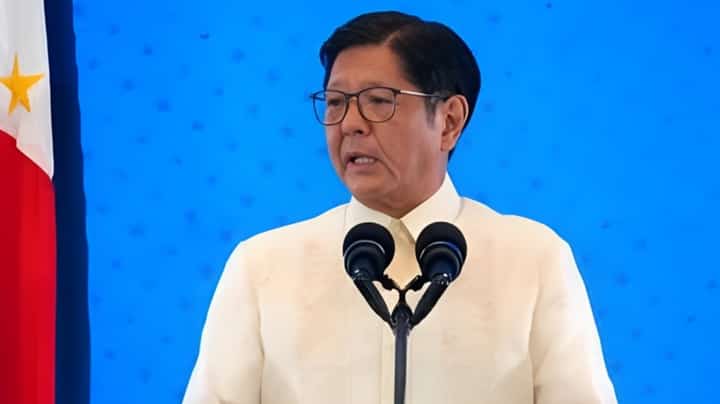
At the turn of the year, two significant developments unfolded: the House approved, critics say “railroaded,” the 2026 Bicameral Conference Committee (Bicam) report, and twin surveys showed dwindling public confidence in President Ferdinand Marcos Jr.
One was a Social Weather Stations (SWS) survey indicating that Marcos’ net trust rating had slipped into negative territory, falling to –3 percent nationwide in the 24 to 30 November 2025 poll, down from positive levels in previous months. In contrast, Vice President Sara Duterte’s trust rating improved and remained strongly positive.
The Pulse Asia survey was then released, showing 48 percent critical of President Marcos and only 34 percent appreciative, while the Vice President enjoys slightly higher approval and trust at 56 percent, with only 24 percent disapproval.
Analysts said the decline in Mr. Marcos’ survey numbers was due to unmet expectations, primarily stemming from his promise that those involved in the corruption scandal would be in jail before Christmas.
The manipulation, or perversion, of the national budget, in turn, was the source of corrupt practices that Marcos even helped to expose.
The specter of abuse remains in the 2026 General Appropriations Bill (GAB).
Akbayan Partylist Rep. Chel Diokno said the Bicam was livestreamed, but key decisions were still made off-screen and in executive sessions.
“Soft pork,” which refers to social aid programs over which legislators have discretion to distribute, has expanded.
The Bicam reinstated P243 billion in Unprogrammed Appropriations (UA), Diokno said.
Marcos also failed to follow through on accountability for government officials and to address suspicions of his involvement in the flood control anomaly.
No significant milestone has been achieved in the “Floodgate” scandal.
Also a factor for the nosedive in the President’s popularity were the resignations at the Independent Commission for Infrastructure (ICI), some of which came even before the death of former Department of Public Works and Highways Undersecretary Cathy Cabral.
University of the Philippines political science professor and analyst Aries Arugay said missteps in the corruption investigations, such as empowering, for example, the ICI have weakened support for President Marcos.
He cited groups that emphasized that putting the word “independent” in the body’s name doesn’t make it so.
“You have to empower it. It’s quite tragic that it had good intentions at first. The President exposed this. But somehow, I think the government has lost control.”
The survey results translate to respondents saying, “You have an administration that is perceived to be detached from the gut issues.”
“How is this administration faring in indicators aside from the fight against corruption, such as food prices?” he said.
He added, “Most of the noise we’re hearing these days is about corruption, but nobody’s really talking about the other vital issues.”
The public not feeling improvement
“They always announce that inflation is low, but the thing is, the public is not feeling this. Prices continue to be high. There’s a lot of hoarding. There’s a lot of price manipulation.”
“And this has something to do with the ability of the government to stay on top of those who have been abusing, for example, setting higher prices than they’re supposed to, even if you have official inflation numbers down,” Arugay explained.
The challenge for any Filipino politician is to listen to the public and to truly institutionalize anti-corruption safeguards.
Long wait for accountability
Flooding caused by heavy rains has long been attributed to clogged drains and improper waste disposal.
While individual behavior plays a role, recent developments have shifted attention to a far more consequential issue: the integrity of government flood control projects intended to protect communities in the first place.
Public scrutiny intensified after President Marcos disclosed the corruption in flood control projects in his 2025 State of the Nation Address.
He pointed to irregularities involving major contractors, lawmakers, and government officials, and ordered the Department of Public Works and Highways to submit a list of flood control projects “started or completed in the last three years” for review.
In August, the President reinforced the call for accountability by launching the Sumbong sa Pangulo initiative, which encourages citizens to report irregularities and failures in flood control projects directly to Malacañang. The move underscored the growing concern over whether public funds allocated for flood mitigation were delivering results on the ground.
As questions mounted, Senate President Francis “Chiz” Escudero confirmed receiving a P30-million campaign contribution from a government contractor in 2022, while denying any role in securing flood control projects for the donor after the elections.
Senate Majority Leader Joel Villanueva, meanwhile, said no senator had been linked to the 15 contractors flagged in the controversy, but he was also implicated in the lucrative racket.
Attention also turned to former House Appropriations Committee chairperson Zaldy Co, who has yet to return to the country as allegations linking him to the anomalies continue to surface.
These include claims of P13.8 billion in budget insertions and a failed attempt to import 3,000 containers of fish — issues now under public and congressional scrutiny.
Public frustration manifested itself in street protests such as the Baha sa Luneta and the Trillion Peso March, reflecting the widespread anger over the repeated flooding and perceived failures in governance.
Organized by various civic, environmental, labor, and church-based groups, the demonstrations called for transparency, accountability, and concrete action regarding flood control spending.
Despite early expectations that exposing the corruption would accelerate investigations, progress has been slow.
By Christmas, even as assurances were made that those responsible would be held to account, no major cases had been resolved — fueling disappointment and questions about enforcement.
The ICI held its final hearing for the year on 15 December. Asked about the President’s timeline, an ICI spokesperson said investigations were ongoing and urged the public to wait, noting that cases were being prioritized by the Department of Justice and the Office of the Ombudsman.
Filipinos take to the streets
Public outrage did not erupt overnight. It built steadily as revelations surrounding alleged anomalies in flood control projects accumulated — until Filipinos took to the streets.
The spark came when Marcos publicly acknowledged the existence of possible infrastructure anomalies, declaring that those responsible would be held to account.
Instead of calming tensions, the statement intensified scrutiny, prompting critics to question how such corruption could persist under his watch.
Within weeks, the government launched the Sumbong sa Pangulo platform, urging citizens to report questionable flood control projects. The Commission on Audit soon followed with fraud audits, initially in Bulacan and later nationwide. Senate hearings exposed budget insertions and the political fingerprints across multiple projects, deepening public suspicion.
For many, the turning point was the perception that investigations were reactive rather than proactive — and that influential figures appeared insulated from the consequences.
This frustration spilled into the streets on 21 September, when protesters gathered for the Trillion Peso March and the Baha sa Luneta rallies. Demonstrators linked ballooning flood control budgets to recurring disasters, arguing that billions allocated to protection had failed to prevent floods that displaced communities year after year.
The choice of the date amplified the anger. Falling on the anniversary of the 1972 declaration of martial law by the incumbent President’s father, the rallies drew parallels between historical abuses of power and contemporary allegations of systemic corruption. Reports of tear gas and gunfire — denied by authorities but attested to by protesters — further fueled the distrust.