
AI IS NOW A CO-WORKER
But who gets promoted, fired, or sued?
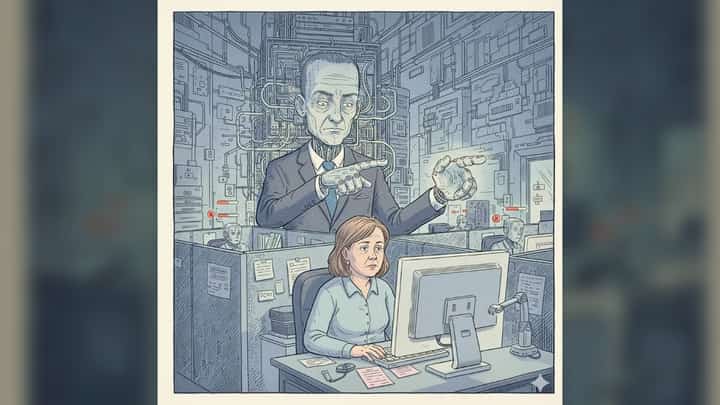
Artificial intelligence (AI) is no longer just a productivity tool in the workplace. In 2026, it is increasingly acting as a silent co-worker — one that tracks performance, allocates tasks, evaluates behavior, and in some cases influences who gets promoted, disciplined, or dismissed.
Across the United States and Europe, companies are deploying AI systems to manage schedules, assess output, flag “underperformance,” and even recommend termination. What once required human judgment is now frequently delegated to algorithms operating behind dashboards that few employees ever see.
Speaking earlier this year, Sam Altman, chief executive of OpenAI, said AI would not only assist workers but fundamentally reshape how organizations operate. He warned that while productivity gains are real, the transition would be socially disruptive if governance fails to keep pace.
That disruption is already visible.
At major logistics and retail firms, algorithmic management systems monitor worker speed, accuracy and time on task.
Former employees of Amazon have publicly described being disciplined or terminated based on automated productivity metrics, often with little explanation or opportunity to challenge the decision.
Labor advocates say this removes accountability from managers and places it inside opaque systems.
In Europe, regulators are pushing back. European Union officials involved in drafting the AI Act have repeatedly stressed that algorithmic decision-making affecting employment must remain subject to human oversight.
One EU digital policy adviser noted in public remarks that no worker should lose a job “to a black box they cannot question.”
Legal scholars are also raising alarms. Professor Ifeoma Ajunwa of Emory University, who studies AI and labor, has argued in interviews and academic forums that algorithmic bias does not disappear simply because decisions are automated.
Instead, discrimination risks becoming harder to detect and contest when embedded in code.
In the United States, workplace lawsuits involving AI are rising. Employees have challenged automated hiring filters, performance-scoring systems, and AI-generated evaluations, arguing they violate labor, disability, or anti-discrimination laws.
Courts are now being asked to decide a new question: when an AI system makes a harmful decision, who is legally responsible — the employer, the software vendor, or the algorithm itself?
For workers, the power shift is profound. A manager can be confronted. An algorithm cannot.
As companies race to integrate AI deeper into daily operations, experts agree on one point: the technology is moving faster than labor law, corporate policy, and worker protections.
AI may be an efficient co-worker — but without transparency and accountability, it may also become the most unchallengeable boss employees have ever faced.