
Rizal on screen: The film that reclaimed a nation’s hero for a new generation

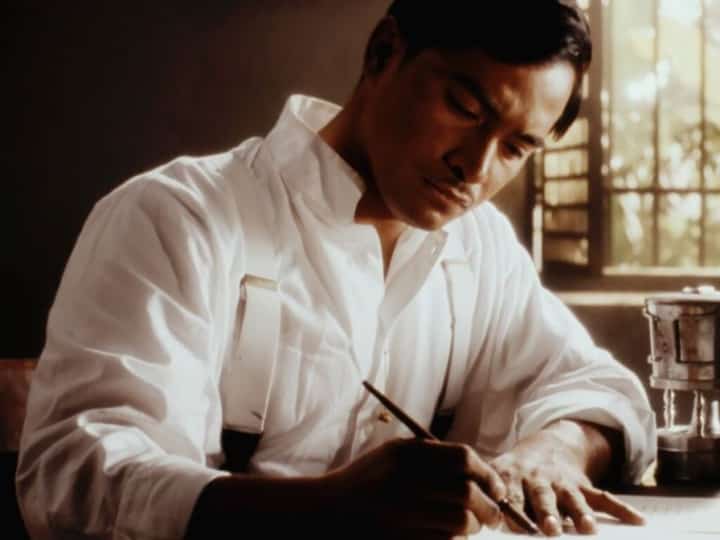
In the late 1990s, Philippine cinema reached a defining moment when scale, scholarship, and storytelling aligned in a single, audacious project. José Rizal (1998) was not merely a historical film—it was a national undertaking that reshaped how Filipinos could engage with their most revered hero through the power of cinema.
Directed by the late Marilou Diaz-Abaya, the epic traced the final chapters of José Rizal’s life under Spanish colonial rule, leading to his execution. Rather than presenting him as an untouchable icon, the film portrayed Rizal as a thinking, feeling man—an intellectual, a lover, and a patriot wrestling with the consequences of his beliefs. Cesar Montano’s restrained yet deeply human performance gave Rizal a rare cinematic intimacy, allowing audiences to encounter the hero beyond textbooks and monuments.
The film’s ambition was evident in its production. With a budget exceeding P80 million, it became the most expensive Filipino film ever produced at the time. Period accuracy was a guiding principle: historic buildings doubled as colonial landmarks, university exteriors recreated old Manila, and Rizal’s execution was staged on the shores of Bataan to ground the story in physical reality. Every frame reflected a commitment to historical immersion and cinematic craft.
The screenplay, written by Jun Lana, Ricky Lee, and Peter Ong Lim, embraced nuance over simplification. It explored Rizal’s inner conflicts, relationships, and evolving convictions, while weaving personal moments into the broader struggle for national consciousness. A powerhouse supporting cast—Jaime Fabregas, Chin-Chin Gutierrez, Gina Alajar, Pen Medina, Gloria Diaz, and Ronnie Lazaro—added emotional depth and texture to the narrative.
When José Rizal premiered as an official entry to the 1998 Metro Manila Film Festival, it made history. The film swept the awards, earning an unprecedented 17 trophies, the highest number of MMFF wins at the time.
1998 Metro Manila Film Festival Awards
• Best Picture
• Best Actor – Cesar Montano
• Best Director – Marilou Diaz-Abaya
• Best Supporting Actor – Jaime Fabregas
• Best Supporting Actress – Gloria Diaz
• Best Screenplay – Ricky Lee, Jun Lana, Peter Ong Lim
• Best Original Story – Ricky Lee, Jun Lana, Peter Ong Lim
• Best Cinematography – Rody Lacap
• Best Editing – Jess Navarro, Manet Dayrit
• Best Sound Production – Mike Idioma
• Best Production Design – Leo Abaya
• Best Special Effects – Mark Ambat (Optima Digital)
• Best Makeup – Denni Yrastorza Tan
• Best Musical Score – Nonong Buencamino
• Best Movie Theme Song – “Awit ni Maria Clara,” Nonong Buencamino
• Best Festival Float
• Gatpuno Antonio J. Villegas Cultural Award
The accolades continued well beyond the MMFF, confirming the film’s critical stature.
1999 FAMAS Awards
• Best Picture
• Best Actor – Cesar Montano
• Best Director – Marilou Diaz-Abaya
• Best Supporting Actor – Jaime Fabregas
• Best Cinematography – Rody Lacap
• Best Editing – Jess Navarro, Manet A. Dayrit
• Best Screenplay – Ricardo Lee, Jun Lana, Peter Ong Lim
• Best Production Design – Leo Abaya
• Best Musical Direction – Nonong Buencamino
• Best Movie Theme Song – “Awit ni Maria Clara”
• Best Special Effects – Rolando Santo Domingo
1999 Gawad Urian Awards
• Best Direction – Marilou Diaz-Abaya
• Best Cinematography – Rody Lacap
• Best Music – Nonong Buencamino
• Best Production Design – Leo Abaya
• Best Sound – Albert Michael Idioma
• Best Supporting Actor – Jaime Fabregas
1999 Star Awards for Movies
• Movie of the Year
• Actor of the Year – Cesar Montano
• Director of the Year – Marilou Diaz-Abaya
• Supporting Actor of the Year – Jaime Fabregas
• Adapted Screenplay of the Year – Ricardo Lee, Jun Lana, Peter Ong Lim
• Editor of the Year – Jess Navarro, Manet A. Dayrit
• Musical Scorer of the Year – Nonong Buencamino
• Production Designer of the Year – Leo Abaya
• Sound Engineering of the Year – Albert Michael Idioma
Internationally, José Rizal also carried Philippine cinema onto the world stage. It was selected for the Panorama section of the 1998 Berlin International Film Festival and competed in major festivals in Toronto and Chicago, where it earned audience recognition and critical notice.
More than two decades later, José Rizal stands as a towering achievement in Philippine film history. It proved that national stories could be told with epic scope, intellectual rigor, and emotional resonance—reminding generations of viewers that Rizal’s greatest legacy lies not only in his death, but in the enduring power of his ideas.