
The kimono, according to Marjorie Kobayashi
The dominant looks of the ‘Modern Shogun’ collection commanded attention through powerful kimono silhouettes anchored by structured obi elements. Denim is fused with upcycled kimono and obi, reinforcing strength, sustainability and the spirit of the modern warrior.

Cool Kimono Crafts, the emerging Japanese-Filipino brand, believes that sustainable fashion should make every individual feel seen, valued, and uniquely themselves — affirming that fashion transcends age, background, and convention, and truly belongs to everyone.
“Fashion is for everybody,” said Marjorie Resuello Kobayashi, the woman behind the brand. “My aesthetic came from a journey of discovery of culture, family, and ultimately, myself. I realized that design is my way of expressing who I am. It lives at the intersection of heritage and self-expression, of honoring tradition while allowing people to see themselves fully reflected in what they wear. That is why each piece I create is meant to make the wearer feel special and unique, just as they are.”
The kimono, widely considered as Japan’s national costume, embodies this heritage. It is also the centerpiece of Kobayashi’s design philosophy.
“Traditionally made of 100 percent silk, hand-painted and handcrafted by skilled artisans — sometimes woven with real gold or platinum — each kimono is truly one of a kind. These garments are worn during significant life milestones such as coming-of-age ceremonies and weddings,” explained Kobayashi. “However, after serving their ceremonial purpose, many kimonos are left unused, stored away, or discarded.”
Upcycling the kimono
“Modern Shogun,” Kobayashi’s collection showcased at the Manila International Fashion Week, held on 30 November, at Okada Manila, is a bold new chapter where upcycled Japanese kimonos are fused with contemporary denim.
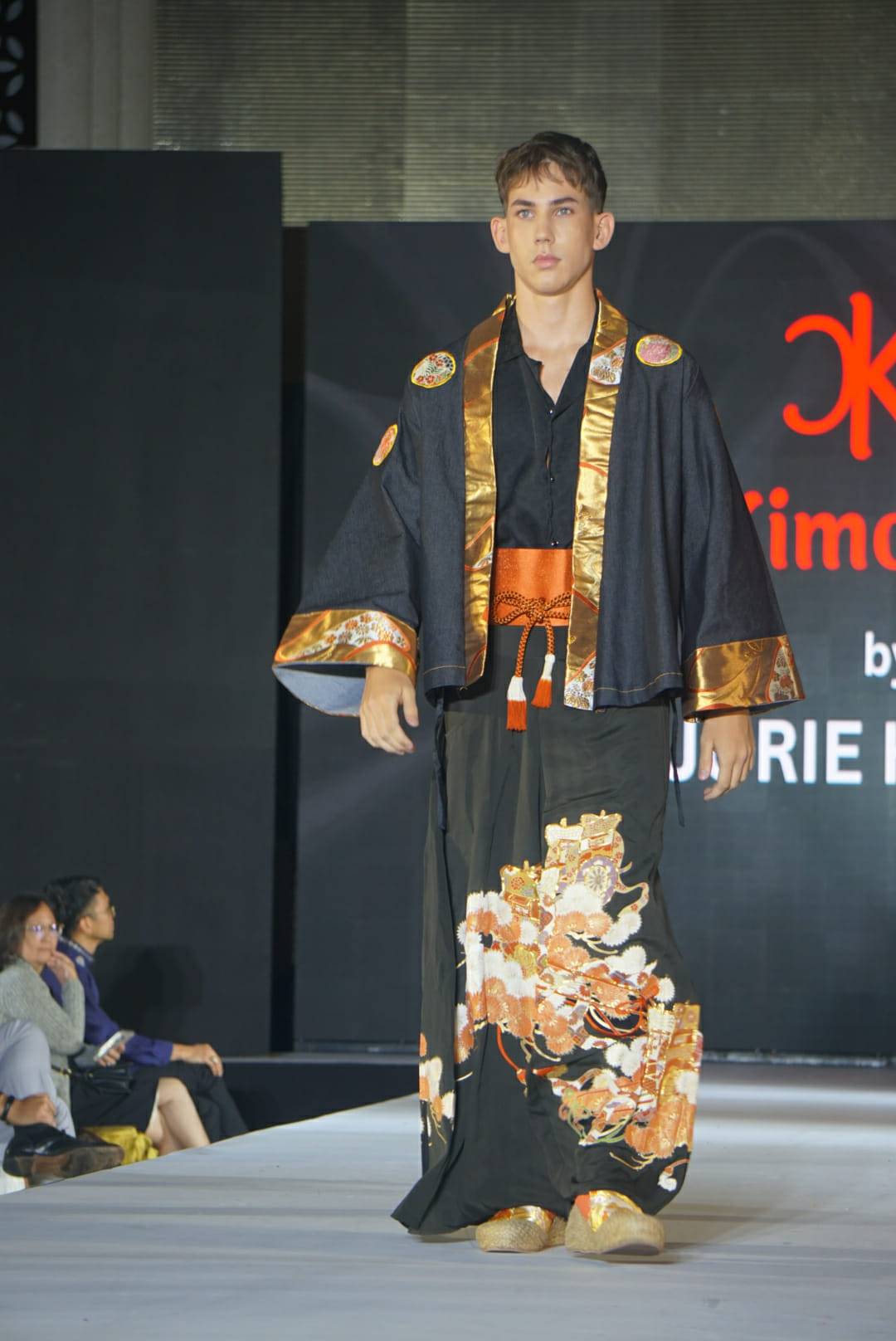
A piece in the ‘Modern Shogun’ collection.
“Inspired by the shogun as a symbol of leadership and discipline, this collection channels the commanding presence of the modern warrior within us all, transforming cultural heritage into a daring, modern expression,” explained Kobayashi in a Facebook Messenger exchange.
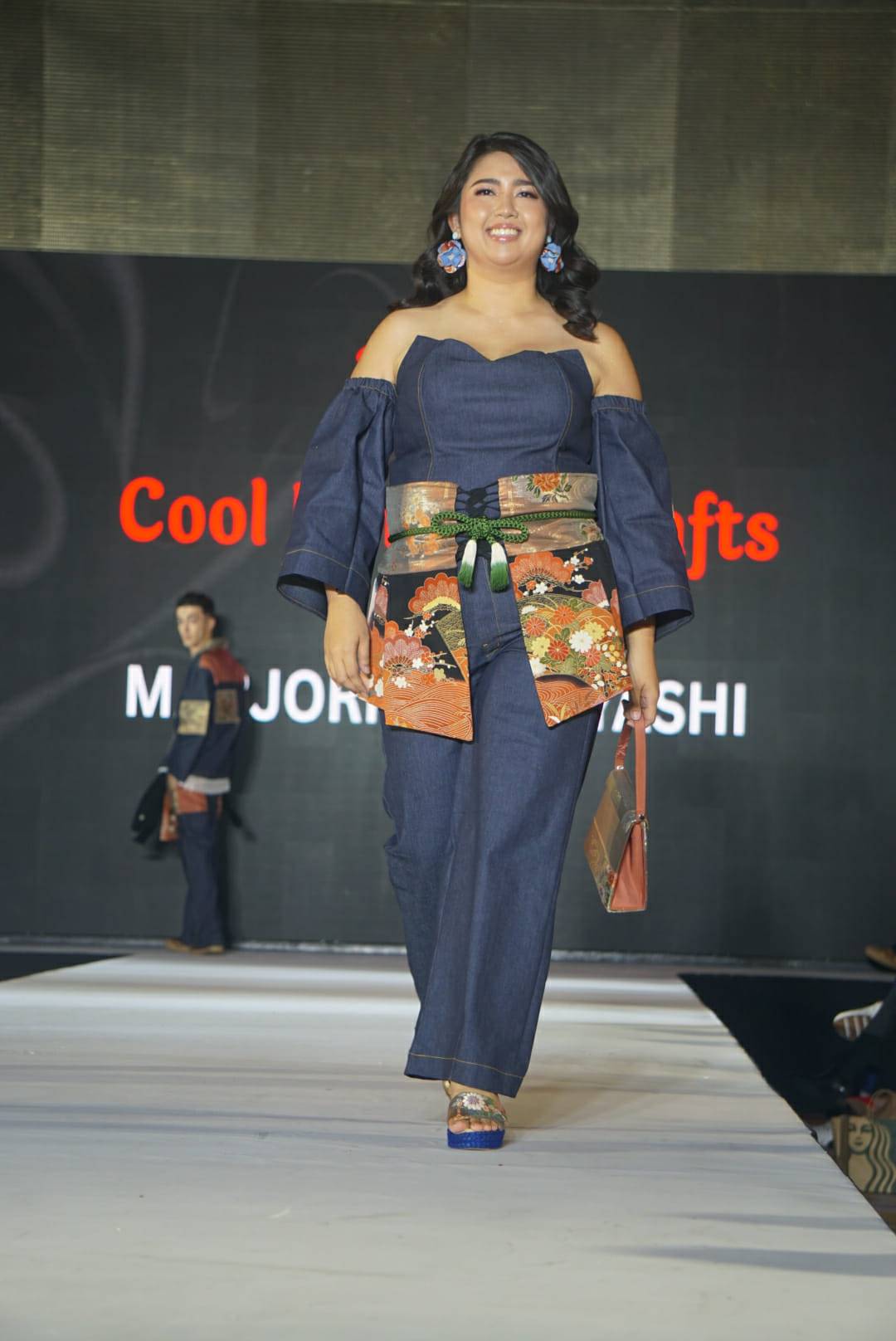
KIMONO-insPired denim ensemble.
Photographs courtesy of Ezel John
“Inclusive by design and rooted in sustainable fashion, the collection transcends boundaries. Each piece is created for all bodies, all identities, and all who lead with intention, where every piece stands as a tribute to resilience and reinvention,” she added.
At its core, Cool Kimono Crafts champions sustainability. Traditional kimonos, once worn, cherished, and set aside, are reborn as visionary fashion, brought to life through the shared craftsmanship of artisans in Japan and the Philippines. Each piece honors the past while deliberately moving toward a more responsible future.
Prices range from accessible statement accessories to premium, one-of-a-kind pieces, reflecting the rarity of materials and intricate handcraftsmanship involved.
The market includes culturally curious, globally minded individuals who value sustainability, craftsmanship, and individuality. They are professionals, creatives, cultural advocates, and collectors who prefer meaning over mass production.
Denim as armor
The dominant looks of the “Modern Shogun” collection commanded attention through powerful kimono silhouettes anchored by structured obi elements. Vivid hues of red, gold, and blue take center stage, which are colors long associated with strength, honor, and authority — and are boldly fused with denim to create a striking balance between tradition and modern edge.
Denim is fused with upcycled kimono and obi in the “Modern Shogun” collection as a symbol of modern resilience. Historically rooted in labor and durability, denim mirrors the function of shogun armor — reinforcing strength, sustainability, and the spirit of the modern warrior. Fused with kimono and obi, it sharpens the silhouette, adding structure and edge to the fluidity of traditional fabrics. It bridges heritage and modern life, making the collection inclusive, wearable, and grounded in the present.
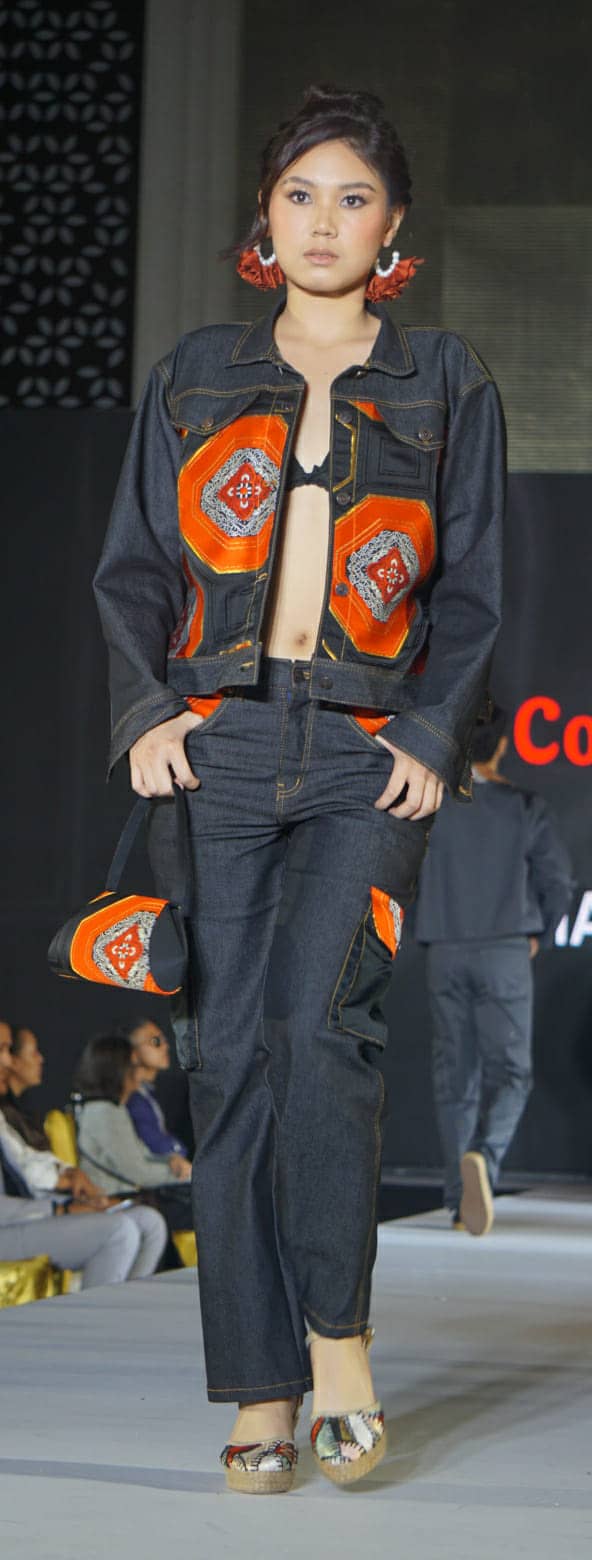
DENIM mirrors the function of shogun armor.
Every look embodies intentional craftsmanship, cultural heritage, and responsible innovation, proving that heritage, sustainability and inner strength can move together on one runway.
Rooted in shared craftsmanship, their process reflects the brand’s commitment to nurturing Filipino creativity, artistry and innovation, with the vision of bringing Philippine-made, culturally driven design to the global stage.
“My designs span custom kimono gowns, suits, coats, and ready-to-wear pieces, complemented by kimono accessories such as bags, earrings, sandals and shoes — all rooted in sustainable design and cultural fusion,” Kobayashi said.
Kimono fashion for all
A large part of the work of Kobayashi, a teacher by profession, involves teaching the importance of taking action toward the United Nations Sustainable Development Goals (SDGs). As such, she reflected on her own role — asking herself what she could do, even in small and practical ways, to contribute to these global goals.
That reflection became a pivotal point, as Cool Kimono Crafts was born from that very question.
“My sustainable fashion journey began in June 2021, during Covid-19 pandemic, when mask-wearing became a global necessity,” she related. “While masks were essential for public health, I became increasingly concerned about the unintended environmental cost, particularly the surge in disposable mask waste polluting landfills and oceans.”
She shared that Cool Kimono Crafts pioneered “Kimono Fashion for All,” an advocacy that champions sustainable and inclusive fashion while celebrating diversity across all ages and backgrounds. Through this initiative, vintage Japanese kimonos are thoughtfully reimagined into modern, culturally fused pieces designed for everybody, redefining how heritage textiles are worn today.
Dressed in upcycled kimono creations, the brand’s models at Manila International Fashion Week were of varying ages and life experiences, many of whom were walking in a fashion show for the very first time. This featured real people confidently expressing their individuality, reinforcing the idea that fashion is most powerful when it is authentic and accessible.
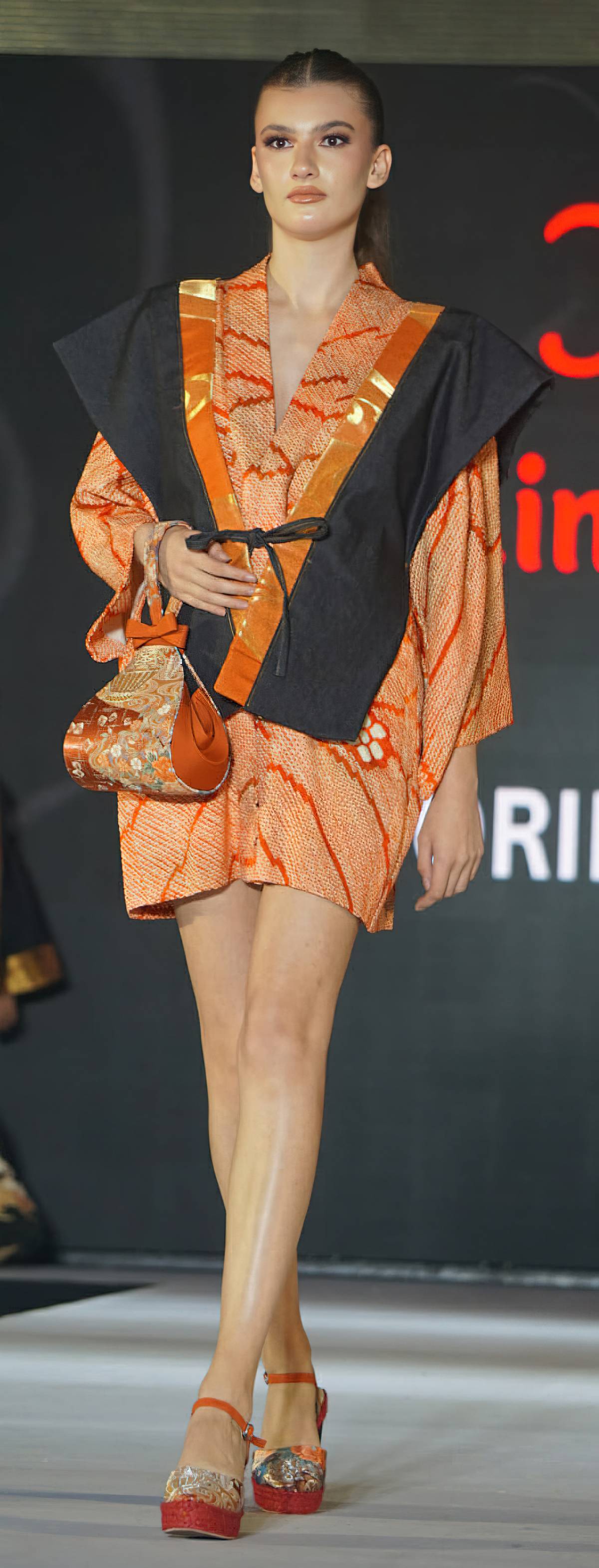
AN upcycled kimono creation.
“It is priceless when we see our clients feeling special and unique as they wear their own transformed kimono clothing and accessories — just like how each kimono is only one in the world, each item we make is only one as well, so we want our clients to feel how special and unique they are and that they are part of embracing sustainable fashion as well as they are wearing Japanese culture and arts infused to our Filipino culture,” Kobayashi remarked.
Showcasing at fashion capitals
Before living in Japan, Kobayashi worked as a civil servant at national government agencies such as the Department of Human Settlements and Urban Settlement and the Development Academy of the Philippines. She finished with BS Development Communication and Master in Development Management and Governance degrees at the University of the Philippines Los Baños, studied for a PhD in International Development at the Graduate School of International Development at Nagoya University and worked as researcher at Ritsumeikan University in Osaka. She is currently with the Nagoya University of Foreign Studies, teaching English, the SDGs, and local governance.
As a fashion designer, the Calamba-born and Nagoya-based creative has showcased her work in Manila, New York and London.
“These global platforms have been transformative and deeply affirming of my design identity, allowing my work to engage with diverse audiences and fashion communities,” Kobayashi declared. “These international showcases will allow me to further develop my design language while staying true to my advocacy for sustainable, inclusive fashion — presenting collections that honor tradition while evolving it for a global audience.”
She holds up hope that the local fashion industry continues to evolve with a strong commitment to sustainability, respect for artistry and craftsmanship, and creative integrity.
“I envision an ecosystem where Filipino designers are genuinely supported, collaboration is encouraged, and mutual respect fuels innovation. A fashion industry rooted in purpose, ethics, and shared growth will allow Filipino creativity to thrive on both local and global stages,” she said.
“I’m grateful to have received several invitations to showcase my designs in upcoming shows. Moving forward, my focus will be on deeper explorations of kimono-based clothing and accessories,” shared Kobayashi, “with an emphasis on cross-cultural silhouettes that continue to bridge Japanese and Filipino heritage.”
Cool Kimono Crafts pieces are sold through curated bazaars, pop-ups, select exhibitions, and direct orders from their website (www.coolkimonocrafts.com) and Facebook page (www.facebook.com/coolkimonocrafts) and Instagram account (www.instagram.com/coolkimonocrafts).