
When order arrives late
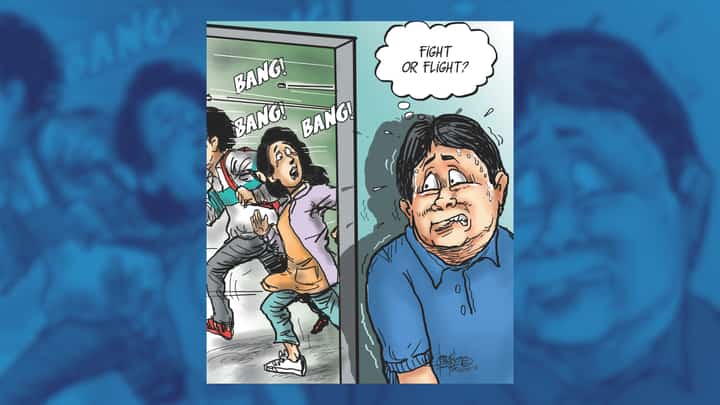
Personal safety and the safety of loved ones depend on citizens understanding fight-or-flight choices before they are forced to make them.

In old Philippine action movies, there is a familiar rhythm. The camera surveys a town already wrecked, smoke still curling and only then do we hear the sirens. The police rush in after the villains had vanished and a lone vigilante (think Fernando Poe Jr. or Lito Lapid) had already done what the system could not. It is pulp, but it carries a folk truth. When violence moves fast, help often comes after the damage is done.
The most recent reminder came from Taipei last week when a smoke and knife attack unfolded near major transit and shopping areas. The assailant moved quickly, sowed confusion, killed several people, injured others and triggered a frantic chase before the threat ended. In a city famed for everyday order, the shocker was that the police response could not be instantaneous when the attacker chooses the time and place.
This imbalance between speed and structure repeats across mass killings later judged to have suffered from slow or indecisive responses. In Uvalde, Texas, a gunman killed 19 children and two teachers while officers waited outside, misread the situation and lost critical time.
In Nova Scotia, a rampage stretched across hours and geography. Public warnings lagged, coordination faltered and lives were lost before the response machinery caught up. These cases and so many others show how government organizations struggle when chaos compresses decision making into seconds.
The popular fix is to add numbers: more police, more patrols. Staffing matters for everyday safety, but it does not change the basic problem. Criminals need moments, while lethargic institutions need minutes. Even in places with dense policing, the nearest unit may be blocks away, stuck in traffic, or working with partial information. In those first moments, the first responder is rarely someone in uniform.
Sydney offered a stark example during a public attack at Bondi Beach this month. Before police could decisively engage, civilians had confronted the threat. Bystanders rushed toward danger, wrested a weapon away, shouted warnings and drew attention to themselves so others could escape.
Some paid with their lives. Their actions were uncoordinated and untrained, yet they happened in the only window that mattered. Proximity, not authority, defined who acted first.
This is why police to population ratios offer limited comfort during active mass killings. A higher ratio can deter some crimes and speed up routine response, but it cannot guarantee favorable outcomes when violence erupts without warning. Geography, congestion, communication gaps and hesitation intervene everywhere. No benchmark abolishes those limitations.
Nope, we are not making a case against better policing. Who would? Clearer command protocols, realistic active threat training, faster medical integration and honest accountability all matter. Prevention and intelligence matter. Public warning systems that move at the speed of the threat matter.
Still, prudence requires shedding the myth that police forces can generally be expected to stop an active incident before it turns people into homicide statistics. What fills the gap is not vigilantism or fantasies of heroism, but preparation. Personal safety and the safety of loved ones depend on citizens understanding fight-or-flight choices before they are forced to make them.
That means situational awareness without paranoia. It means casually noting exits, making family meet up plans and knowing when to run, where to hide and how to move decisively away from danger. If escape is blocked, it means understanding basic last resort actions to create a chance to break contact. It also means first aid literacy, because bleeding control and minutes matter as much as courage.
So when we say that order arrives late, we do not mean a restaurant order missing its cue. We mean order as in law, authority and rescue, the kind that decides who lives and who does not.
In real life, sirens often come after the first few critical minutes have passed. Survival in those minutes belong to those ready to choose quickly, move intelligently and get out alive, even if that means choosing to fight.