




No pork? Guess again


Text size
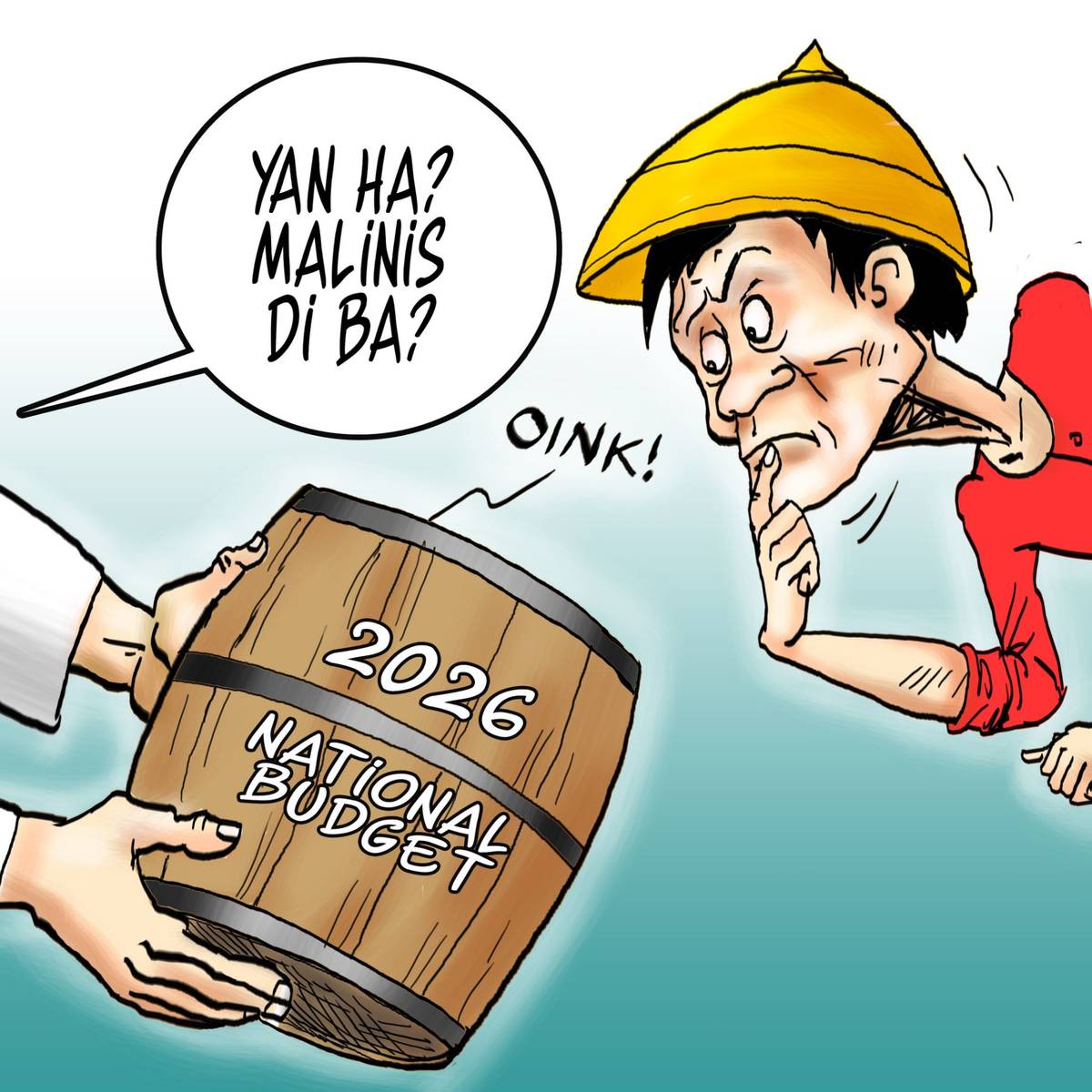
The controversy surrounding the 2026 General Appropriations Bill (GAB) reflects the great divide between government assurances of fiscal reform and the public distrust amid the persistent allegations of embedded corruption in pork barrel projects.
The pork barrel refers to discretionary funds allocated to legislators for local projects, often criticized for enabling patronage, kickbacks, and inefficiency.
The abuse gained notoriety with the Priority Development Assistance Fund (PDAF), which was declared unconstitutional by the Supreme Court in 2013 following a massive scam involving billions in misappropriated funds.
From thereon, the pork has merely shape-shifted into subtler forms, such as unprogrammed appropriations (UA), congressional “allocables” for infrastructure, and lump-sum allocations in various agencies, said a budget expert who sidled up to Nosy Tarsee.
The 2026 national budget, totaling P6.352 trillion, is touted by Congress as a “transparent General Appropriations Act” focused on key sectors like education, health and agriculture.
Congress leaders vehemently denied any pork insertions, calling such claims “impossible “ during a press briefing, emphasizing that the Bicameral Conference Committee (Bicam) deliberations were livestreamed for scrutiny by the public.
Budget watchdogs insist these assurances are mere “performative transparency” masking a deeply entrenched system.
Delving deeper, the bicam process itself has come under fire. Held this month, the closed-door negotiations between House and Senate representatives reconciled differences in their respective versions of the budget bill.
While livestreamed, the real manipulations occurred off-camera or through opaque amendments.
Progressive blocs documented specific increases they labeled as pork, such as how funding for farm-to-market roads, starting at P16 billion in the National Expenditure Program (NEP), doubled to P32.6 billion in the House version and edged up to P33 billion in the bicam report.
Similarly, the Department of Health’s medical assistance program was increased to P51 billion, entrenching a patronage system in which lawmakers direct aid to constituents for electoral gain.
The Makabayan bloc provided even more granular evidence, estimating that at least P695.78 billion in total pork was split between presidential (P281 billion) and legislative (P415 billion) shares.
Presidential pork includes P243 billion in the UA, which critics call a “dangerous backdoor” for realignments without congressional oversight, violating the constitutional mandate on transparent supplemental appropriations.
These funds, often tied to ghost or overpriced infrastructure, ballooned under the incumbent administration despite initial NEP figures of P158 billion, only to be inflated during the bicam when public attention waned.
Legislative pork was manifested in P174.6 billion for district engineering offices, equating to roughly P230 million per congressman and P3.2 billion per senator for “pet projects.”
Additional allocations included P32.6 billion for farm-to-market roads, P35.1 billion for school buildings, P20.2 billion for health facilities, and P130.4 billion in “ayuda” programs, all subject to lawmakers’ discretion, fostering corruption through contractor favoritism and kickbacks.
Confidential and Intelligence Funds added another layer, with P10.9 billion allocated, including P4.5 billion to the Office of the President, often unaccounted for and linked to political slush funds.
Hindu immigrants abroad celebrate in either August or September Ganesh Chaturthi, a 10-day festival commemorating the…
President Ferdinand Marcos Jr. on Tuesday called for women’s greater representation in leadership across Southeast…
The Senate impeachment court on Tuesday denied the prosecution’s bid to compel Vice President Sara Duterte to confirm…
