
LGUs adopt real-time monitoring to curb air pollution

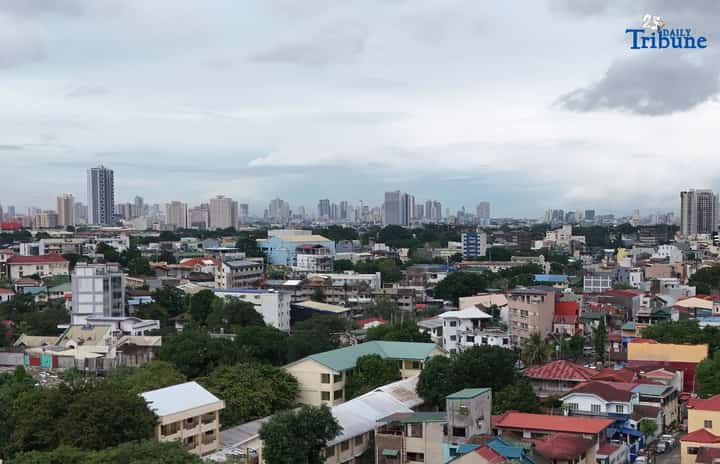
METRO Manila skies seen from Quezon City on Saturday, 6 September 2025, ahead of International Day of Clean Air for Blue Skies on Sunday, 7 September, an annual UN-designated event to raise awareness and encourage action against air pollution.
Photo by Analy Labor for Daily Tribune
Long-term exposure to polluted air is linked to increased risks of stroke, chronic obstructive pulmonary disease (COPD), lung cancer, pneumonia, and heart disease, among others, according to the World Health Organization (WHO).
The Center for Research on Energy and Clean Air estimates that air pollution causes more than 66,000 deaths in the Philippines each year.
In response, more local government units (LGUs) are leveraging real-time monitoring to strengthen local response and policy action.
Quezon City manages a network of 40 monitoring stations across schools, hospitals, and major roads. Similarly, Makati uses real-time sensors to identify pollution hotspots and issue timely health advisories, even during volcanic smog events.
Last year, Mandaluyong installed six air quality sensors through Project MENCHIE, or Mandaluyong Enhanced Monitoring of Natural Hazards and Climate for Household Information and Education.
Mandaluyong also hosted sensors under Breathe Metro Manila (BMM), a coalition of technology, academic, and research institutions working to improve responses to respiratory illnesses and environmental hazards.
“We needed our own data — not assumptions — to respond to rising respiratory illnesses and environmental events like volcanic eruptions and smog,” Mandaluyong City Disaster Risk Reduction and Management Office Chief Roald Arcangel said.
“Real-time monitoring became the trigger for faster, smarter action for us,” he added.
Arcangel noted that while Mandaluyong’s air quality usually remains within acceptable levels, pollution increases during rush hours and in densely populated areas such as Addition Hills.
“Most of the time, levels are normal. But during peak traffic, they rise sharply, especially in high-density areas,” he explained.
“By comparing sensor readings across locations, we see clear hyperlocal variations that guide our response,” he added.
Real-time monitoring has also influenced policy. According to Mandaluyong Sangguniang Panlungsod Ordinance No. 1030, S-2025, air quality data now serves as a trigger for school cancellations, demonstrating how monitoring results lead to practical public safety actions.
Collaboration key to cleaner air
BMM has praised LGUs for implementing real-time monitoring but stressed the need for more cities to join the expanding network of data-driven efforts.
“Pollution doesn’t stop at city borders. Sharing data across LGUs is essential so communities can work together — not in isolation,” said Engr. Ethel Garcia, Clarity Movement regional account manager for Southeast Asia and Oceania and BMM coalition member.
Garcia emphasized that partnerships between LGUs and private organizations are essential for raising awareness and challenging the notion that air pollution is “normal.”
“With strong LGU leadership and cross-sector collaboration, we can protect public health and create cleaner, more livable cities for all Filipinos,” she said.
BMM is now open to collaborating with corporate groups, city governments, and NGOs to expand the network, aiming to provide more detailed, actionable data to guide air-quality interventions across Metro Manila.