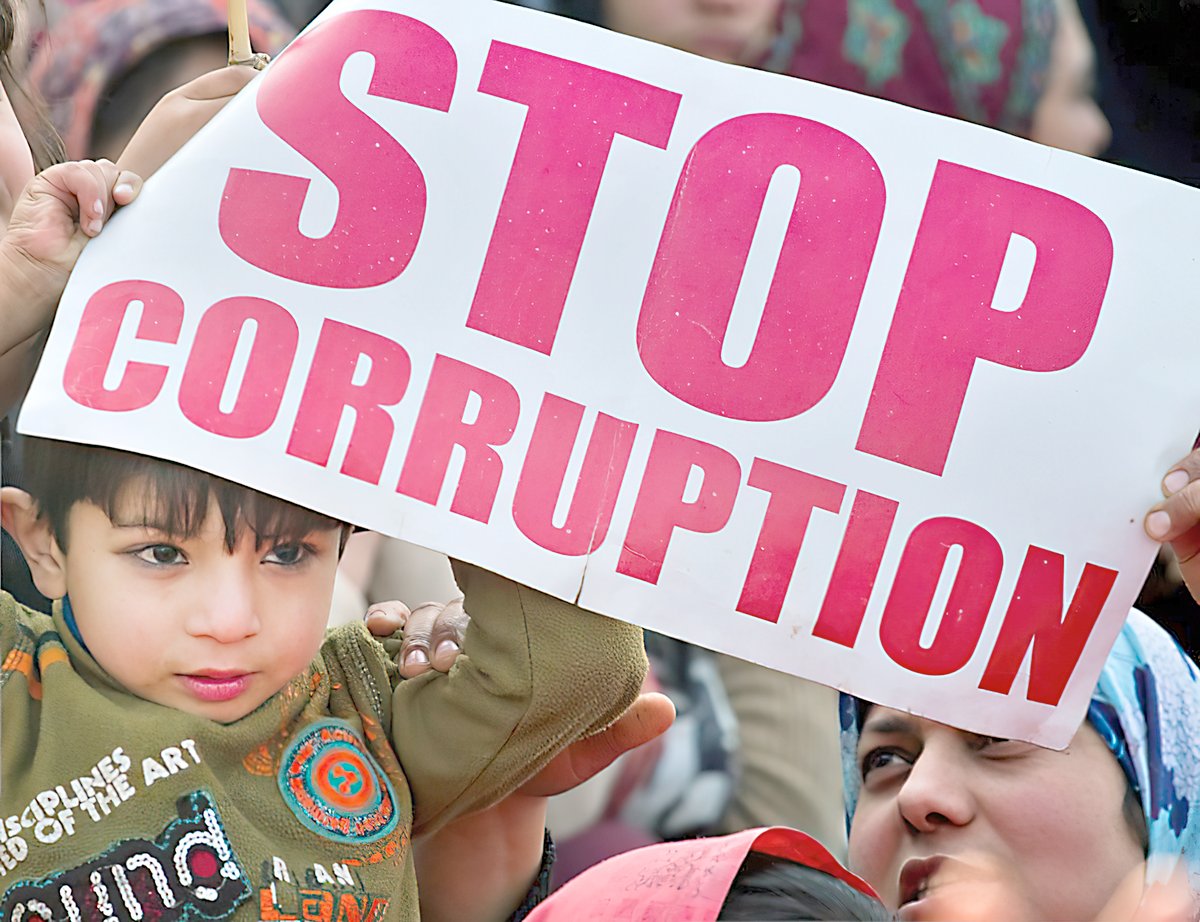
Various business organizations and civil society groups have joined forces to submit a unified proposal in combating corruption, particularly the massive flood control scandal and long-standing problems in government procurement.
In a joint statement, the Institute of Corporate Directors, Institute for Solidarity in Asia, Justice Reform Initiative, and the Management Association of the Philippines said the flood control mess echoes earlier controversies — from the ZTE broadband deal and the Napoles pork barrel scam to the Pharmally procurement case — as well as recurring irregularities in large-scale infrastructure projects.
Together, these cases reveal a troubling pattern: corruption flourishes where political patronage and dynastic influence intersect with opaque procurement processes, weak oversight, and poor accountability in the use of public funds, the groups said.
Similar challenges
“Other countries have confronted similar challenges — and many have succeeded in reducing corruption by enforcing transparency in major projects, responding quickly to red flags, and clearly assigning institutional responsibility. The Philippines can — and must — do the same,” the groups noted.
“However, statements of concern are not enough. Now is the time to act. Business, professional, and civil society groups should demand urgent reforms to be implemented now to end the grim consequences of corruption, whose magnitude has shocked the country. Decisive action can still be taken using existing laws, particularly the New Government Procurement Act (Republic Act 12009),” they added.
Time-bound reforms, starting
1 January 2026
To safeguard public resources — especially in major infrastructure projects worth P50 million and above, aligned with the capabilities of the Modernized Philippine Government Electronic Procurement System (mPhilGEPS) and the expanded mandate of the Government Procurement Policy Board (GPPB) — the groups propose time-bound reforms, to begin on 1 January 2026.
These include full transparency across the project life cycle, urging that all disbursements and variations to contracts should be made publicly accessible online and linked to mPhilGEPS.
The groups said the suggestion, to start on 31 March 2026, is modeled in Chile and the United Kingdom, which proved that transparency is a proven deterrent to corruption.
Also, the groups suggest disclosure of beneficial ownership and financial red-flagging that would interconnect the Securities and Exchange Commission and the Construction Development Authority beneficial ownership data and BIR tax records with mPhilGEPS to enable real-time verification.
Rapid response to red flags
The groups are also proposing a rapid response to red flags, mimicking Singapore and Hong Kong, mandating the initiation of joint audits by the Commission on Audit, Department of Budget and Management, Department of Public Works and Highways, and the Anti-Money Laundering Council within 90 days when warning signs appear — and before funds are dissipated.
Lastly, the groups are urging the government to have a public red flag dashboard, which will display delays, cost overruns, and repeated contract winners for every infrastructure project with secure whistleblower channels.
“The Office of the Ombudsman must remain focused on independent investigation, prosecution, and whistleblower protection. The Independent Commission for Infrastructure (ICI), or a comparable oversight mechanism, should lead compliance monitoring, transparency enforcement, and early-warning systems,” the groups reiterated.
The courts, particularly the Sandiganbayan and designated trial courts, must prioritize the swift resolution of major corruption cases; delays perpetuate impunity, signal tolerance for corruption, and erode public trust in the rule of law.
The Government Procurement Policy Board, chaired by the DBM Secretary, must ensure full implementation of RA 12009, including interconnection among the Bureau of Treasury, the Bureau of Internal Revenue, the Department of Trade and Industry, SEC, COA and LGUs, and activation of the Bureau of the Treasury Management System to track General Appropriations Act disbursements to suppliers,” the group said.