
Slow fashion revolution: With tips from stars
‘There’s that and also, be you! Because if you try to copy someone else’s style, if I try to copy my ate’s style, it might not work on me.’


In fashion, the holidays only mean one thing: sale season!
But do we really need new clothes every Christmas or special occasion?
Studies, according to news sites pulsenigeria247 and Sociaty, show that a woman, on average, owns 95 pieces of clothing, but routinely only wears around 12. Most pieces are hidden away in the closet.
A 2022 report by German sustainability think tank Hot or Cool Institute showed that a “sustainable” wardrobe must only have 74 garments, with new pieces of clothing only limited to an average of five per year.
But in today’s era of fast fashion, the average person, according to United Nations, buys 60 percent more clothing than 15 years ago, “while each item is kept for only half as long.”
Environmental organization Earth.org said fashion is responsible for a quarter of the pollution of the world’s waters and a third of microplastic or toxic substances discharges that are harmful for fish and humans. If, however, every person commits to the 74-garment recommendation, then Hot or Cool Institute said that the planet will be able to meet the target of the Paris agreement that aims to keep global temperature rise at below 1.5 Celsius — a 50-percent reduction in billions of tons of carbon emissions, said global consultancy firm McKinsey & Company.
The box office dominance of superhero movies like “Avengers: Endgame” is proof that many of us aspire to become superheroes. We might not have superpowers, but through pro-active measures starting from our closets, we can save the world — one conscious clothing at a time. Here’s how:
Make styling, not shopping, your therapy
Use and reuse your clothes in rotation by preparing your wardrobe in advance. For example, every Saturday or Sunday, or any day or time that I want to de-stress or clear my head, I look at my closet and experiment on mixing and matching just for fun.
Then I segregate these clothes and accessories that I mixed and matched, one hanger per combination for example, then put all those combinations in a spot in my closet where I could easily take them out as soon as the need arises. It’s very helpful especially for days when I can’t think of anything to wear or when an “emergency” event comes and I have to be dressed asap. That’s why I prepare looks ranging from casual to work meetings, cocktails and travel.
Don’t be ‘delulu;’ accept and let go
Be honest to yourself: you’re a “delulu” (delusional) to believe that you’d return to that old shape and size you had! Yes, you might get thinner, but by the time you do, you might no longer be interested to use those clothes you kept because they might be out of fashion or no longer suitable to your taste. And then, you keep them again and forget them until they accumulate!
According to the American College of Allergy, Asthma and Immunology, a closet filled with clothes rarely or never used poses various health problems, ranging from allergies (sneezing, coughing, stuffy or runny nose; throat irritation, chest tightness, shortness of breath and eczema flare-ups) due to dust and parts and droppings of dust mites; and/or exposure to harmful chemicals and toxins from clothes like phthalates, microplastics and heavy metals like lead linked to serious long-term health issues like cancers, reproductive problems and cardiovascular disease.
So if something is already off — if those pants make you look pregnant or the big print in that shirt falls on the tummy, and again makes you look bloated, if it can’t be altered to suit you, your profession, age, personality and body type, then give it away — even if you haven’t worn it, it’s your favorite or it’s expensive or designer stuff. If it’s an investment piece, auction it off and give the proceeds to charity. As Marie Kondo said, learn to detach and let these clothes “spark joy” to others that would truly use them and not stack them in their closets.
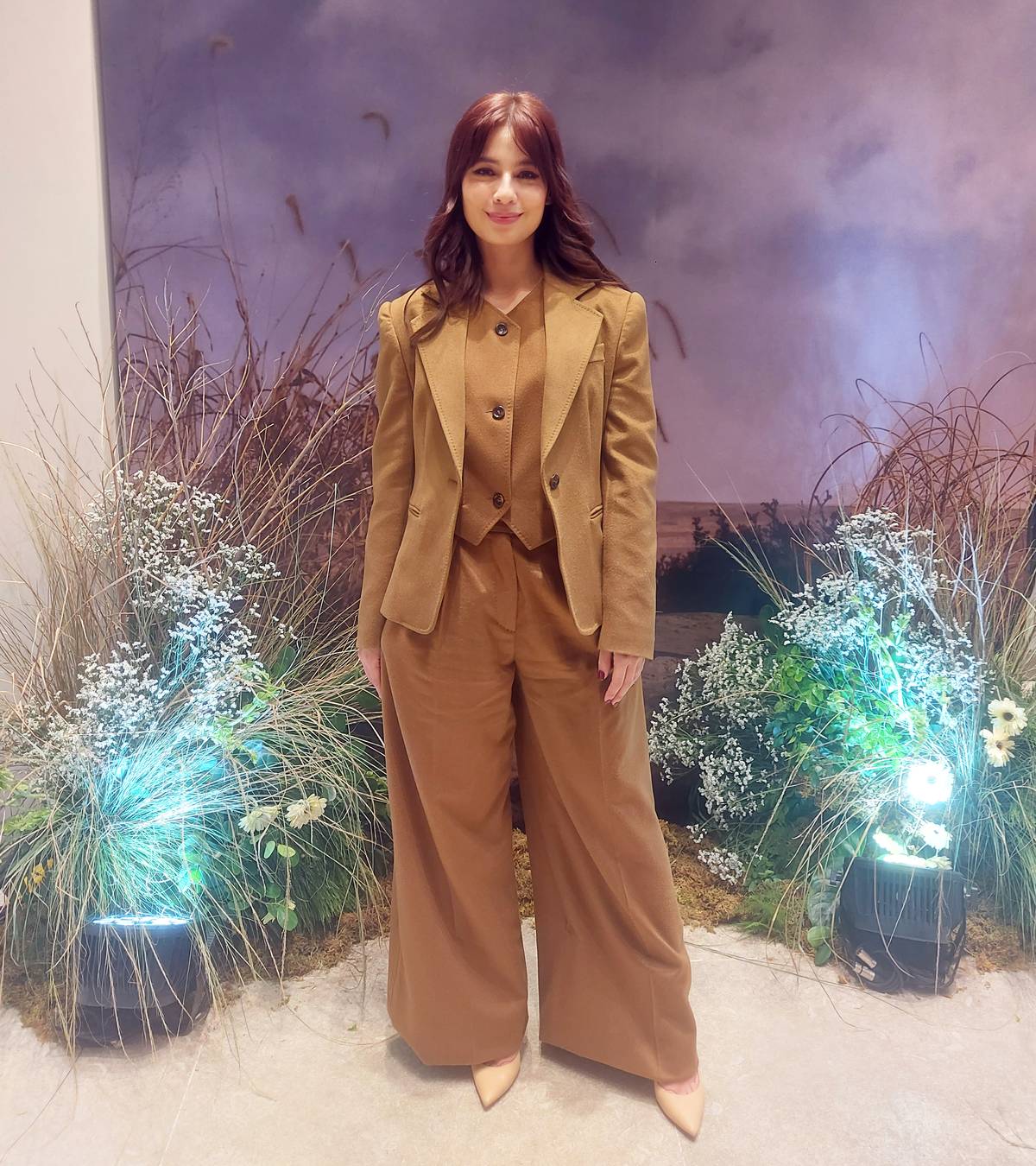
JASMINE Curtis-Smith
PHOTOGRAPHS BY DENI AFINIDAD-BERNARDO
Jasmine Curtis-Smith: Borrow before you buy
Although a celebrity, Jasmine Curtis-Smith admitted that she has to invest in clothes a lot.
“Of course, we have to level-up and also, it’s part of the job!” she said when I pointed out that she and her sister Anne Curtis are now considered as fashion icons.
In spite being a star, however, Jasmine repeats her clothes often and borrows first from her ate Anne before she buys something new.
“She’s my biggest inspiration in fashion,” Jasmine said of Anne. “S’ya, hindi s’ya nakakahiram sa’kin ng damit (She couldn’t borrow clothes from me), but of course, I borrow everything from her!” she told me at an exclusive interview during MaxMara’s recent fall-winter 2025 collection presentation in Makati City.
According to her, “I just couldn’t borrow her shoes anymore because I’m a size bigger, but usually ‘pag may nawawalang (if there is a missing) piece of garment sa bahay ni ate (in Anne’s house), ako ‘yung hinahanapan, ako ‘yun! (I’m the one being blamed, I am that!).”
“Kasi alam nilang ako lang ang kukuha nu’n. Ako lang ang manghihiram nu’n na hindi magbabalik (Because they know I’m the only one who gets her clothes and borrows them and no longer returns them),” she professed with a laugh.
“Actually, I borrow more of the basics from her — mga maong na (denim) shorts, plain T-shirts, hoodies, things I feel like hindi n’ya mapapansin na nawawala (she wouldn’t notice were missing)… pero after mga six months, hinahanap na ‘yan bigla sa’kin like, ‘Hiniram mo ba ‘yun? Na sa’yo ba ‘yun?’ (But after six months, she would ask me if I borrowed it or if it was with me). And I’m like, ‘No!’ And then one month later, binabalik ko na sa (I return it to the) closet!” Jasmine shared with more laughter.
She assured Anne though that she returns the clothes without damage and more importantly, already washed.
Apart from garments, the sisters always check out each other’s OOTDs (outfits of the day) and exchange style tips and recommendations.
“Which item to post first that it complements the brand or the designer, things like that. Ano lang kami ni ate, soundboard ng isa’t isa (We are each other’s soundboard).”
Of all the style tips she got from Anne, here’s at the top of her head: “When it comes to fashion, if you don’t feel the look, if there are doubts about it, look for something else right away because you’d only feel uncomfortable throughout your event, throughout the day, and also, you can’t flaunt your outfit because someone designed it to look a certain way and you’re not going to rock it and feel your best in it.”
“There’s that and also, be you! Because if you try to copy someone else’s style, if I try to copy my ate’s style, it might not work on me. I might not carry it the same way or things like that, so keep it at your own style. Don’t be pressured by trends or even your fashion icon,” she added.
Referring to the caramel MaxMara ensemble she was wearing at the launch, Jasmine said as a shout-out to Anne: “Ate, if you still don’t have a gift for me, I really love this outfit!”
“But other than that, I just would love to have a nice Christmas with my family, together with my mom and brother, for Christmas.”
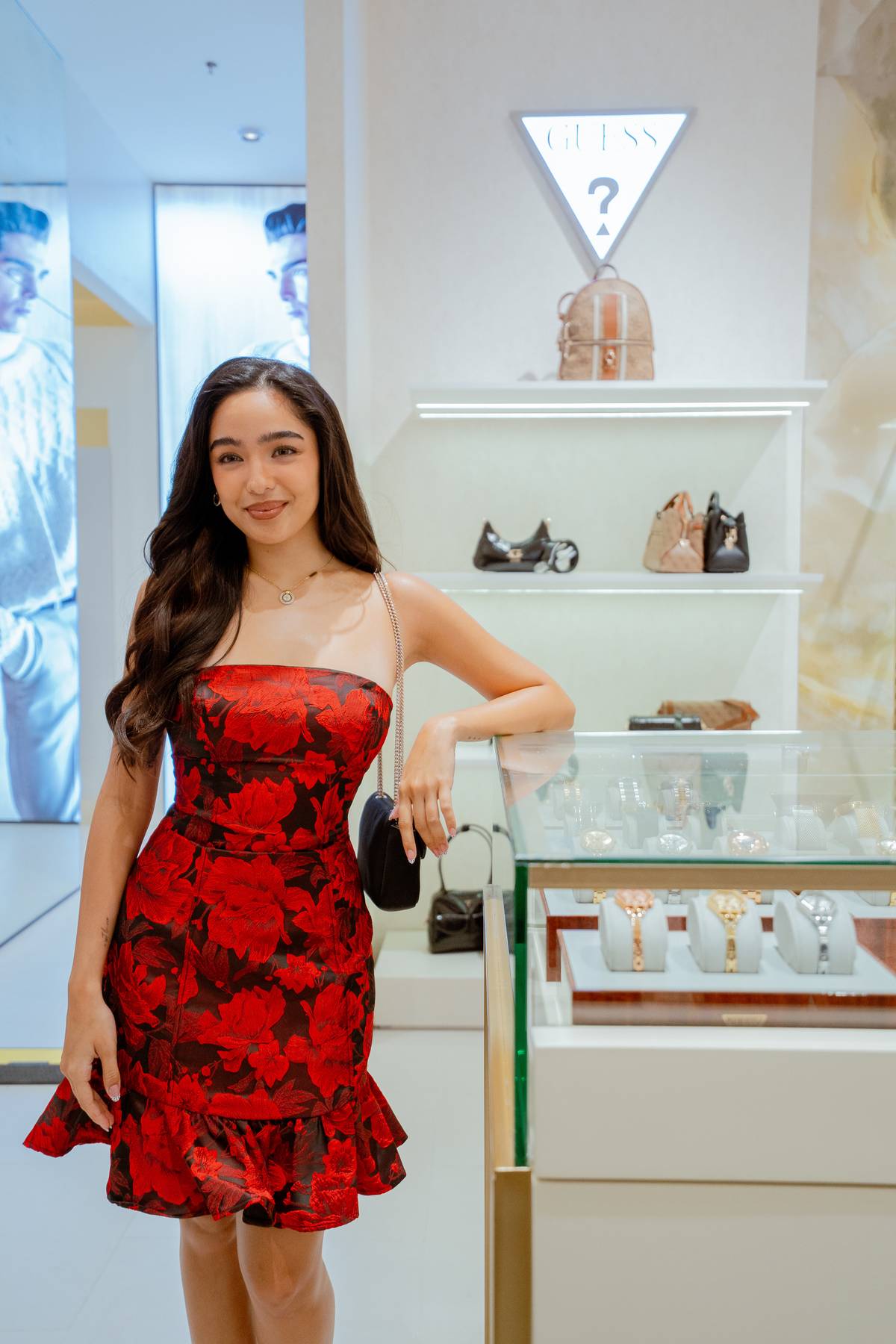
ANDREA Brillantes
PHOTOGRAPH COURTESY OF GUESS
Andrea Brillantes: Stick to your list
Mall-bound? Leave your credit card at home and don’t bring a lot of money so that even if you get tempted by sales and promos, you will be able to make do with only necessities.
“Dapat talaga naka-lista lahat ng mga bibilhin natin (We should really list down what we have to buy),” Andrea told DAILY TRIBUNE at her recent launch as Guess’ first ever Filipina brand ambassador.
It also helps, she said, to always bring someone along who would play as devil’s advocate. “I think kapag nag-sha-shopping kasi ako ‘pag Pasko, parati ko kasing kasama ang mommy ko. Kasi s’ya ‘yung mas magaling mag-budget (Whenever I go Christmas shopping, I always bring my mom with me because she’s better at budgeting).”
“I guess, we should really know our friends and loved ones more so that when we have to give them something, we really know that they would really use your gift,” she advised. “’Pag nagbibigay kasi ako, hindi ko gusto na nagyayabang na ito ‘yung pinaka-uso ngayon o pinakamahal. Sa totoo lang, mas naa-appreciate ng tao ‘yung thought (Whenever I give something, I don’t like to brag that it is the trendiest or the most expensive. Honestly, people appreciate the thought more than the gift). It’s always the thought that matters when it comes to gift-giving.”
“So ayun, ‘wag na tayo magyabangan lalo na sa mga nangyayari ngayon. Ang mas mahalaga, magbigayan tayong lahat (Let’s no longer brag at each other, especially with what is happening today. What’s more important is that we’re generous toward each other),” she reminded everyone.

RUFFA Gutierrez
Ruffa Gutierrez: Practice light packing
Holiday traveling is among those that trigger shopping for new clothes. But through the years, actress and beauty queen Ruffa Gutierrez has been able to fight the urge to buy new outfits for her travel OOTDs.
“Back in the day, I used to bring a lot of suitcases with me. But now, I only bring two suitcases. I’ve learned how to mix and match. I just make sure that I have key pieces that I can wear again and again,” Ruffa told me in an exclusive interview at the recent launch of Italian fashion house MaxMara’s fall-winter 2025 collection in Makati City.
For winter traveling, Ruffa’s must-haves are turtlenecks and cherry-reds or burgundy as these colors are “classic and timeless.” “All the trench coats I love because I’m tall and these fit me perfectly,” she noted.
For winter dressing, she suggested, “Nothing loud, stick to the basics, something neutral, black, camel, cherry, and the other ‘in’ colors this season are army green and mocha mousse.”
As fashion advice for the younger generation of fashionistas, including her daughters Lorin and Venice, she said: “Enjoy dressing up because you’re only young once. You don’t need to dress up like an older lady or wear classic pieces. This is the time for you to enjoy your moment. Wear bright colors and anything that you feel during that moment. And then, as you get older, that’s when you stick to the timeless pieces.”
An investment piece, she said, is always a good Christmas gift. “You can never go wrong with a good bag because it appreciates in terms of the price and you can use it time and time again. Because a lot of the bags that I have, the styles would be gone and then they’ll resurrect a couple of decades later and you still have it on your closet. So, they’re vintage pieces that I think, is a very good investment.”
For those into shopping for clothes as Christmas gifts, Ruffa said: “My advice, depending on your budget especially this Christmas season, lahat po nagtitipid (everyone’s into saving), buy them something they really need. Something they can use time and time again. Something that when you open their closet, it’s there and you can use it for every season.”