
NMC condemns Chinese attack in Escoda Shoal

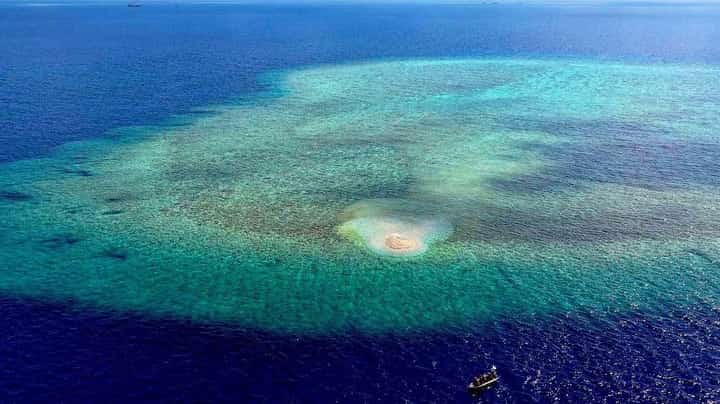
The National Maritime Council (NMC) on Monday condemned what it described as aggressive actions by Chinese vessels at Sabina Shoal, also known as Escoda Shoal, which left three Filipino fishermen injured and damaged their fishing boats.
NMC spokesperson Alexander Lopez said the 12 December incident marked a dangerous escalation compared to earlier encounters involving the Chinese Coast Guard (CCG).
“There have also been instances where the China Coast Guard used water cannons against our fishermen. However, those incidents were not at close range, and the water sprayed on our fishermen was more like a light shower,” Lopez said in Filipino during an interview with “Bagong Pilipinas Ngayon.”
He stressed that the latest incident was different in both proximity and intensity.
“What happened at Escoda was really close-range and a direct hit, which is why three of our fishermen were injured, and their fishing vessels were damaged. That is why we are concerne,d and we condemn this incident,” Lopez added.
The Philippine Coast Guard (PCG) earlier reported that around 20 Filipino fishing boats in the vicinity of Escoda Shoal were targeted by two CCG vessels and accompanying Chinese maritime militia ships.
The PCG said the Chinese vessels used high-pressure water cannons and conducted dangerous blocking maneuvers against the Filipino fishermen.
Two Filipino fishing boats suffered significant damage as a result of the water cannon blasts.
In a statement to the media last Saturday, the Chinese Embassy in Manila cited separate announcements from the Chinese People’s Liberation Army Southern Theater Command and the CCG, claiming they had taken “necessary measures” to expel Philippine aircraft and vessels that they alleged had illegally intruded into the airspace of Huangyan Dao (Scarborough Shoal) and the waters near Xianbin Jiao, which China calls Sabina Shoal.
The NMC, however, rejected China’s claims, maintaining that Chinese vessels have no legal basis to operate in the area.
“First and foremost, their presence at Escoda Shoal is illegal, and they have no legal basis under international law to carry out what they call ‘controlled measures,” Lopez said.
Escoda Shoal lies about 75 nautical miles, or roughly 140 kilometers, off the coast of Palawan.
The area is a coral reef formation with a central lagoon surrounded by shallow sections and forms part of the disputed waters of the West Philippine Sea. China refers to the feature as Xianbin Reef.