


Disastrous start
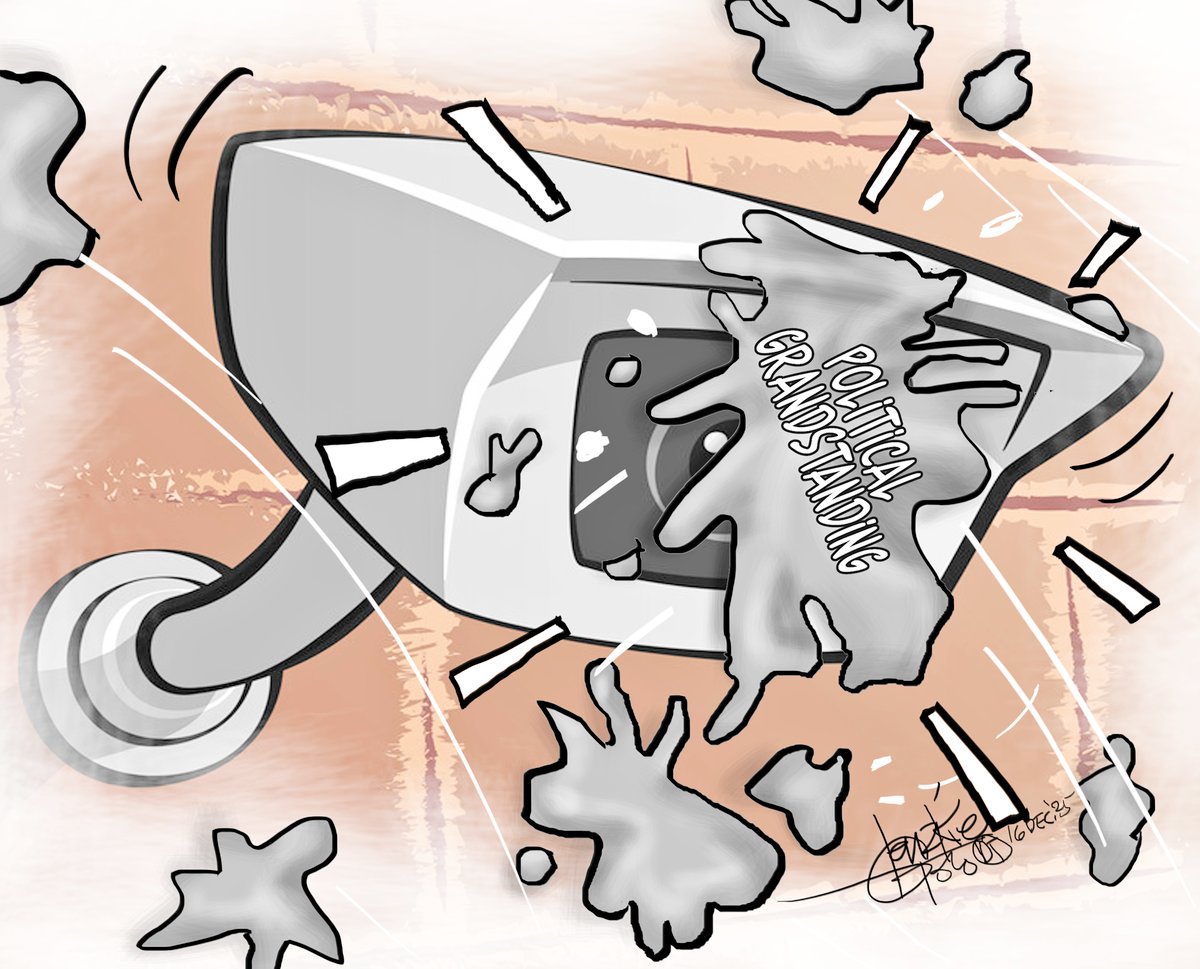
It was observed that one ill effect of airing the process or livestreaming is that it disrupts how it functions and delays proceedings, as its members use the opportunity to grandstand.

Text size

 Daily Tribune
It was observed that one ill effect of airing the process or livestreaming is that it disrupts how it functions and delays proceedings, as its members use the opportunity to grandstand.
The resourcefulness of our legislators is remarkable, as the shift to transparency in the Bicameral Conference Committee (Bicam) has been hijacked for political gain.
In essence, the bicam is the mechanism in the legislative process to reconcile the differences between the bills passed by the House of Representatives and the Senate.
Under Article VI, Section 26 of the Constitution, when versions of a bill diverge after the third reading, a conference committee should harmonize them before final enactment.
The Bicam on livestream was a response to the public demand for transparency following recent budget controversies in which legislators made pork barrel insertions to the 2025 General Appropriations Bill (GAB).
Davao City Representative Sid Ungab is one of the doubting Thomases about the trumpeted transparency initiative.
Ungab, a former head of the powerful House Appropriations Committee, sought a comparative matrix to illustrate the disparity between the third-reading versions approved by the House and the Senate.
He said the document is the proper starting point for any Bicam proceeding.
Instead, the deliberations became another investigation in aid of election. Thus, the discussion of topics seems to take longer than necessary.
It was observed that one ill effect of airing the process or livestreaming it is that it disrupts its functioning and delays proceedings, as members use the opportunity to grandstand.
Senator Imee Marcos’ pointed questions and attacks on the education budget, for instance, had already been settled at the committee level.
Despite the showmanship, much pork barrel remained. A budget watchdog noted that allocations to farm-to-market roads, for example, remain challenging to comprehend.
It gets passed on to the Department of Agriculture, diverting the agency from its core task of improving agriculture, which has been a drag on growth.
Agriculture has the weakest performance and is still burdened with having to allocate farm-to-market roads, the selection and approval process for which is unclear.
Ungab said a matrix comparing all disagreeing provisions that must be harmonized in the Bicam should be prepared and made available to members.
When no such matrix is presented, the purpose for the transparency is undermined, and the process becomes more susceptible to change.
The comparison ensures that reconciliations are grounded on the official texts debated and voted upon in plenary sessions, minimizing deviations that could be exploited for partisan purposes.
In practice, the third reading constitutes the final versions of the Senate and the House, making it the legitimate baseline.
Deviating from this has proven to be the source of the pork barrel. For instance, in the lead-up to the 2026 GAB Bicam, hearings were postponed to allow for the preparation of such comparisons, underscoring their operational necessity.
Analysts note that without a starting point, bicameral negotiations remain opaque, as evidenced by past “closed-door” deals that inflated budgets or added pork barrel items.
To bolster transparency, preparing and disseminating a matrix that compares all conflicting provisions is essential.
It will also aid Bicam members, the media, and the public to track harmonization.
Resolutions under the open Bicam framework explicitly require that such matrices be publicly available, along with comprehensive minutes of discussions.
For the 2026 budget, Senate leaders committed to producing the minutes, ensuring that discrepancies, such as the Senate’s reduction of unprogrammed funds from P243 billion to P174.5 billion, are clearly reconciled.
This matrix primarily serves as a safeguard, allowing stakeholders to verify that changes address only genuine conflicts and not hidden agendas, according to analysts.
Livestreaming deliberations, while a step forward, is insufficient without advance disclosure of amendments, proponents, and impacts in machine-readable formats to facilitate scrutiny.
Incomplete transparency enables corruption from planning to implementation.
Still, many budget watchdogs said at least the public can see the problems manifesting before their eyes.
All of those were hidden before.
