
67 traditions and practices newly inscribed in UNESCO intangible cultural heritage lists
The inscriptions affirm the shared responsibility of nations and communities to safeguard cultural knowledge that is passed on through memory, skill and everyday life.


From festivals and rituals to performing arts and cuisine, a total of 67 elements have been inscribed into the United Nations Educational, Scientific and Cultural Organization (UNESCO) Lists of Intangible Cultural Heritage (ICH) during the 20th session of its Intergovernmental Committee for the Safeguarding of the Intangible Cultural Heritage, held at the Red Fort in New Delhi, India, from 8 to 13 December.
During the meeting, which was the largest to date with over 1,400 participants, the 24 member states of the committee examined the 67 nominations — 11 for the List of Intangible Cultural Heritage in Need of Urgent Safeguarding; 53 for the Representative List of the Intangible Cultural Heritage of Humanity; and one for the Register of Good Safeguarding Practices of Intangible Cultural Heritage — submitted by 77 countries.
The practice of making asin tibuok, the artisanal sea salt of the Boholano of Bohol of the Philippines was inscribed onto the List of Intangible Cultural Heritage in Need of Urgent Safeguarding, which is for elements requiring “urgent measures to keep them alive.” Inscriptions on this list help “to mobilize international cooperation and assistance for stakeholders to undertake appropriate safeguarding measures.”
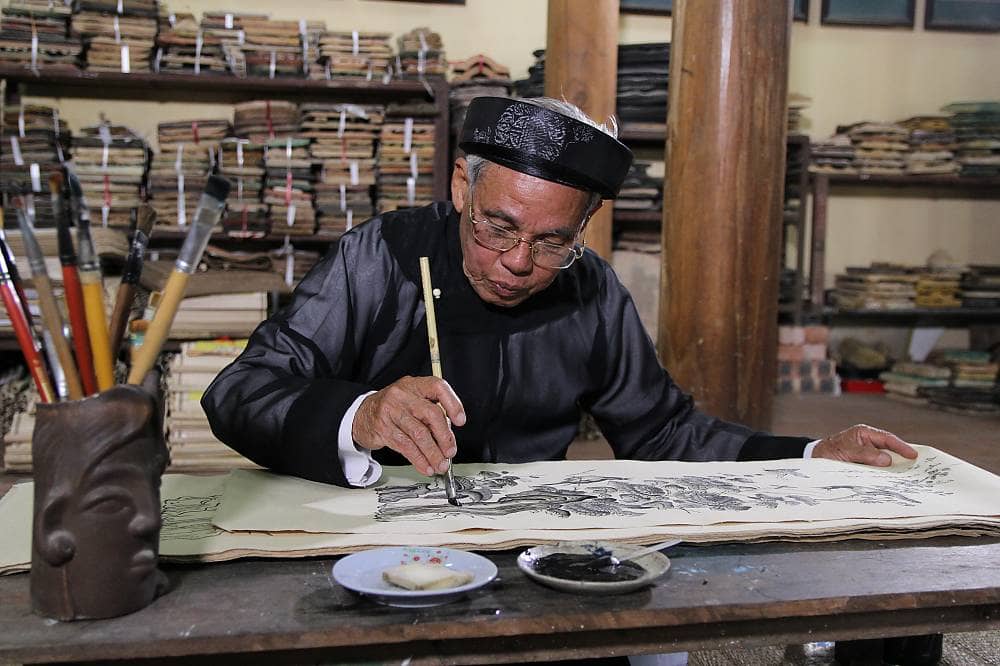
DÔNG Ho folk woodblock printing in Vietnam.
Photograph courtesy of Viet Nam National Institute of Culture and Arts Studies
With asin tibuok making, other elements inscribed in this list were the art of crafting and playing kobyz of Uzbekistan; art of playing, singing and making the lahuta of Albania; boreendo, bhorindo: ancient dying folk musical instrument, its melodies, knowledge, and skills of Pakistan; construction processes of the quincha house and the junta de embarre/embarra of Panama; craft of making Dông ho folk woodblock printings of Vietnam; moliceiro boat: naval carpentry art of the Aveiro region of Portugal; Mwazindika spiritual dance of the Daida community of Kenya; Ñai’ũpo art, ancestral ceramic craftsmanship of Paraguay; Negliubka textile tradition of Vetka District, Gomel Region, of Belarus; and the social and cultural traditions associated with landships in Barbados.
Notable inscriptions into the Representative List of the Intangible Cultural Heritage of Humanity, which “is made up of those intangible heritage elements that help demonstrate the diversity of this heritage and raise awareness about its importance,” include Italian cooking, between sustainability and biocultural diversity, which the first cuisine to be inscribed in its entirety, and the popular Festival of Lights, Deepavali, of India.

AL Sadu weaving in the United Arab Emirates.
Photograph courtesy of Intangible Heritage Department, UAE
Other new ICH elements that have been included in this list are Al Ahalla, a living performing art in the United Arab Emirates (UAE); Al Sadu, traditional weaving skills, also in the UAE; Al-Jertiq: practices, rituals and expressions for preservation, protection, abundance and fertility in Sudan; Al-Mihrass tree: knowledge, skills and rituals associated with it of Jordan; Al-Muhaibis: social practices and traditions associated with it of Iraq; amateur theatre acting in Czechia; Antep isi, drawn thread embroidery of Gaziantep in Türkiye; Arabic koh of Syrian Arab Republic, Iraq, Jordan, Libya, Oman, Palestine, Saudi Arabia, Tunisia and UAE; Ayeneh-Kari, the art of mirror-work in Persian architecture of Iran; bagpipes and bagpipe playing in Bulgaria including transmission of knowledge and skills; the basketry traditions of Poland; Behzad’s style of miniature art of Afghanistan; bisht (men’s abaa): skills and practices of Qatar, Bahrain, Iraq, Jordan, Kuwait, Oman, Saudi Arabia, Syrian Arab Republic and UAE; Brussels’ rod marionette tradition of Belgium; Christmas Bram and Sambai of Gales Point Manatee of Belize; Cobza, traditional knowledge, skills and music of Romania and Moldova; Commandaria wine of Cyprus; Cuarteto: music, dance and lyrics in the city of Córdoba, Argentina; culture of Sumanak/Sumalak cooking of Tajikistan; family tradition circus in Chile; Festivity of the Virgen of Guadalupe, Patroness of Sucre, of Bolivia; wheat culture, traditions and rituals of Georgia; Gifaataa, Wolaita people New Year festival, of Ethiopia; Guruna, a practice of pastoral, socio-cultural and artistic retreats centered on livestock among the Massa of Chad and Cameroon; Hadrami Dan gathering of Yemen; Hezhen Yimakan storytelling of China; Highlife music and dance of Ghana; Joropo in Venezuela; Kithul Madeema/Kithul Kapeema, an ancient indigenous technology for tapping Kithul in Sri Lanka; Koshary, daily life dish and practices associated with it of Egypt; Moroccan caftan: art, traditions and skills; Mvet Oyeng, musical art, practices and skills associated with the Ekang community of Gabon, Cameroon, and Congo; Pantun of Indonesia, Malaysia, and Brunei Darussalam; representation of the passion, death and resurrection of Christ in Iztapalapa of Mexico; Sarawja, Aimara music and dance of Moquegua of Peru; wwimming pool culture in Iceland; Tchiloli, living theatre of Sao Tome and Principe in the quest of justice; the art of breeding Turkmen alabay of Turkmenistan; the bearing of the sacred stone or the rites of the New Year in the Guin country in Togo; the Compas of Haiti; the Confraternity of flowers and palms of El Salvador; the Diwaniya, a unifying cultural practice in Kuwait; the practice of Cuban Son; the zaffa in the traditional wedding of Djibouti, Comoros, UAE, Iraq, Jordan, Mauritania, and Somalia; traditional knowledge and cultural contexts of making Maksym, a traditional Kyrgyz beverage of Kyrgyzstan; traditional knowledge and skills in making Kyrgyz, Kazakh and Karakalpak yurts (Turkic nomadic dwellings) of Kazakhstan, Kyrgyzstan, and Uzbekistan; traditional Saree weaving art of Tangail of Bangladesh; traditional skills, techniques and knowledge for the conservation and transmission of wooden architecture in Japan; traditional weaving of Al Sadu of Saudi Arabia, Kuwait, and Qatar; Tsapiky, rhythm and musical style characteristic of the south-west region of Madagascar; Washi, craftsmanship of traditional Japanese hand-made paper; Yama, Hoko, Yatai, float festivals in Japan; and yodeling of Switzerland.
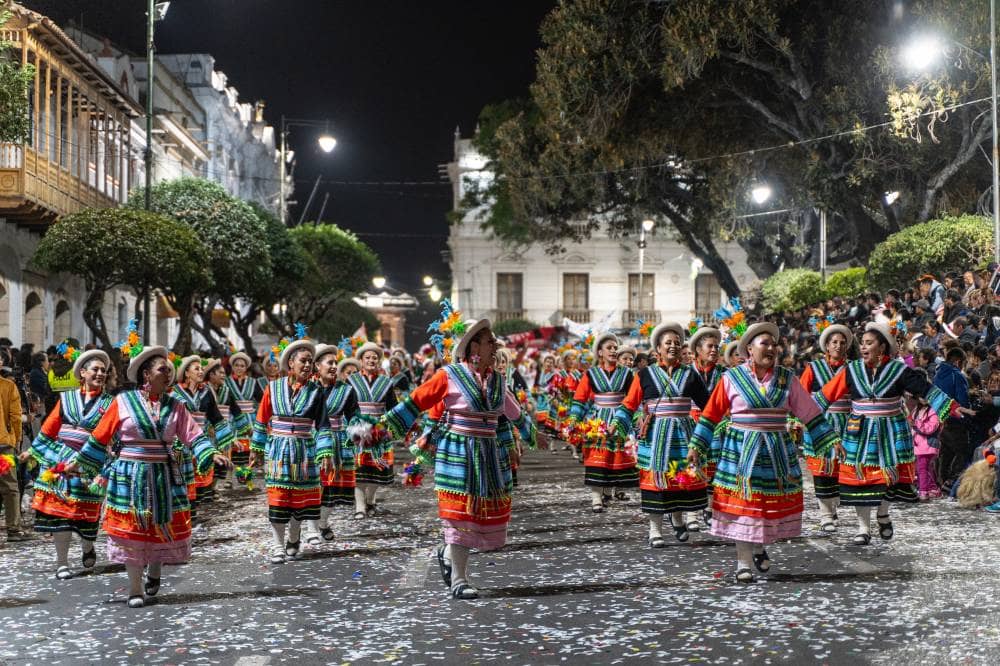
FESTIVITY of the Virgen of Guadalupe in Bolivia.
Photograph courtesy of Farosur Produccion Audiovisual
Al Sadu weaving and Hezhen Yimakan storytelling were transferred from Urgent Safeguarding list to the Representative list with their safeguarding programs selected for the Register of Good Safeguarding Practices which “contains programs, projects and activities that best reflect the principles and the objectives” of the 2003 Convention for the Safeguarding of the Intangible Cultural Heritage. The Community safeguarding and documenting of the “Lastovo Poklad” carnival custom of Croatia was added this 2025.
This year, nine were multinational inscriptions submitted by 28 countries. Barbados, Chad, the Comoros, El Salvador, Gabon, Libya, and Sao Tome and Principe marked their milestones with their first inscriptions to the lists. The UNESCO now has 849 cultural practices in 157 countries in its ICH lists.
Aside from the inscriptions, the meeting emphasized how ICH are sources of sustainable livelihoods of communities.
In his message for the occasion, Khaled El-Enany, UNESCO Director-General, said, “Fragile yet essential, living heritage remains a pillar of cultural diversity in a world that can at times feel fragmented and divided. Living, creative, and carried by communities, it reminds us of what binds us together. Let us keep alive the hope that unite us: to share knowledge, strengthen connections, and build bridges across borders.”