
DENR chief seeks stronger support for ERDB researchers

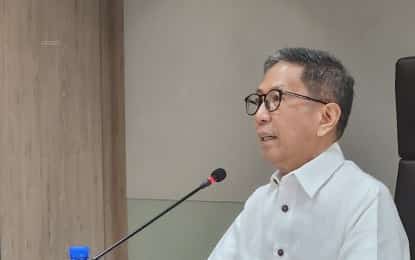
Department of Environment and Natural Resources (DENR) Secretary Raphael P.M. Lotilla on Sunday underscored the need to strengthen institutional mechanisms that translate scientific research into policy-relevant, practical, and commercially viable solutions.
Lotilla said government scientists and researchers must be better supported and rewarded to accelerate innovation in the environment and natural resources (ENR) sector.
He said this was among the key takeaways from his recent visit to the Ecosystems Research and Development Bureau (ERDB), where the bureau’s Executive Committee, led by Director Lormelyn E. Claudio, presented an overview of its programs, ongoing and completed studies, and major accomplishments.
Lotilla commended ERDB’s wide range of initiatives, including the Department of Science and Technology–Philippine Council for Agriculture, Aquatic and Natural Resources Research and Development (DOST-PCAARRD)-funded PhilFlux Project. The project uses the Eddy Covariance Approach—the first in the Philippines—to measure carbon fluxes in mangrove areas in Del Carmen, Surigao del Sur. He also cited ERDB’s ongoing development of a low-cost, locally sourced hydroseeding-hydrogel technology for vegetation recovery in mined-out areas.
“One of the challenges we face across the country is graduating these efforts into commercially useful technologies or research results,” Lotilla said, pointing to the persistent gap between scientific output and practical application.
Lotilla also noted that the Philippines’ low standing in international research and development rankings is partly due to the limited visibility and accessibility of local scientific publications.
“If you look at the international ratings on research and development, we rank very low. One of the reasons is that our research output is not directly reachable by those coming up with these ratings,” he said.
He encouraged government scientists and researchers to publish in internationally recognized journals and urged agencies to provide stronger institutional support to help them meet global standards.
In line with this, Lotilla called on researchers to actively pursue the Scientific Career System (SCS), a merit-based program that offers career progression, incentives, and salary grades comparable to those in the broader scientific community.
“What we’d like to see is more of our researchers actually be able to enter the Scientific Career System and get the right incentives, not only with ERDB, but also within the department itself. If we can have a purposive program that allows our people to reach the standards required by the SCS, that would be great,” Lotilla said.
He directed ERDB to take the lead in crafting and implementing projects that would enable more DENR researchers to qualify for the SCS, noting that other government agencies have already adopted similar initiatives.
Responding to the secretary, Liberty E. Asis, chief of ERDB’s Technology Transfer Division and managing editor of the Sylvatrop Editorial Board, thanked Lotilla for supporting scientific publication. Sylvatrop, DENR’s official technical journal, is fully accredited by the Commission on Higher Education and publishes original research on ecosystems and natural resources. The journal traces its roots to the former Forest Research Institute in 1976 and will mark its 50th anniversary in 2026.
Lotilla also urged the Sylvatrop team to develop proposals that would elevate the journal’s scientific standing and improve incentives for contributing authors and researchers.
Beyond publishing, the DENR chief supported the creation of additional plantilla positions for technical experts and specialists. ERDB’s technical personnel currently cover 14 fields of specialization, including forestry, agriculture, biology, engineering, environmental science, law, and geology.
The proposed positions are expected to strengthen ERDB’s research, development, and extension initiatives, enhancing its capacity to deliver science-based, inclusive, and responsive policies and technologies.
DENR officials from CALABARZON also shared how ERDB’s research and technologies have supported national, regional, and community-level initiatives.