
Unilab works with health groups on medicine quality


REPRESENTATIVES from medical, pharmacist, drugstore, and chemist associations join Unilab employees in reaffirming their shared commitment to quality medicines. The thumbprint symbolizes the Quality Alaga seal found on every Unilab product.
Photo from Unilab Inc.
At least one in 10 medicines circulating in low- and middle-income countries is either falsified or substandard, according to the World Health Organization (WHO), a situation that can lead to treatment failure and serious health risks.
Against this backdrop, pharmaceutical firm Unilab Inc. has engaged with professional medical and pharmacy organizations to discuss quality standards in the manufacture, distribution, and sale of medicines in the Philippines.
The discussions were held during Unilab’s observance of World Quality Week in Mandaluyong City, attended by representatives from medical, pharmacy, and drugstore associations, where issues related to medicine safety and quality assurance were raised.
Unilab President and Chief Executive Officer Sebastian Frederick F. Baquiran said medicine quality should be demonstrated through compliance with standards and verification processes, noting that products vary in how they are developed and monitored.
During the event, Unilab presented its quality control processes, covering research and formulation, manufacturing, storage, distribution, and post-market monitoring. Participating groups included the Philippine Medical Association (PMA), Philippine Academy of Family Physicians, Philippine Pharmacists Association, Drugstores Association of the Philippines (DSAP), Community Pharmacists Association of the Drugstores Association of the Philippines (CPhAD), and Integrated Chemists of the Philippines.
Former PMA president Dr. Maria Minerva P. Calimag said medicine quality is closely linked to patient safety, particularly when combined with pharmacovigilance systems that monitor adverse drug reactions.
CPhAD president Romvon V. Daligdig noted that medicines carry both therapeutic benefits and risks, highlighting the need for coordination among doctors, pharmacists, manufacturers, and distributors.
Consumer confidence remains an issue. Data from the National Demographic and Health Survey show that around 30 percent of Filipino households do not consider medicines and vitamins from drugstores to be safe.
Unilab said it continues to apply internal quality benchmarks covering evidence-based product development, regulatory compliance, testing protocols, and facility standards.
Unilab Operating Vice President and Head of Research and Development Joyce B. Santos said quality oversight involves multiple units across the organization and must align with global standards.
The company said it has also conducted continuing professional education programs for healthcare professionals and academic institutions, focused on technical practices related to pharmaceutical quality and safety, and plans to maintain engagement with health-sector stakeholders as issues surrounding medicine quality and regulation persist.
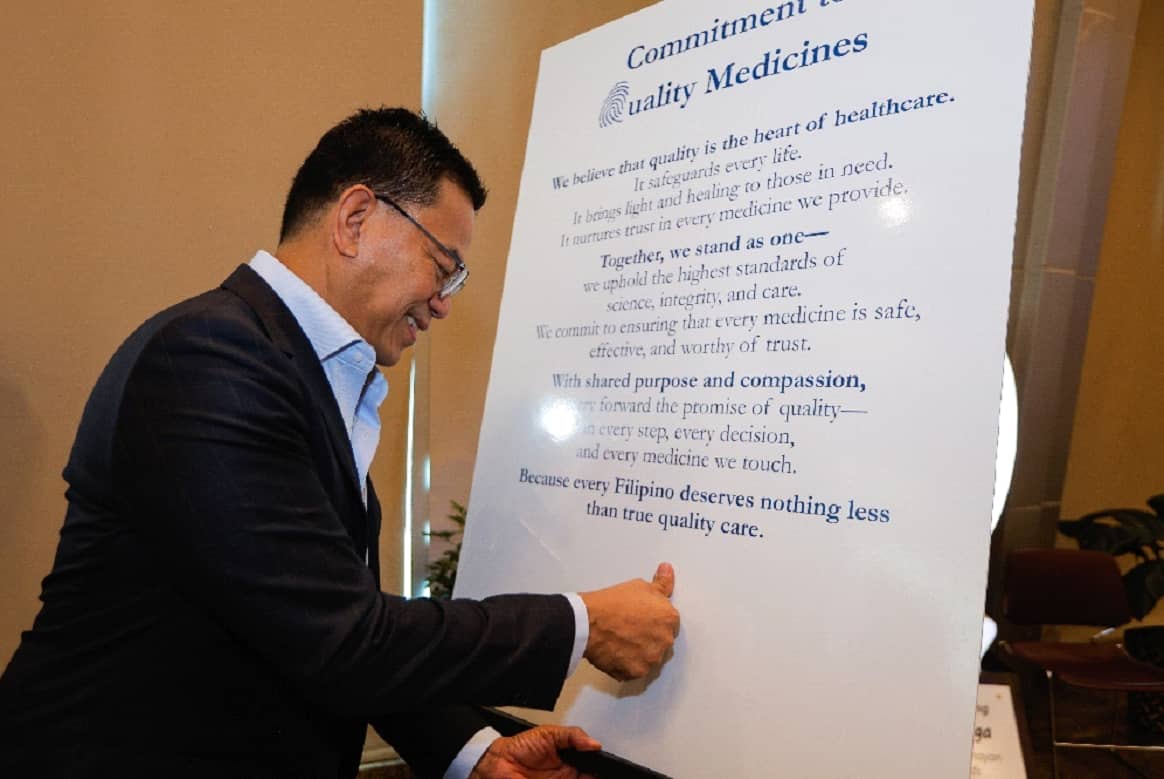
Unilab, Inc. President and CEO Sebastian Frederick F. Baquiran affixes his thumbprint to the “Commitment to Quality Medicines.” .
Unilab Inc.