




Baguio adopts Japanese wastewater treatment technology

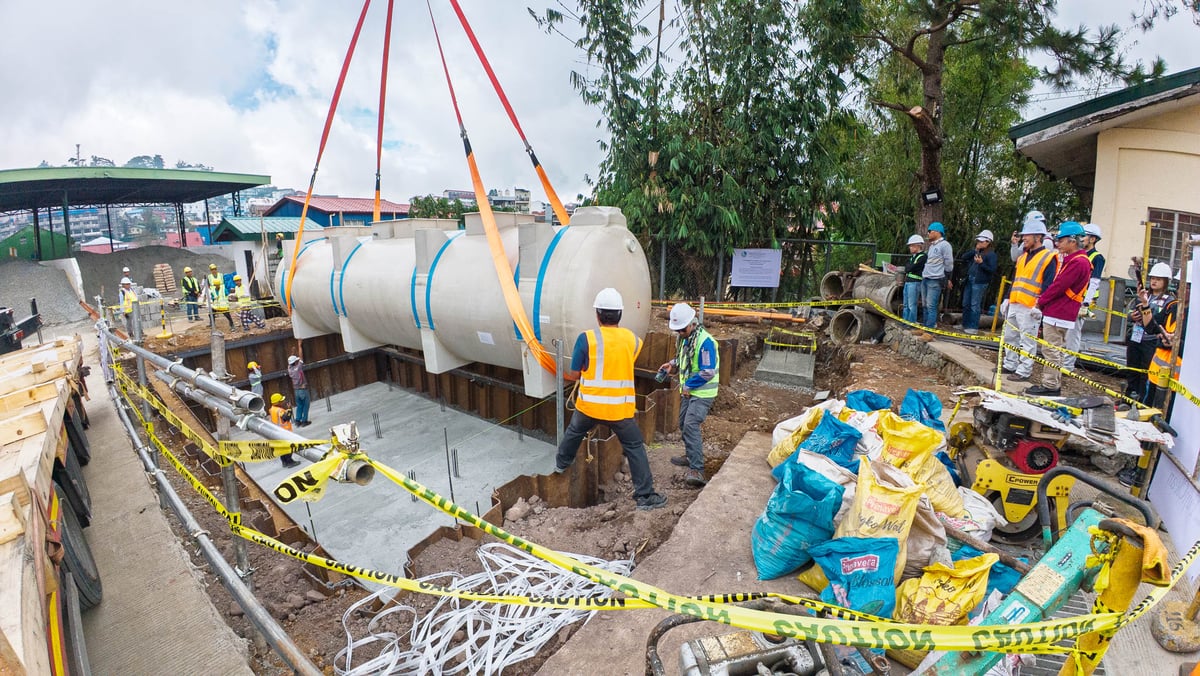
BAGUIO City adopts Japanese technology in treating wastewater discharges from toilets and kitchens before being released to the waterways.
Photo Courtesy of Neil Clark Ongchangco
Text size
BAGUIO City adopts Japanese technology in treating wastewater discharges from toilets and kitchens before being released to the waterways.
Photo Courtesy of Neil Clark Ongchangco
BAGUIO CITY — In a bid to achieve cleaner waterways, the Baguio City government has begun implementing a major initiative by adopting Japanese technology for wastewater treatment.
The City Environment and Parks Management Office (CEPMO), in partnership with the Japan International Cooperation Agency (JICA), has installed a pilot demonstration facility for the Johkasou sewage treatment system at the City Engineering Office (CEO) compound. The project aims to demonstrate an efficient and effective method of purifying wastewater before it is released, helping mitigate pollution in local waterways.
Johkasou, a Japanese term meaning “purification tank,” is a compact, decentralized, all-in-one sewage treatment system designed for urban environments. It is capable of treating both blackwater from toilets and gray water from kitchens and baths at the same time.
The system uses a combination of anaerobic and aerobic biological processes, often enhanced by specialized microbes and advanced fillers, to produce high-quality treated water. The resulting effluent is considered safe for non-potable reuse, such as irrigation.
This capability makes Johkasou technology suitable for individual households, small communities, and areas not connected to centralized sewer systems. Its decentralized design allows it to operate independently while maintaining effective wastewater treatment standards.
The pilot facility marks a step toward addressing Baguio City’s long-standing sanitation and environmental challenges and supports broader efforts toward sustainable urban development.
Japanese Johkasou systems are widely recognized for their operational efficiency and practical design. They are valued for their small footprint, which allows installation even in densely built areas, as well as their low energy consumption that helps reduce operating costs.
For Baguio City, officials expect the system to serve as a model for regulatory compliance, particularly for commercial establishments, while supporting the city’s goal of cleaner waterways and a healthier urban environment.
Housing is probably the biggest issue affecting people the world over.
Malacañang on Monday called for a more thorough investigation into the questioned flood control projects in Taguig…
The defense on Monday backed the move by senator-judges to exclude a prosecution witness who testified on the firearms…
