
Where noise meets the sacred: Jigger Cruz’s ‘Hail Holy Eyes’
In his latest exhibit, the artist’s riot of color, texture, and sound reveals not just visual turbulence but a deeper spiritual struggle.

Amid the loud, chaotic, almost assaultive experience of a Jigger Cruz exhibition lies a deep and resounding spiritual conflict.
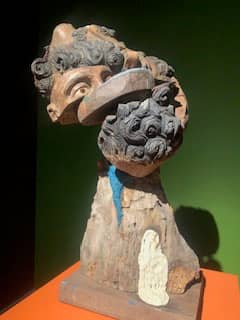
Surreal sculpture
Hail Holy Eyes, now on view at the Metropolitan Museum of Art Manila, presents more than 200 works by Jigger Cruz (b. 1984). In keeping with his usual approach, none of the pieces bear labels indicating titles, sizes, or media. Most are large-scale oil paintings, joined by a small number of resin table-top sculptures, installation pieces, an animation and a steady pulse of rhythmic electronic music composed by the artist himself. These elements accompany viewers as they move through multiple galleries across two floors of the museum.
When you finally step out onto the street, the quiet of Bonifacio Global City feels distant. Your mind is still charged by the loud, brightly colored sweeps of impasto, the relentless electronic beat, and an unsettling spiritual tension that lingers long after the visit.
The exhibition is, in essence, one sustained burst of noise — visual and auditory alike. Like a magician’s sleight of hand, Cruz uses this overwhelming sensory field to divert the viewer from what lies beneath. Behind the layers upon layers of vigorous, energetic paint, partially obscured religious imagery presses forward, flickering beneath the surface.
The Abstract Expressionist swirls, gestural marks, and thick, almost sculptural impasto seem to defy logic, conveying a sense of urgency and unease. This decades-long devotion to paint is further emphasized by an installation composed of a mountain of empty tubes — the remnants of nearly 20 years of work. According to the museum, these are only a fraction of what Cruz has consumed, amounting to roughly a ton of paint tubes accumulated through the years.
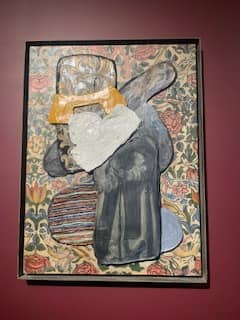
'Floral pattern.'
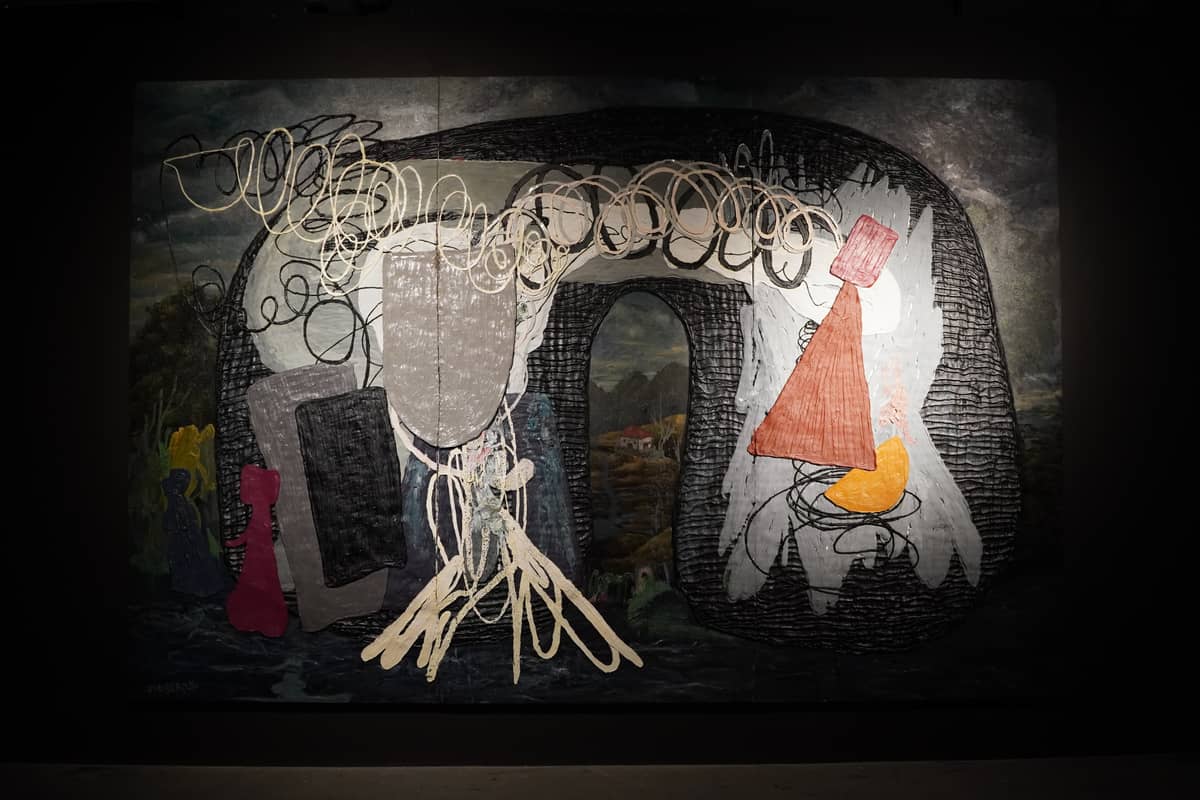
'portal.'
Across the canvases, medieval priests in black robes, altar boys in red, skulls, crucifixes, and other religious symbols emerge from the visual turmoil. Cruz also introduces psychological “escape routes” —portals, staircases, floral motifs, decorative tiles, and even a finely rendered Renaissance nude — each demonstrating his remarkable technical control and offering brief reprieve from the density of the religious echoes.
Mystical babaylan vs. Western ideology
Tucked between galleries is a large exhibition text that shifts the conversation to mid–sixteenth century Bohol, where the babaylan Tamblot led a major resistance movement against Spanish rule.
“Early Filipino resistance to Spanish rule often advocated for the reinstatement of indigenous spiritual practices…”
Though the uprising was eventually crushed, it remains one of the earliest and clearest declarations of spiritual resistance. Tamblot urged his followers to “return to the old ways,” destroying Catholic symbols in favor of honoring the anito — ancestral spirits and deities.
Cruz, like many Filipinos, was raised Catholic, but the faith practiced in his household went beyond ordinary devotion. As the museum notes, both his parents were espiritistas who conducted ritualistic faith-healing sessions. This layered background forms part of the friction seen in his work.
Historically, Catholicism often absorbed pagan symbols and practices to ease conversion, adopting elements from Roman, Celtic, Germanic, Greek, and Egyptian traditions. In the Philippines, this process of syncretism blended Catholic worship with local beliefs, replacing native deities with saints, integrating rituals such as offerings, chants and fiestas, and giving rise to what is known today as folk Catholicism.
Cruz’s exhibition reveals the emotional and psychological dissonance that such syncretism can produce — one that sits between logic and instinct, doctrine and ancestral memory.
A graduate of the Fine Arts program of Far Eastern University and trained further at De La Salle–College of Saint Benilde, Cruz has built a strong career both locally and abroad. His works have appeared in major auction houses and numerous exhibitions worldwide.
In Hail Holy Eyes, he offers not simply a riot of color and sound, but a confrontation with the enduring conflict between inherited faiths and indigenous roots — an undercurrent that quietly, insistently, refuses to be drowned out.
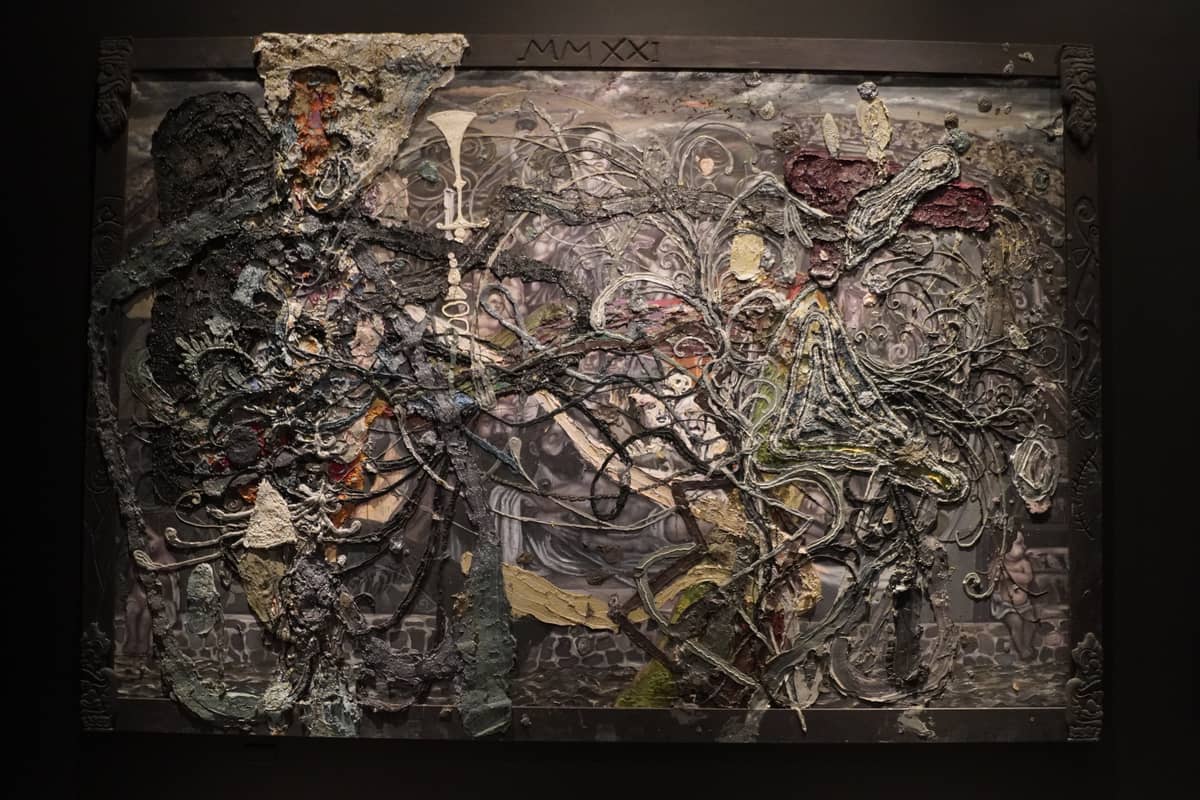
'Hidden Figures.'
PHOTOGRAPHS COURTESY OF MET MUSEUM MANILA