
‘The White Olive Tree’: Fragile bloom of hope
At its heart, the white olive tree symbolizes resilience, memory, and hope. It reminds us that even in barren soil, life can take root.

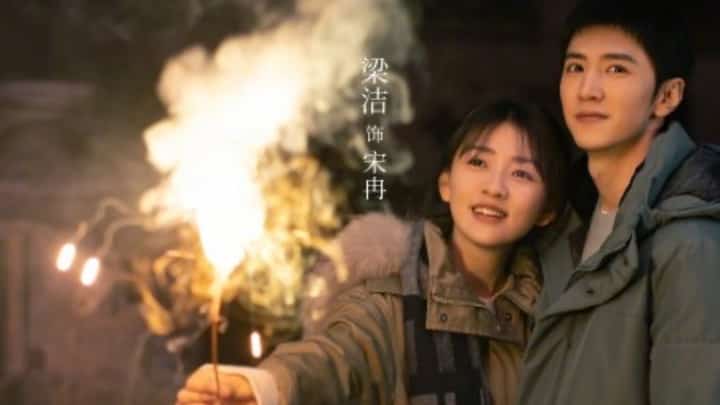
Chen Zheyuan’s portrayal of Li Zan is layered with gentleness and trauma, while Liang Jie’s Song Ran embodies both vulnerability and fierce principle.
PHOTOGRAPH COURTESY OF IQIYI
The White Olive Tree, adapted from Jiu Yuexi’s novel, is a Chinese military romance drama that dares to place tenderness at the heart of devastation. Starring Chen Zheyuan as Li Zan and Liang Jie as Song Ran, the series unfolds in a war-torn East Country, where a female journalist and an explosive engineer meet under impossible circumstances.
Their connection is not born of convenience or fleeting attraction, but of shared ideals and the scars that come from surviving chaos.
What makes the drama compelling is its refusal to romanticize war. Instead, it lingers on the quiet moments — the gaze exchanged under a moonlit sky, the trembling hands that plant a white olive tree in barren soil, the silences that speak louder than words. Chen Zheyuan’s portrayal of Li Zan is layered with gentleness and trauma, while Liang Jie’s Song Ran embodies both vulnerability and fierce principle. Together, they create a chemistry that feels lived-in, as if their love story is less about passion and more about endurance.
The cinematography heightens this duality. Harsh landscapes of conflict are juxtaposed with tender imagery: olive branches swaying in the wind, fragile white blooms, the symbolic act of planting a tree where destruction once reigned. The pacing occasionally falters, leaning into melodrama, but the sincerity of its message redeems those moments.
At its heart, the white olive tree symbolizes resilience, memory, and hope. It reminds us that even in barren soil, life can take root. It stands as a testament to comrades lost, innocence broken, and the fragile dream of peace. Watching Song Ran and Li Zan nurture this tree feels like witnessing two souls reclaim agency over their pain, insisting that love can be a force of healing.
Ultimately, the drama is not just a romance. It is a meditation on endurance, a reminder that peace is always fragile yet always worth believing in.