
SCUTTLEBUTT

Most Filipino families will have a taste of a holiday spoiler, courtesy not of Ebenezer Scrooge but an intractable policy of US President Donald Trump.
A real and painful shift is happening among overseas Filipino workers based in the United States, as many are choosing not to return to the Philippines even for Christmas, the most important family reunion season in Filipino culture.
The reason is their fear that they will not be allowed to re-enter the United States afterward. This phenomenon is separate from the usual reasons Filipinos cite for staying abroad longer (corruption, lack of jobs, high cost of living, etc.).
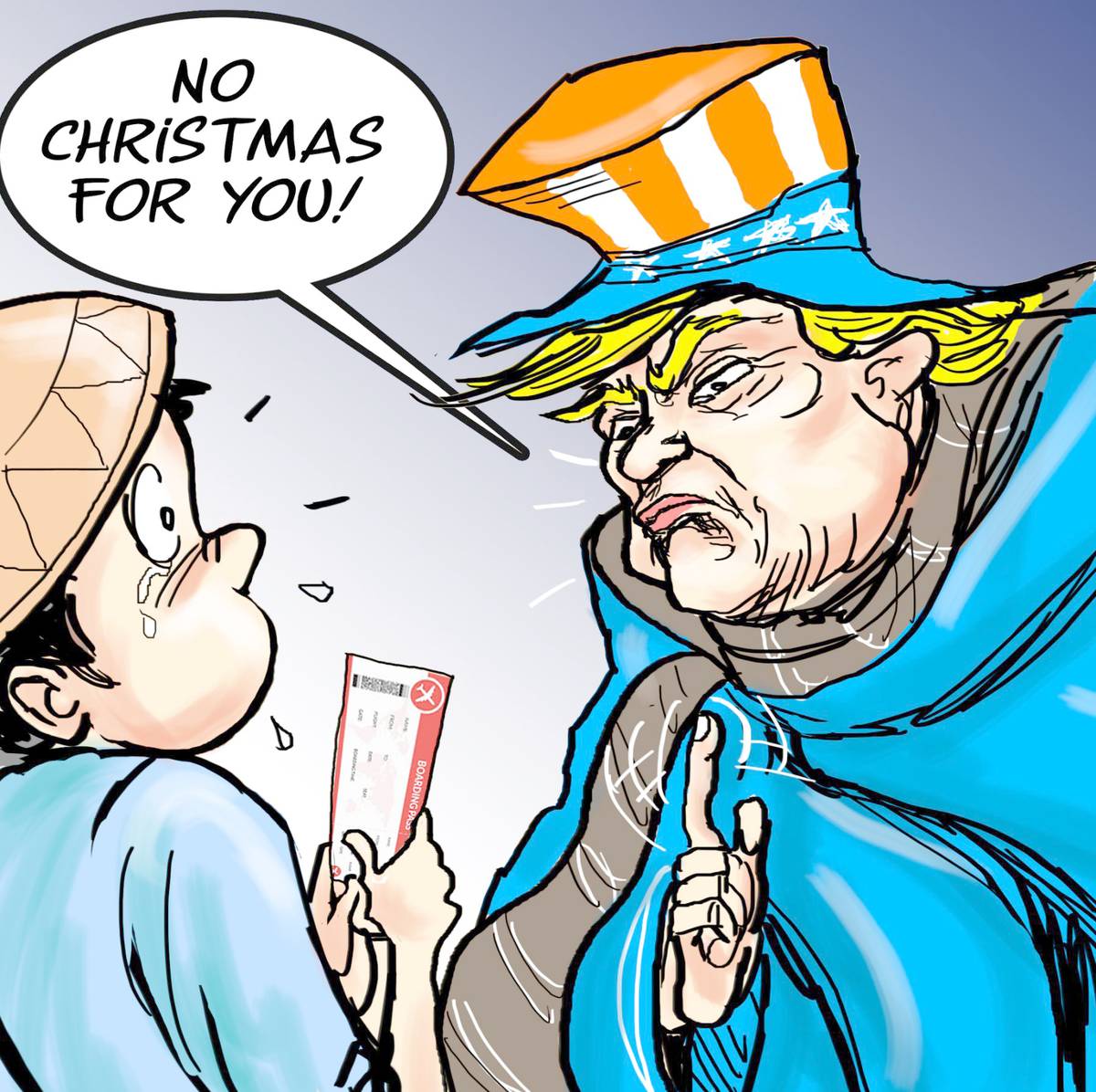
This is driven almost entirely by fear of US immigration policy changes under the second Trump administration that began in January 2025.
Since President Trump took office again in 2025, his administration has repeatedly emphasized the largest deportation operation in US history. Even legal immigrants and long-term visa holders have seen increased scrutiny.
Statements from officials like Border Czar Tom Homan (“We’re coming for everyone who’s here illegally, and we’ll look at legal statuses too if there’s fraud”) have created widespread panic.
Travel warnings have been circulating in Filipino-American social media.
Facebook groups such as “Filipinos in America,” “TNT ka ba?” and “Pinoy Nurses USA” warn:
“Don’t go home even for Christmas. Many have been detained at the airport upon return. Even with valid visas, they’re being questioned strictly; there are cases of denied entry.”
There have been documented incidents since mid-2025 of long-time H-1B holders (nurses and IT professionals) being subjected to extended secondary inspection and, in a few cases, having their visas canceled on the spot for minor past discrepancies.
Treaty National visa holders from the Philippines who traveled home were refused boarding on the return flight by airlines exercising caution.
Green-card holders with years-old misdemeanor convictions (including traffic-related) were flagged and paroled rather than admitted, effectively triggering removal proceedings.
Airlines have become extremely risk-averse. Under US law, a carrier is fined heavily if it brings someone who is refused entry.
As a result, some OFWs with perfectly valid documents are being denied boarding in Manila or at connecting hubs (Tokyo, Seoul, Vancouver) because the check-in agent “feels” that Customs and Border Protection might not allow them in.
A collapse in balikbayan traffic has thus been reported. Philippine Airlines and Cebu Pacific have reported significant drops of 20 to 40 percent in Manila-bound bookings from the US West Coast on some routes during the traditional November–December peak.
Ninoy Aquino International Airport usually sees a surge of “balikbayan flights” (extra sections added just for OFWs bringing boxes). In 2025, several of these additional flights were canceled due to low load factors.
Remittance data for the third and fourth quarters this year showed unusual patterns. Cash remittances from the US are still up, but the volume of balikbayan boxes sent through freight forwarders has fallen sharply as people fear the boxes will arrive, but the sender won’t be able to return.
Duty-free shops and pasalubong centers in Parañaque and Pasay, which commonly boom in December, are reporting their slowest pre-Christmas season in decades.
Christmas in the Philippines without the OFW parent, sibling, or child is already painful, but it used to be temporary.
Now, many families are facing the possibility that this could be permanent or at least last several years until immigration policy stabilizes again.
Many households may have to do video calls on Christmas Eve instead of the traditional Noche Buena hug.
The policy intended to target undocumented immigrants and criminal aliens in the US has created a chilling effect that is keeping hundreds of thousands of legal, tax-paying, long-term Filipino residents from seeing their families, even during the most family-centered holiday of the year.