
Marble sculptures of The Vatican Museums


There was a certain anticipation as we returned to a destination last thoroughly visited in our youth, particularly one as massive and monumental as the Vatican Museums. Together with my sisters, who were then-residents of Madrid, our parents organized a family trip to Rome. In one of our tours, I recall following my dad go through the endless corridor after corridor, absorbing frescoes and tapestries, murals and paintings, sculptures and statues, and a diversity of other art pieces, without quite understanding the weight, importance, and value of what surrounded us. I silently whispered to myself “Uscita,” — the Italian word for exit — “Where are you?”
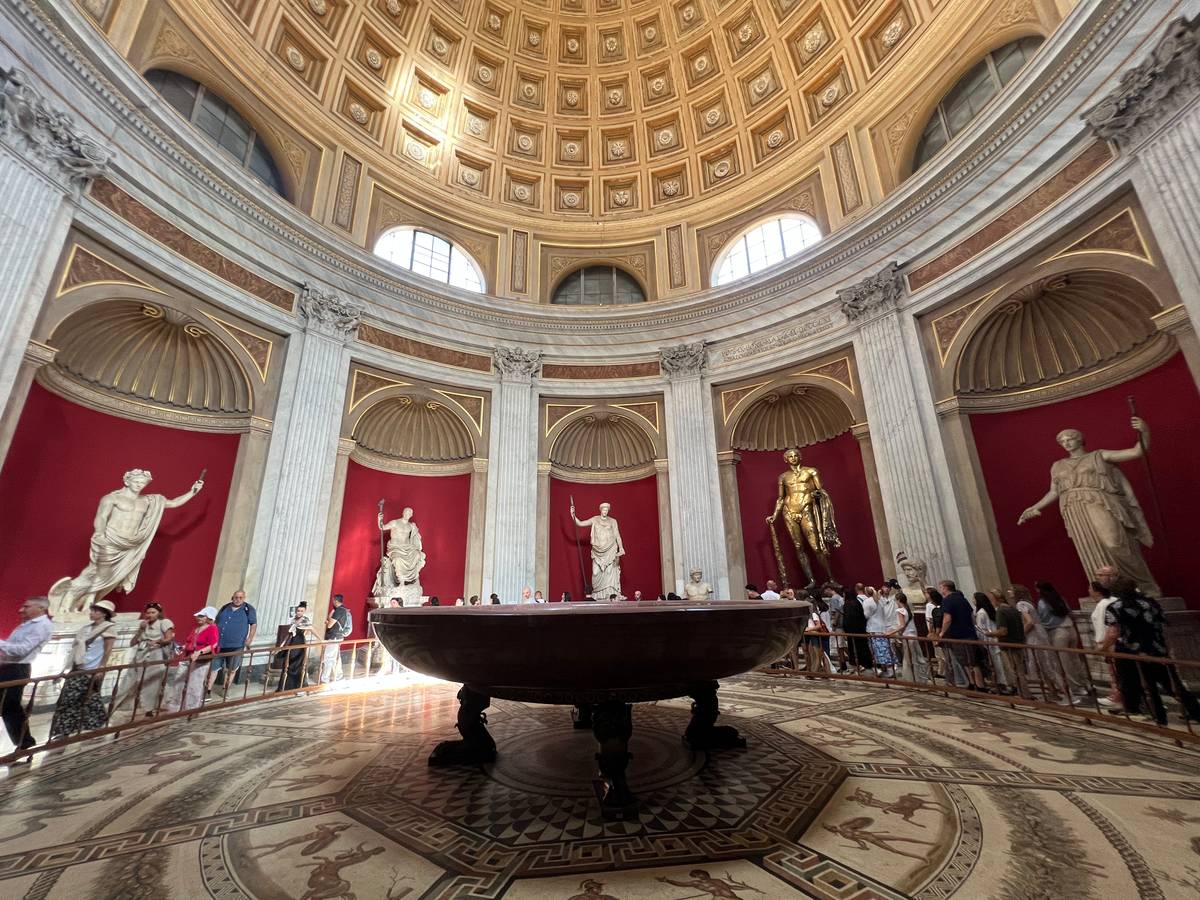
The Bowl of Nero, surrounded by other sculptures.
Photographs by Edu Jarque for DAILY TRIBUNE
Several decades later, my sisters and I toured the same galleries. And yet, the revisit felt both familiar and entirely new. Who’s to blame — please don’t look at me.
The grand depositories, composed of 24 galleries, comprise the public museums of Vatican City. They were integrated from the immense priceless collections the Catholic Church and the papacy amassed over the centuries. They safeguard some of the best–known ancient Roman sculptures and Renaissance masterpieces in the world — an extraordinary anthology of human achievement housed within one vast complex.
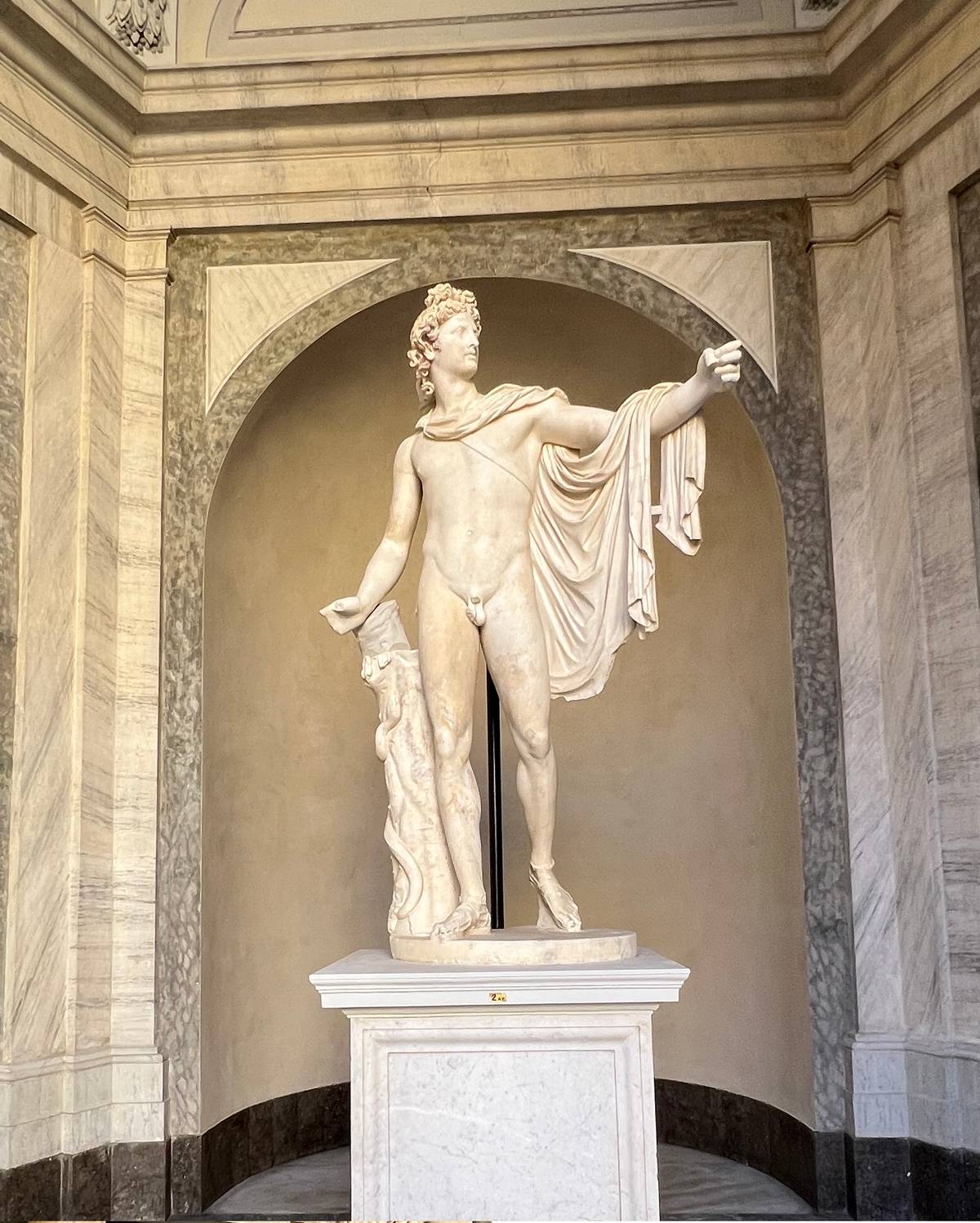
Apollo Belvedere.
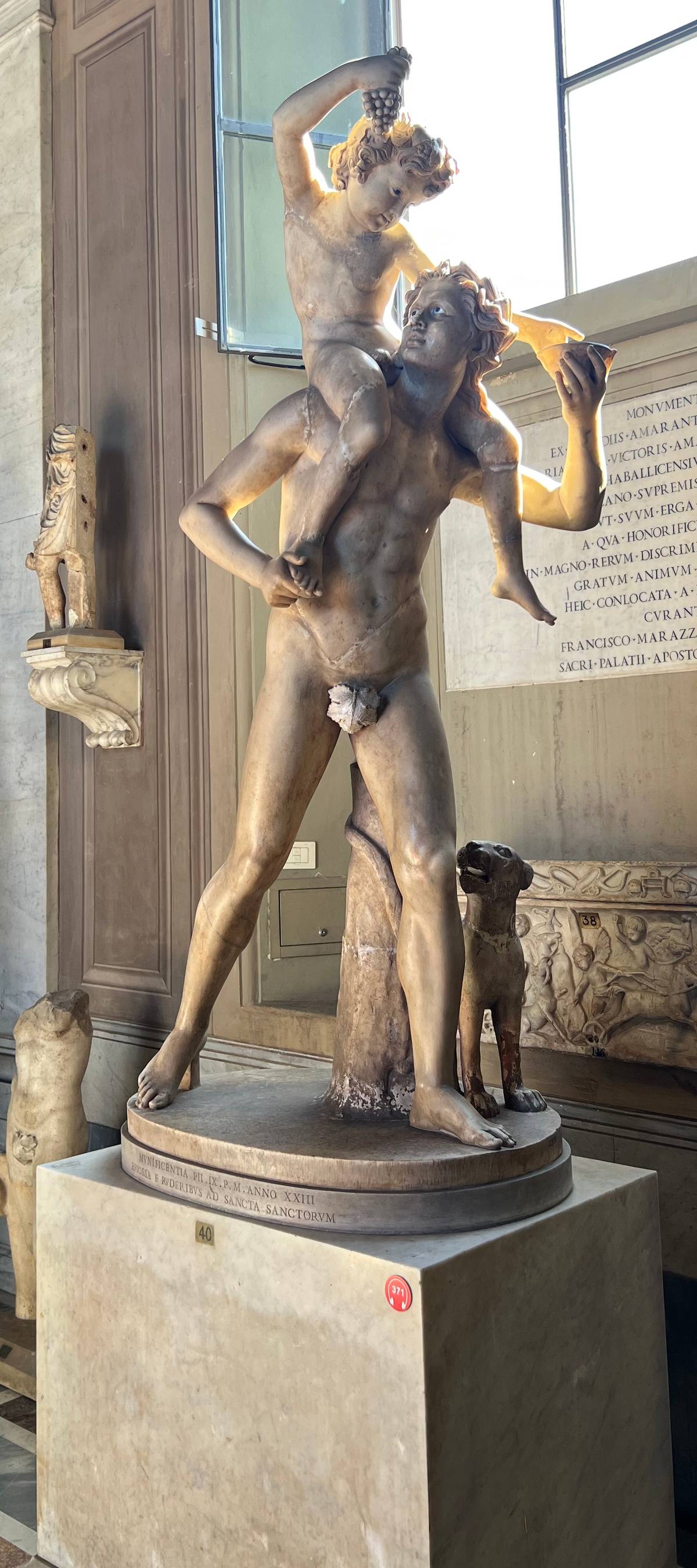
Faun with the Infant Dionysius.
The origins may be traced to the early 16th century, when Pope Julius II established the museum following the dramatic discovery of Laocoön and His Sons in 1506. Unearthed in a vineyard near Basilica di Santa Maria Maggiore, the marble depiction of the Trojan priest Laocoön and his two sons in the coils of sea serpents, was examined by the Michelangelo at the Pope’s request. His immediate recommendation to purchase it set into motion a legacy that would shape, beyond compare, the Vatican’s cultural identity! One month later, the impactful find was publicly displayed, to become the first cornerstone of what the Vatican Museums would eventually be.
The collection grew. Other significant antiquities were acquired, and today, the Vatican Museums hold some 70,000 obras, though only 20,000 are currently exhibited.
And so, we moved through a sequence of several halls which continued to reveal the breadth of this collection: sculpture courts that opened to sudden shafts of light, long corridors of tapestries, and rooms painted by masters whose names had shaped entire eras of art history, all leading toward the Sistine Chapel.
The Museo Pio–Clementino, known for its remarkable collection of classical sculptures, offered an awe-inspiring experience, with a different medium — marble. The Apollo Belvedere, attributed to Greek sculptor Leochares, was admired for its harmony and idealized figure. Meanwhile the Belvedere Torso, signed by the Greek philosopher and mathematician Apollonius, commanded attention through its raw musculature.
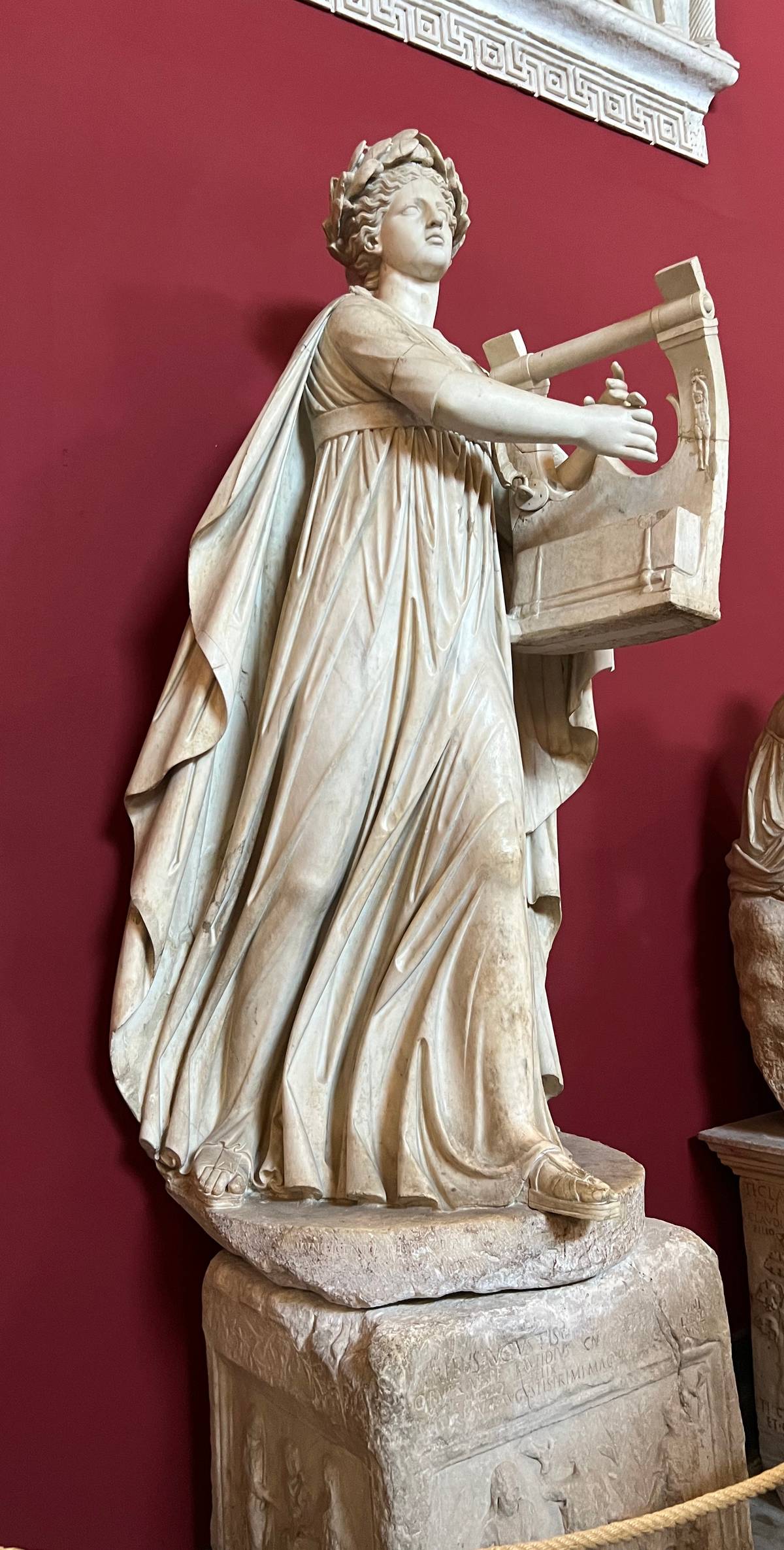
Apollo Citharoedus.
Photographs by Edu Jarque for DAILY TRIBUNE
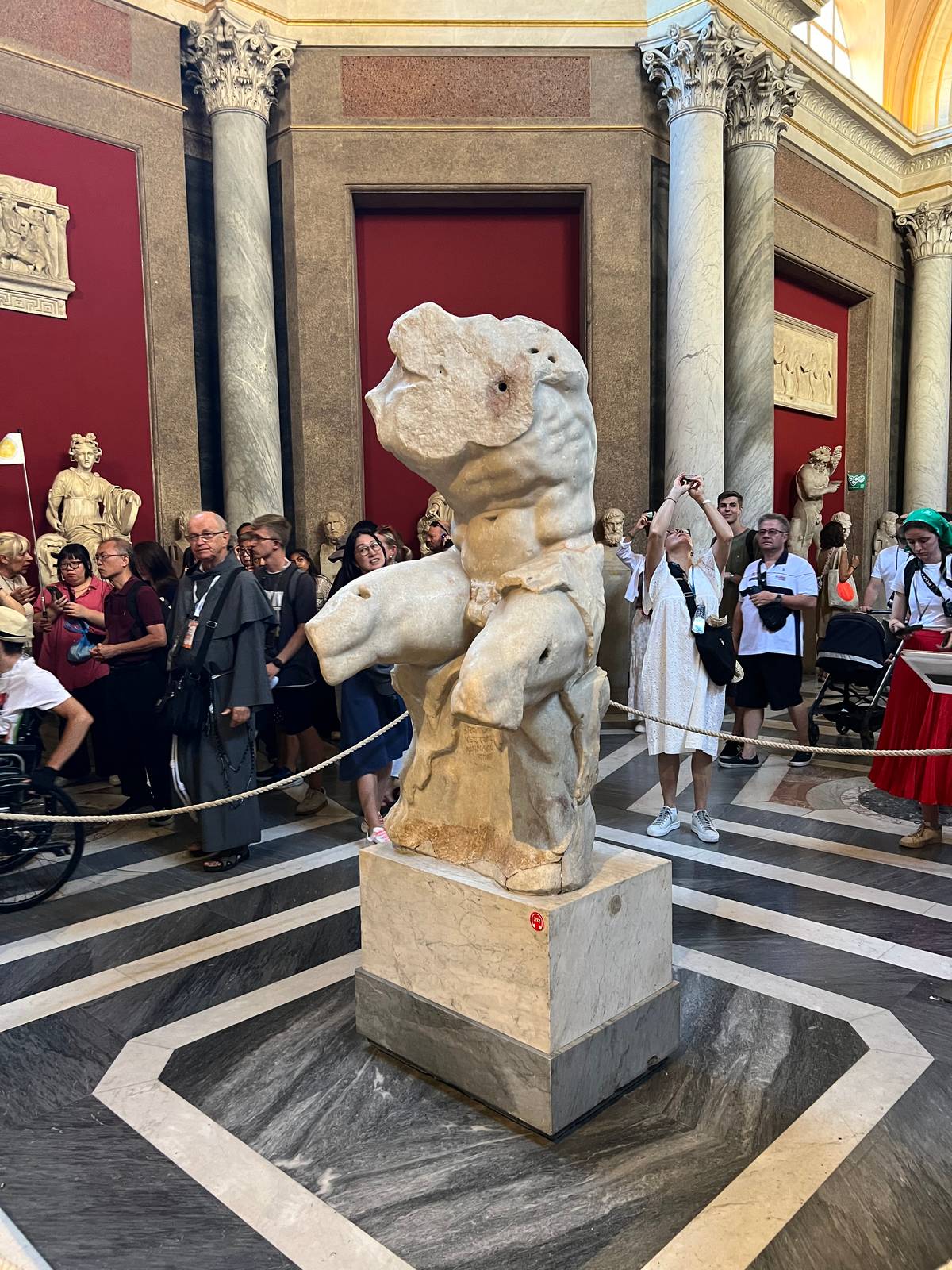
The Belvedere Torso.
Further along, we laid our eyes on the Augustus of Prima Porta, displayed in the Museo Chiaramonti, which presented the first Emperor of Rome as both statesman and emblem of restored order. Carved in the first century AD, it embodied a vision of authority that set the tone for imperial portraiture for generations.
Not far from it, the Sleeping Ariadne reclined in the Galleria delle Statue, which contrasted the heroic poses around her.
In the center of a hallway stood the so–called Bath of Nero — more fountain than bath — carved from deep red porphyry, the richly hued marble once only reserved for imperial use. Its scale alone conveyed a sense of awe befitting one of the most infamous rulers of Rome!
The Sarcophagi of Saint Helena — mother of Emperor Constantine the Great — and Constantina, were likewise fashioned from porphyry. It drew in a curious crowd even though it was positioned to the side. It was a standout — a life-sized red box in a hall full of statues.
We then made our way to the gilded bronze Hercules. Discovered near the Theater of Pompey where Julius Caesar was assassinated, it offered another striking presence, with its wide eyes and curly hair. More intimate in scale yet equally captivating was the Faun with the Infant Dionysius. Notice their glass eyes, which was a technique used in antiquity to enhance lifelike qualities. They appeared almost alive!
Even the river gods rested here. The Divinità Fluviale, representing the river Arno, was a personification of the very waterway which flowed through Florence and influenced much of Tuscany’s early prosperity.
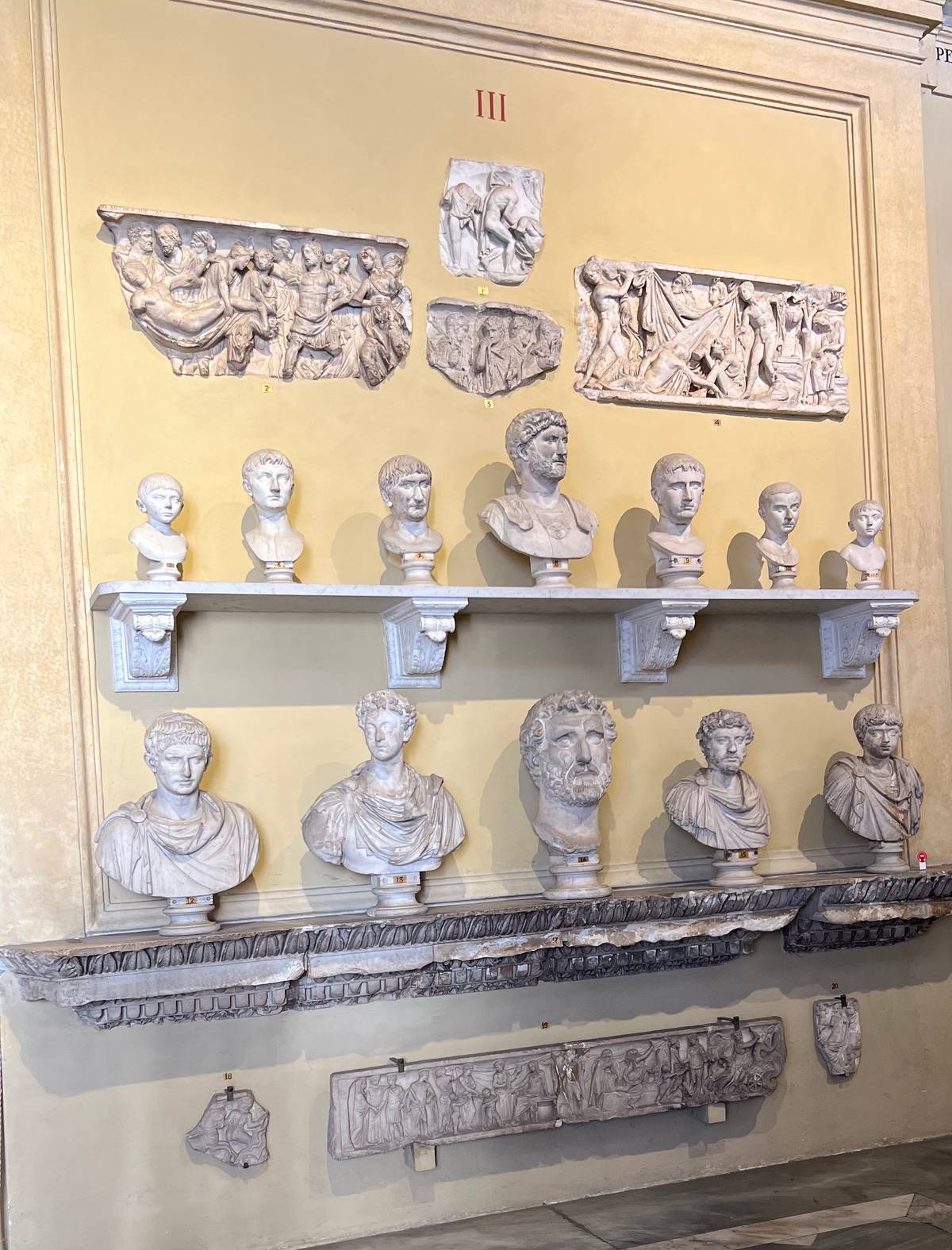
A collection of Roman busts at the Vatican Museums.
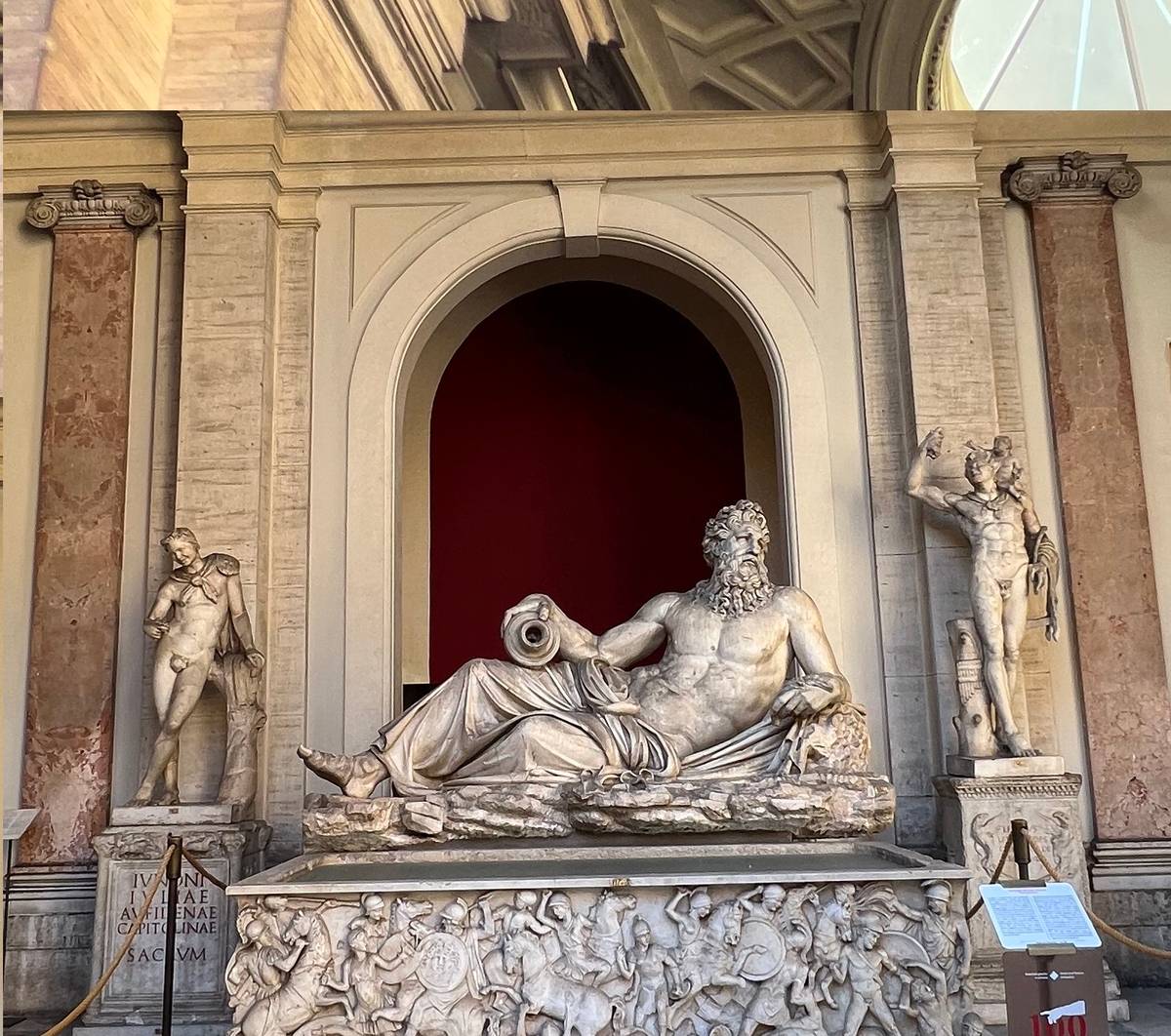
Divinità Fluviale.
One of our last stops was the Sala degli Animali, a lively menagerie of carved animals from various periods, which softened the solemnity of neighboring areas. A doe standing as she fed her baby kid touched
our hearts.
Truth be told, hours passed as we sauntered from one chamber to another, creating impressions, valuable learnings and solidifying memories which still left us astonished. I came out of it as a changed man.
You see, when we were younger, we would always look for the sign uscita, eager for the tour to finish so we scurry back into the Roman sun. On this return, the experience had reversed entirely, completely, and absolutely, and I found myself hoping the sign would not appear too soon, unwilling to leave the incomparable quiet grandeur of the galleries.
How times have changed!