
China launches Shenzhou-22 early for stranded space station crew
The Shenzhou-20 crew eventually returned aboard Shenzhou-21 on 14 November, nine days behind schedule, leaving their replacements without a secure return vehicle.
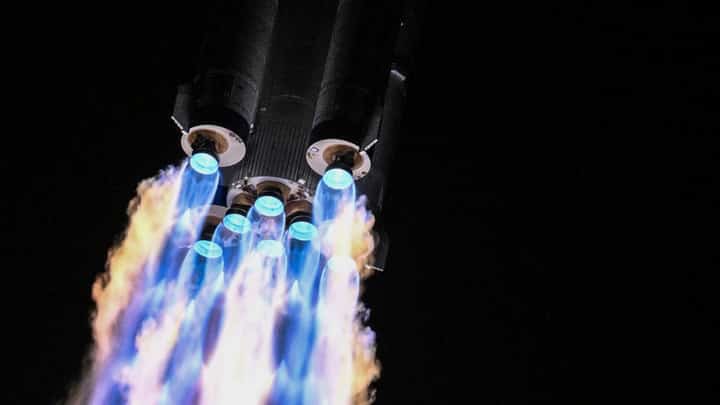
A LONG March-2F carrier rocket, carrying the Shenzhou-21 spacecraft and a crew of three astronauts, lifts off from the Jiuquan Satellite Launch Center in the Gobi desert, in northwest China, taking a new crew to the Tiangong space station.
Photograph courtesy of Hector RETAMAL/Agence france-presse
China on Tuesday launched an unmanned Shenzhou-22 spacecraft ahead of schedule after damage to a previous mission’s return capsule left the crew on its Tiangong space station temporarily without a safe way home.
State broadcaster CCTV showed the Long March-2F rocket lifting off shortly after midday from the Jiuquan Satellite Launch Centre in northwest China.
Shenzhou missions typically rotate teams of three astronauts every six months. Shenzhou-22 had originally been planned as a crewed launch in 2026, but officials advanced the timetable after a suspected space debris strike compromised the Shenzhou-20 return capsule, rendering it unsafe for Earth re-entry.
The Shenzhou-20 crew eventually returned aboard Shenzhou-21 on 14 November, nine days behind schedule, leaving their replacements without a secure return vehicle.
The accelerated Shenzhou-22 launch restores a functioning escape and recovery craft for the Shenzhou-21 team of Zhang Lu, Wu Fei and Zhang Hongzhang, who the China Manned Space Agency said Monday were “working normally and in good condition.”
China is the third country to send humans into orbit, following the United States and the former Soviet Union. Beijing has been barred from the International Space Station since a 2011 US law prohibited NASA from cooperating with China.
In response, Beijing built its own station and has sought international partners. In February, it signed an agreement with Pakistan to recruit the first foreign “taikonauts” — the term for Chinese astronauts.