
PEZA, BuCor partner to develop Palawan ecozone
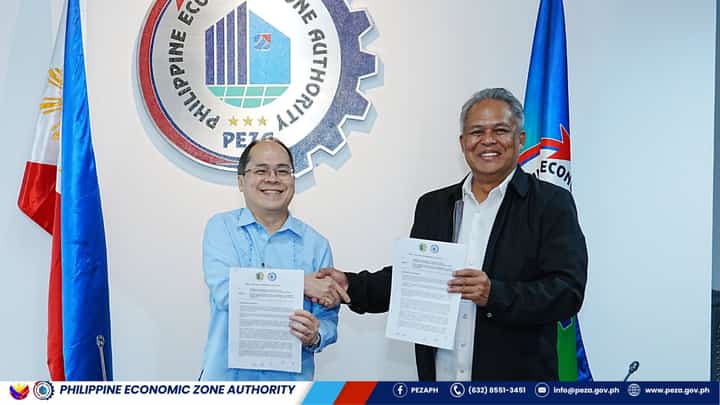
PHILIPPINE Economic Zone Authority Director General Tereso O. Panga (left) and BuCor Director General Gregorio Pio P. Catapang, AFP (Ret) (right).
Philippine Economic Zone Authority on Facebook
The Philippine Economic Zone Authority (PEZA) and the Bureau of Corrections (BuCor) have formalized the transfer of more than 4,000 hectares of BuCor-administered land within the Iwahig Prison and Penal Farm (IPPF) for conversion into a new ecozone. The signing of a Joint Memorandum Circular (JMC) took place on 20 November 2025 at the PEZA Head Office in Pasay City.
The agreement, signed by PEZA Director General Tereso O. Panga and BuCor Director General Gregorio Pio P. Catapang, AFP (Ret), forms a key part of the planned 28,000-hectare Palawan Mega Economic Zone (PMEZ), envisioned as the country’s first government-led, mega-scale eco-industrial township. PEZA projects PMEZ could generate up to 480,000 direct jobs and attract domestic and foreign investments across agribusiness, manufacturing, and energy, boosting Palawan’s long-term economic growth.
Catapang highlighted BuCor’s modernization and role in nation-building. “This partnership shows the heart of a modern BuCor, no longer solely defined by walls and fences, but what we can contribute to the nation,” he said.
Panga cited strong investor interest in PMEZ, noting inquiries from major regional and international firms, including Thai conglomerate CP Group, a Taiwanese aquaculture operator, a Peruvian food manufacturer known for its global Stevia brand, a coconut-based product exporter, and an energy company.
“I firmly believe that PMEZ will become a magnet for new investments, housing locators with complete supply chains and linking this to our broader regional commitments,” he said, adding that PMEZ is poised to become a major investment hub aligned with the Philippines’ leadership of the Brunei Darussalam–Indonesia–Malaysia–Philippines East ASEAN Growth Area (BIMP-EAGA) this year.
BuCor also reported that its Master Plan and Terms of Reference have been completed, signaling readiness for the next phases of development. As PEZA and BuCor advance the project, PMEZ is expected to serve as a strategic gateway for investments ahead of the Philippines’ ASEAN chairmanship in 2026, strengthening the country’s regional competitiveness and supporting long-term economic resilience.