




NASA shoots down notion 3I/Atlas an alien craft

Text size
A flying piece of cosmic rock or an alien craft? Comet 3I/ATLAS is hurtling through the solar system and fueling speculation among scientists, casual sky watchers and the internet at large — even prompting Kim Kardashian to ask NASA for clarity.
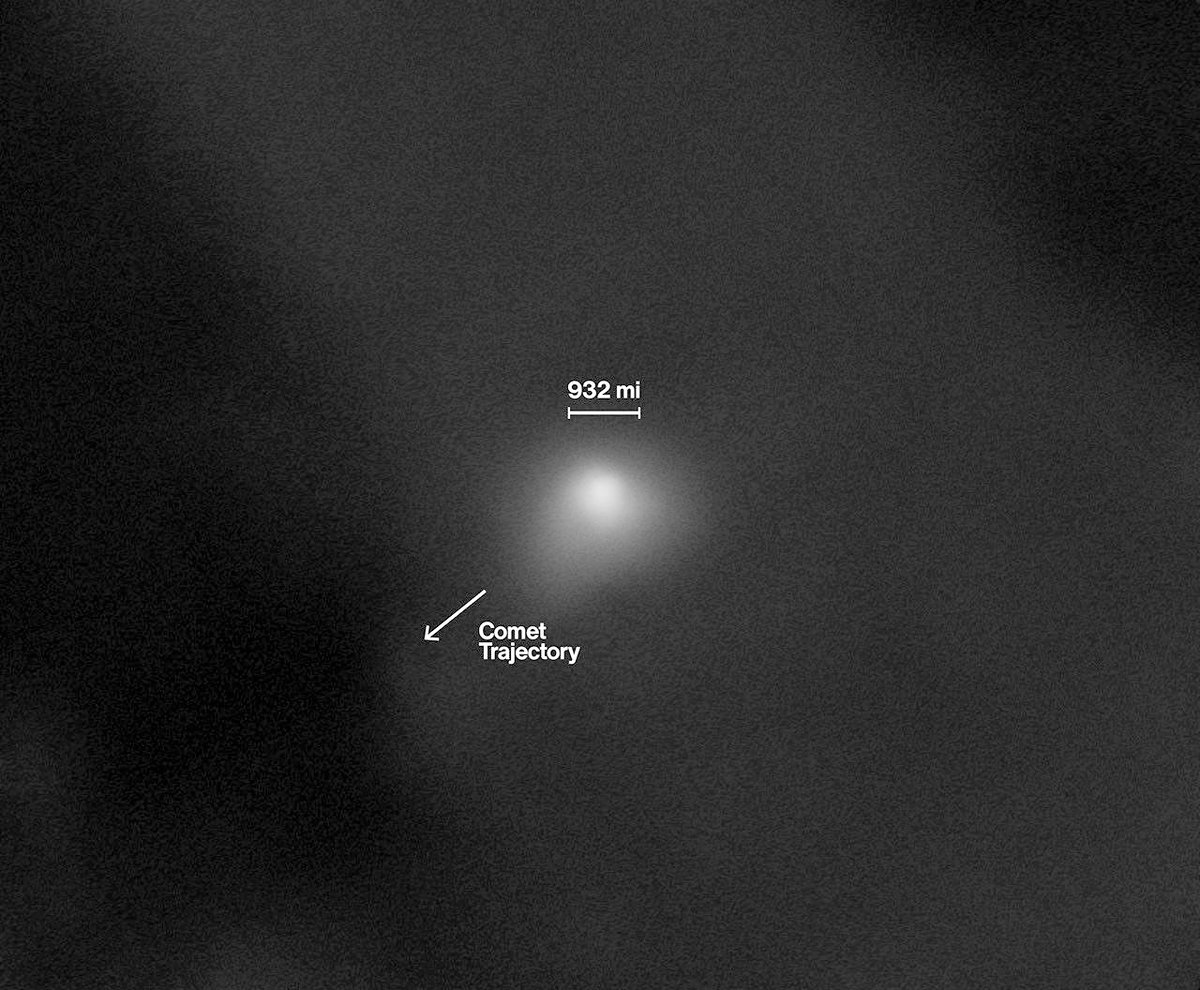
Questions on whether the comet could be an extraterrestrial spacecraft have come from sources as varied as a member of the US Congress, a Harvard researcher and several conspiracy theorists. NASA moved to tamp down the rumor this week after releasing new images of the comet as online chatter intensified.
“It’s amazing to see how people are really engaged in the discussion,” said Thomas Puzia, the astrophysicist who led the team at a Chilean observatory that made the discovery. But, he warned, “it’s very dangerous and to a certain degree misleading to put speculations ahead of scientific process,” a remark widely seen as aimed at researchers who continue to insist that the alien-craft hypothesis cannot be dismissed.
“The facts, all of them without exception, point to a normal object that is coming from the interstellar space to us,” he said, adding that while the comet is “very exceptional in its nature,” it remains “nothing that we cannot explain with physics.”
Since its detection in July, the comet has generated wide interest as only the third known interstellar object to pass through the solar system. The first, Oumuamua, triggered a similar debate in 2017 when Harvard professor Avi Loeb suggested it might be an artificial craft — a position he later expanded on in a book.
Loeb now claims the scientific community is not being open-minded enough about Comet 3I/ATLAS. “Obviously, it could be natural,” he said. “But I said: we have to consider the possibility that it’s technological because if it is then the implications for humanity will be huge.”
NASA rejected that idea.
“We want very much to find signs of life in the universe... but 3I/ATLAS is a comet,” said Amit Kshatriya, a senior NASA official, during a Wednesday briefing.
Puzia said the controversy risks overshadowing the scientific value of the object, which offers “an unprecedented insight into an extrasolar system, potentially billions of years older than our own.”
Scientists hope the comet’s approach in the coming weeks will provide clues about its origin and composition. The rocky, icy body could help researchers understand how planets — and possibly life — form around other stars in the Milky Way.
NASA scientist Tom Statler said he gets “goosebumps” thinking about its potential origins. “The likelihood is it came from a solar system older than our own,” he said.
Unlike the first two interstellar objects, which were observed only briefly, astronomers have had months to study 3I/ATLAS — and expect more such discoveries as detection technology improves.
“We should be finding many, many more of them every year,” Darryl Seligman of Michigan State University told AFP.
A traditional dish called zongzi is served during China’s Dragon Boat Festival, which falls in June. It is a rice…
Divina credited the firm’s achievements to its members, thanking them for their ‘hard work, dedication, teamwork, and…
‘Sec. Vince Dizon, please explain how this finding of your own team should not be flagged as a ghost project in Taguig.’
