
Monopolizing storytelling made Oz less and less colourful


Text size
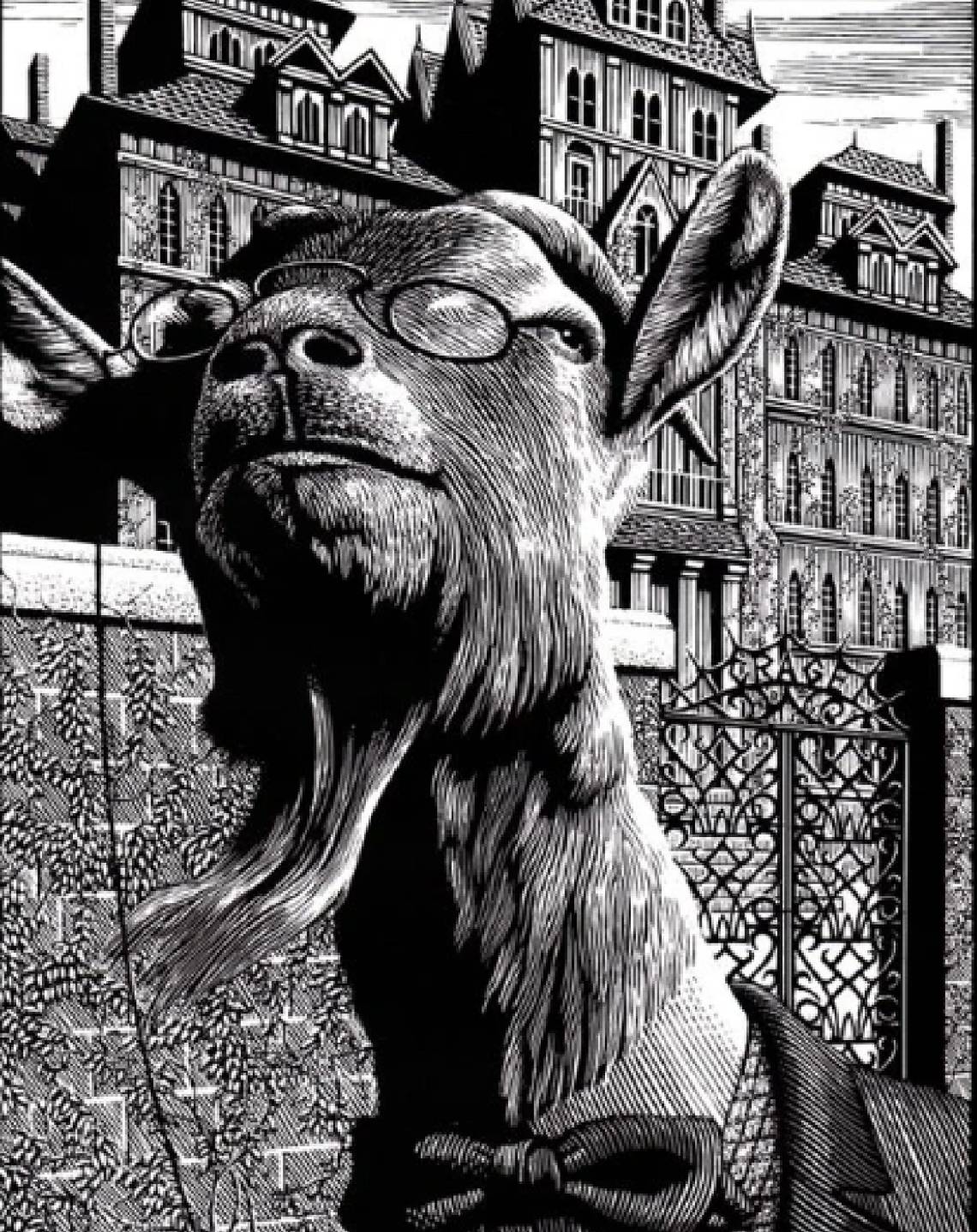
Doctor Dillamond, the goat professor of Shiz University.
Douglas Smith
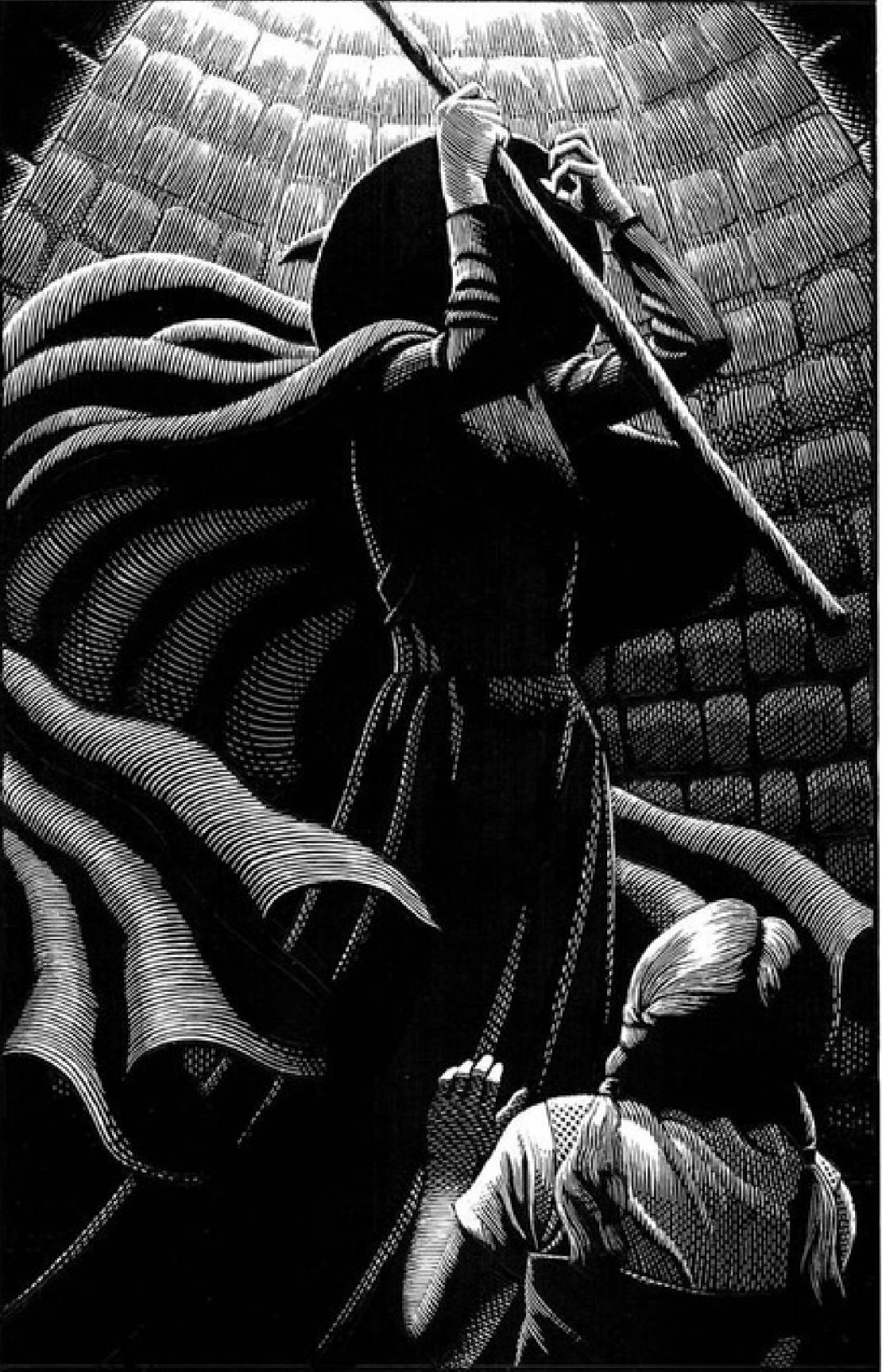
The Wicked Witch, after Dorothy throws a bucket of water over her.
Douglas Smith
I've read a lot of books ever since I was old enough to know how, and like Chimamanda Adichie, I noticed that the stories I've read were about foreign children, with blonde curls and blue eyes, who had silly-sounding names like Dorothy.
I've also read about the same characters in different forms: the hapless damsel in distress, the kind and beautiful princess, the man who saved the people from their problems, and the ugly, menacing villain. Everything was in black and white. Or if not black and white, it was confined to the seven colours of the rainbow in my nursery rhymes. Everything was either good or bad. There wasn't much room for diversity.
It wasn't until I came across Gregory Maguire's The Wicked Years: The Life and Times of the Wicked Witch of the West—a retelling of L. Frank Baum's The Wonderful Wizard of Oz—that I was awakened to a world that was far more complex than I knew it to be. It even triggered an existential crisis and a profound unsettledness that life wasn't so straightforward, that there were multiple outcomes to a series of events and decisions that didn't guarantee simple happy or sad endings.
For one thing, growing up, I've always thought witches were evil and ugly, with grotesque features and moles, and whose sole purpose in life was to terrorise children. L. Frank Baum's books surely painted the Wicked Witch of the West that way. As an impressionable child, I didn't even begin to question what made the Wicked Witch, well, wicked. Why was she so angry at Dorothy? Why was she so obsessed with a pair of shoes?
But Maguire's retelling showed me a girl—yes, a girl, barely a woman when she was pronounced a wicked witch—who simply cared too much, fought for what she believed in aggressively, and was driven insane by a lack of love from her family and the world. The Wicked Witch in Maguire's version even had a name, one that we never got to know in the original stories: Elphaba Thropp. Suddenly, she wasn't just the green-skinned terrible villain I grew up fearing and despising. Suddenly, she was like me—unhappy, famished for love, and twisted into misery and resentment.
Did I despise L. Frank Baum, then, for simply telling one story, one side to the Wicked Witch? No, I did and do not. After all, like what Chimamanda Adichie said, a single story's fault usually isn’t because it is “incorrect,” per se. The fault is that it is incomplete.
When you read a single story again and again about a certain topic or person, they are reduced to that simplicity of a perspective—they are made one-dimensional and flat. But L. Frank Baum cannot be blamed entirely for writing one story about the Witch. Shonda Rhimes expressed in a TED Talk that there are many other uses for storytelling, many other ways of telling stories, and many other people who can tell stories. But it isn't one writer's job to do everything and be everything for the future of storytelling.
This insight shows how storytelling as a tool for communication and empathy will never change, no matter the developments in medium or form. We tell stories to relate to each other—to know that someone, somewhere, has experienced or could understand what we are going through. And with the availability of the internet as a space and medium for everyone all over to tell their stories, we can get glimpses not only of what makes us different—like the differences in how America is portrayed versus Nigeria—but also of what unites us and makes us one.
Somewhere, in the Philippines, a young girl is also experiencing a coming-of-age love story, like any next-door girl in, say, California. Somewhere in France, a boy is also working to the bone to support his family and is looking at the well-fed schoolchildren with envy, like any other poor child in Mexico or India.
There is a commonality in the way we experience the world. How else would you spot these without stories shared and exchanged? Shonda Rhimes admits that because everyone nowadays can tell stories, some of the greater ones might get buried under the saturation of the market, but that doesn’t negate the fact that stories are important and meant to be told. I think the real question then is, “Which stories deserve to be told more than others?”
If we go by the idea that stories are subjective truths to those who experience them, then we still have to acknowledge some truths are louder than others. After all, for example, we can tell the story about the Marcos family and how they “struggled” after being overthrown during the EDSA Revolution. But the stories of the countless people who died and suffered under their regime deserve to be told and heard louder. Stories are interconnected and cannot exist outside of each other and outside of context. To treat them as such means to isolate and ignore the countless other realities experienced by people.
All in all, both Rhimes and Adichie encapsulated the realisation I had at twelve years old when I first read Wicked: There are more stories than one. It's not up to a single person to tell them all. It is up to all of us.
There must be a seat and a voice for every character of every background at the proverbial campfire where we gather to exchange anecdotes of what it means to be human. To understand this can mean being triggered into an existential crisis like I was. It can mean being unsettled and feeling remorse for failing to see the world as it is. Yes, the world is complex. It can be frightening and overwhelming. But it can be colorful too.
Suddenly, Oz is no longer just about the green-skinned witch obsessed with a pair of slippers that glowed blue, red, and yellow in the different angles of the sun. Rather, Oz is also the yellow brick road that was paved and destroyed and repaved. It is the bronze mask of the Wizard who uses it to hide the blood of the Quadlings he ordered killed as he stole rubies for his regime. It is the orange dress of Madame Morrible, like the eyes of a snake, targeting and grooming talented young girls to act as puppets for propaganda. It is in the brown skin of the Vinkun tribes in the West, studded with azure tattoos, that caused them to be alienated from the rest of Oz.
Oz is colourful, far too colourful than I ever imagined, and the Witch isn't the only wicked one. And we have to take it upon ourselves to know the other stories too—not just the one fed to us time and time again.
The Commission on Audit (CoA) has “affirmed with finality” its P73.28-million disallowance of confidential funds spent…
Car company Tesla has rolled out its autonomous taxi in Austin, Texas, USA.
First Lady Liza Araneta-Marcos joined members of the Philippine Constitution Association (PhilConsa) in celebrating its…