
Mexico’s Fatima Bosch triumphs at Miss Universe, Phl’s Ahtisa Manalo delivers a standout finish


Miss Universe 2025 unfolded in Bangkok as a powerful showcase of heritage, determination and international pride — led by two women who defined the season: Mexico’s Fatima Bosch and the Philippines’ Ahtisa Manalo. From their first walk to their final answers, both contenders wrote stories that resonated far beyond the stage, capturing the hearts of fans across Mexico, the Philippines and the global pageant community.
Mexico’s Fatima Bosch claims a defining victory
Fatima Bosch arrived in Thailand with unmistakable momentum, but it was her unwavering consistency — deliberate, confident and deeply charismatic — that elevated her as the woman the universe could not ignore. Each phase of the competition showcased a different facet of her strength, but her final answer ultimately sealed her destiny.
When asked what message she would give the world as Miss Universe, Bosch delivered what would become the defining answer of the night:
“As Miss Universe, I will say to them, believe in the power of your authenticity. Believe in yourself, your dreams, your heart, mother and never let anyone make you doubt about your worth, because you’re worth everything, and you are powerful, and your voice needs to be heard.”
The clarity and emotional weight of her words electrified the arena. When outgoing Miss Universe Victoria Kjær Theilvig placed the crown on Bosch’s head, the response from Mexican supporters was nothing short of electric.
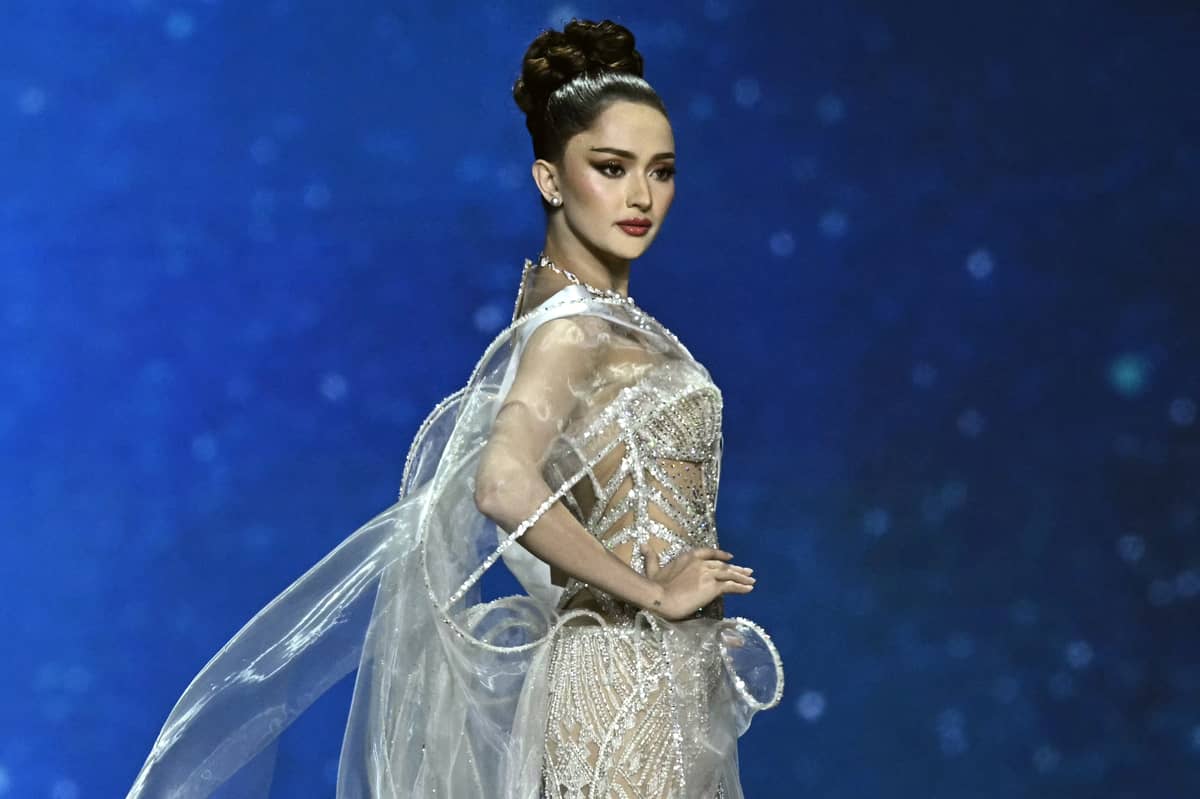
MISS Universe Philippines 2025 Ahtisa Manalo.
AFP
Ahtisa Manalo’s resounding success for the Philippines
For the Philippines, Ahtisa Manalo’s third runner-up placement marks a triumphant return to the upper tier of Miss Universe finishes. Her journey in Bangkok was a masterclass in elegance and authenticity — from her polished national costume presentation to her captivating preliminary performances and heartfelt communication in interviews.
Ahtisa brought to the stage the unmistakable warmth, intelligence, and strength Filipinos are known for. Her finish reignited excitement across the archipelago, affirming her stature as one of the most memorable Filipina representatives of the decade. She leaves the competition with global admiration and a legacy defined by grace under pressure.
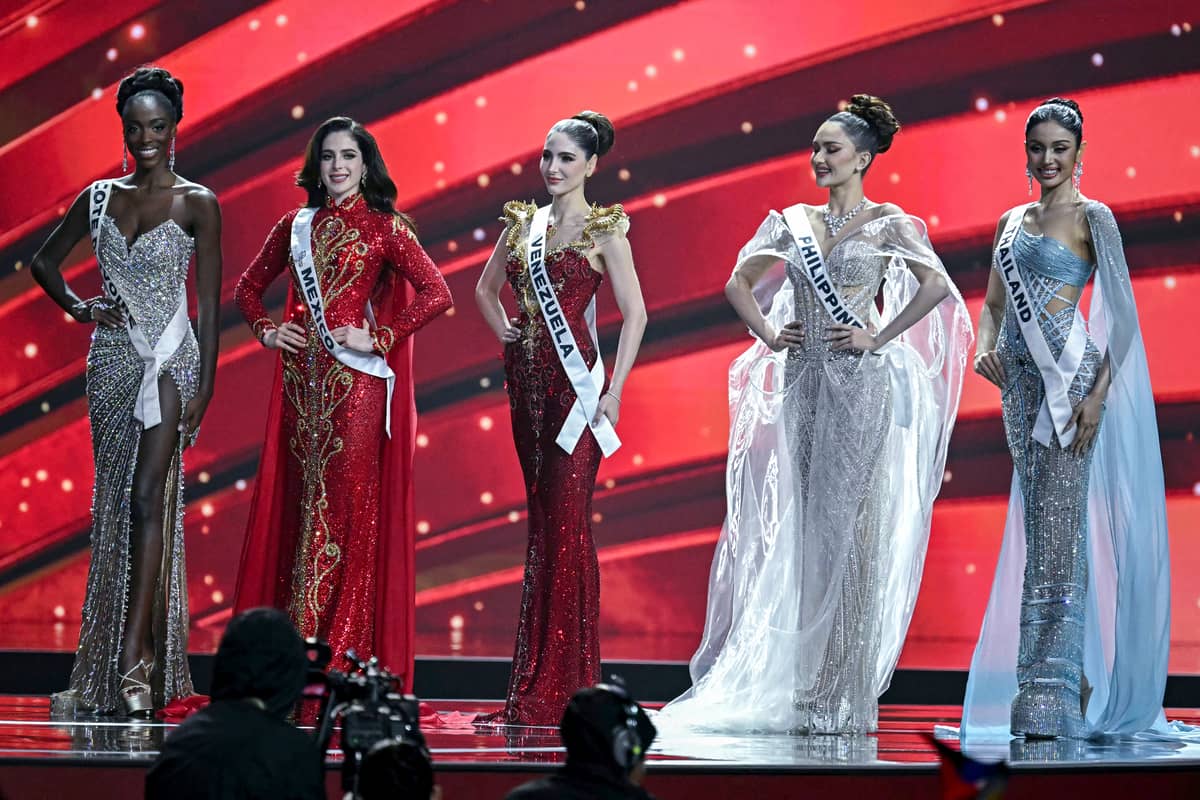
Fourth runner-up Olivia Yacé (Côte d’Ivoire), Miss Universe 2025 Fatima Bosch (Mexico), second runner-up Stephany Abasali (Venezuela), third runner-up Ahtisa Manalo (Philippines) and first runner-up Praveenar Singh (Thailand).
Lillian SUWANRUMPHA
Grand finale rooted in culture, heart and purpose
This year’s Miss Universe edition celebrated diversity on an extraordinary scale. With 120 candidates narrowed down to a Top 30, then Top 12, and ultimately Top 5, the finale spotlighted women whose stories transcended borders. The production — rich in Thai artistry and global flair — served as the perfect stage for two of the night’s brightest stars: Mexico and the Philippines.
Power and politics
The road to Miss Universe 2025 was anything but ordinary. What was expected to be a smooth, glamorous prelude to the finals unraveled into one of the most talked-about controversies in modern pageant history — an unexpected storm that placed Bosch at the center of a global debate on power, conduct and women’s agency.
The tension first exploded during an early-month pre-pageant gathering, where Thai pageant impresario Nawat Itsaragrasil — license holder and co-organizer of this year’s competition — publicly scolded Bosch for not posting promotional materials. When she attempted to explain her side, the exchange escalated. Witnesses recount that Nawat threatened disqualification, called security, and warned other contestants against siding with her. Bosch walked out. Dozens followed. Within hours, the incident made international headlines.
The Miss Universe Organization, led from Mexico under the stewardship of Raul Rocha, swiftly condemned Nawat’s outburst, calling the incident “malicious” and unbecoming of a partner institution. Even Mexican President Claudia Sheinbaum weighed in, hailing Bosch for showing how women “should speak out” when confronted with intimidation.
By finals night, Nawat kept his presence muted — appearing only in sporadic Instagram Story posts from the audience. After Bosch’s crowning, he released a single cryptic sentence in Thai: “A billion words that cannot be said.” He later told reporters that viewers could “make their own assessment,” a remark many interpreted as distancing himself from the result.
Online discourse erupted. Some pageant fans insisted the drama had paved the way for Bosch’s triumph — Mexico’s fourth Miss Universe crown. Comments ranged from playful cynicism (“Next year, whoever walks out will win”) to pointed accusations (“They had to crown her to correct the injustice”).
Observers say these controversies expose deeper tensions within the pageant’s current leadership structure. While the international organization is now headquartered in Mexico under Rocha’s direction, this year’s on-ground operations were controlled by Nawat — creator of Miss Grand International and a figure known for his forceful social media persona and highly theatrical approach to pageant production. The competing styles and priorities of the Thai and Mexican teams, analysts note, created an unstable environment that ultimately spilled onto the
global stage.
Miss Universe turmoil
In the final days leading up to the 74th Miss Universe coronation, the pageant is reeling from the resignation of three judges, each departure adding fuel to ongoing questions about transparency and internal tensions.
The controversy began when Lebanese-French musician Omar Harfouch abruptly stepped down, alleging that an unofficial group had pre-selected the Top 30 candidates without the involvement or knowledge of the official judging panel. His claims — suggesting personal connections between the alleged group and certain contestants — sparked public concern about fairness just as the competition entered its final stretch.
The MUO firmly rejected his accusations, asserting that no such shadow jury exists and that Harfouch had likely misunderstood Beyond the Crown, an MUO leadership program unrelated to scoring or results.
Shortly afterward, former French football star Claude Makélélé also resigned, citing only “unforeseen personal reasons.” Makélélé emphasized his respect for the organization but did not elaborate further, leaving observers speculating about whether his exit was connected to the broader tensions.
A third judge, Princess Camilla di Borbone delle Due Sicilie, whose departure has drawn less public attention but further unsettled the panel, also withdrew in the same turbulent period, deepening uncertainty around the judging process and the stability of this year’s event.
The string of judge resignations has become the defining issue of this year’s competition, intensifying scrutiny on an organization already battling declining viewership, a troubled legacy, and persistent allegations of rigging and misconduct.