
Slim Nubia Air boasts surprising AI functions
The system-level tools include app-freezing for seldom-used apps, resource allocation adjustments based on usage patterns, and overall CPU scheduling that aims to stretch battery life.

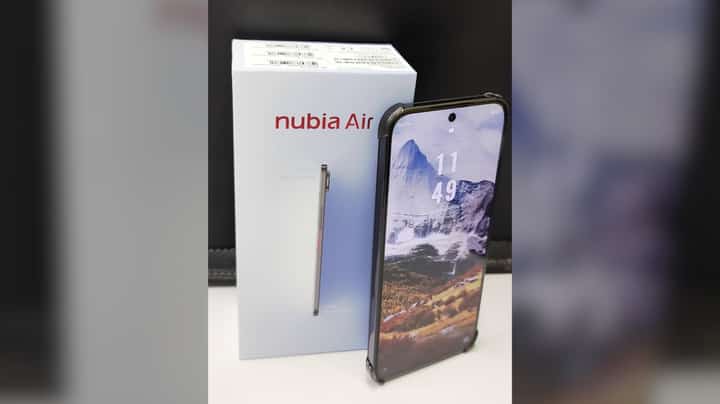
TechnoGizmo spent the past week with the new Nubia Air, one of the devices unveiled during Nubia Philippines’ holiday launch alongside the V80 Design.
The phone arrives as an ultra-slim option in the mid-range segment, measuring 6.7 mm thick and weighing around 172 grams, suggesting that Nubia is positioning it as a design-first device without pushing it into flagship pricing territory.
The hardware leans toward practicality. The 6.78-inch AMOLED display offers a 1.5K resolution, a 120 Hz refresh rate, and a claimed peak brightness of 4,500 nits.
Whether the maximum brightness is fully attainable outside laboratory testing is unclear, but during use under Manila’s midday sun, the panel remained visible enough for outdoor tasks.
The addition of Gorilla Glass 7i and IP68/IP69K ratings gives the device durability that many Filipino users, often exposed to unpredictable weather, public transport squeeze-ins, and active environments, will likely find useful.
Inside, the Nubia Air is powered by a UNISOC T8300 chipset paired with 8 GB RAM (expandable virtually up to 12 GB) and 256 GB of storage.
It is not aimed at high-performance gaming, but it handles general multitasking — productivity apps, messaging and content consumption — without major issues.
Its 5,000 mAh battery, supported by 33W charging, delivered a full day of use, aided by the phone’s aggressive power management under what Nubia brands as its AI Performance Engine.
AI is central to Nubia’s pitch. The system-level tools include app-freezing for seldom-used apps, resource allocation adjustments based on usage patterns, and overall CPU scheduling that aims to stretch battery life.
Nubia claims up to 20 percent longer usage and reduced power consumption. While TechnoGizmo cannot verify the exact figures, the phone did show slower battery drain during heavy commuting and workdays.
On the imaging side, AI continues to drive several functions. The 50 MP main camera is supported by AI Super Night, AI HDR, Magic Editor, object eraser, and AI Sport Snapshot.
These tools expand the flexibility of the camera system and should suit Filipino users who frequently document gatherings, events, or content for TikTok and Facebook.
The enhancements do not radically transform image quality but add convenience for quick edits and corrections.
Translation tools, including AI Real-Time Translate and AI Conversation Translate, should prove to be among the more practical features.
These would be useful for OFWs in communication, tourism workers dealing with foreign visitors, and online sellers or content creators engaging with international audiences.
The phone also integrates Google’s Gemini model, enabling functions such as image generation, drafting posts, and assisting with idea development.
The mid-tier chipset naturally limits how intensive these AI tasks can be, but the inclusion signals Nubia’s intention to bring more AI-centric workflows to the mid-range space.
Launched alongside the Nubia V80 Design, which features a dedicated AI button and a more lifestyle-oriented design, the Nubia Air positions itself as the slimmer, more utilitarian option in the lineup.
As tested by TechnoGizmo, the Nubia Air offers a balanced mix of durability, design, and functional AI features, aimed at Filipino users seeking a practical mid-range smartphone with modern conveniences.