
From waste to worth: Circular economy for climate resilience
From waste to worth: Circular economy for climate resilience


Every day, mountains of waste move from our homes to our rivers and into our seas. What begins as convenience — plastic packaging, sachets and food wrappers — ends up choking waterways, flooding cities and contaminating the ecosystems that feed and protect us. According to the Department of Environment and Natural Resources (DENR), the Philippines generates around 61,000 metric tons of solid waste daily, much of it plastic.
The problem is visible along our coasts. In Manila Bay, a Marine Litter Monitoring Study conducted across 10 coastal sites recorded about 12 million pieces of litter, roughly 90 percent plastic, mostly single-use sachets, food wrappers, and flexible packaging materials. These are not abstract numbers — they are daily reminders of how a culture of disposability threatens the foundations of sustainability.
The economic cost is equally alarming. The World Bank (2021) estimates that the lost value of recyclable plastics in the Philippines ranges between P45.8 billion and P52.5 billion annually — resources that could have financed livelihood projects, strengthened local waste recovery systems, or supported climate adaptation efforts in vulnerable communities.
A 2023 study by the Philippine Institute for Development Studies (PIDS) further shows that about 85 percent of recyclable plastics never enter formal recovery systems. In short, what we discard as waste could have been reinvested in resilience.
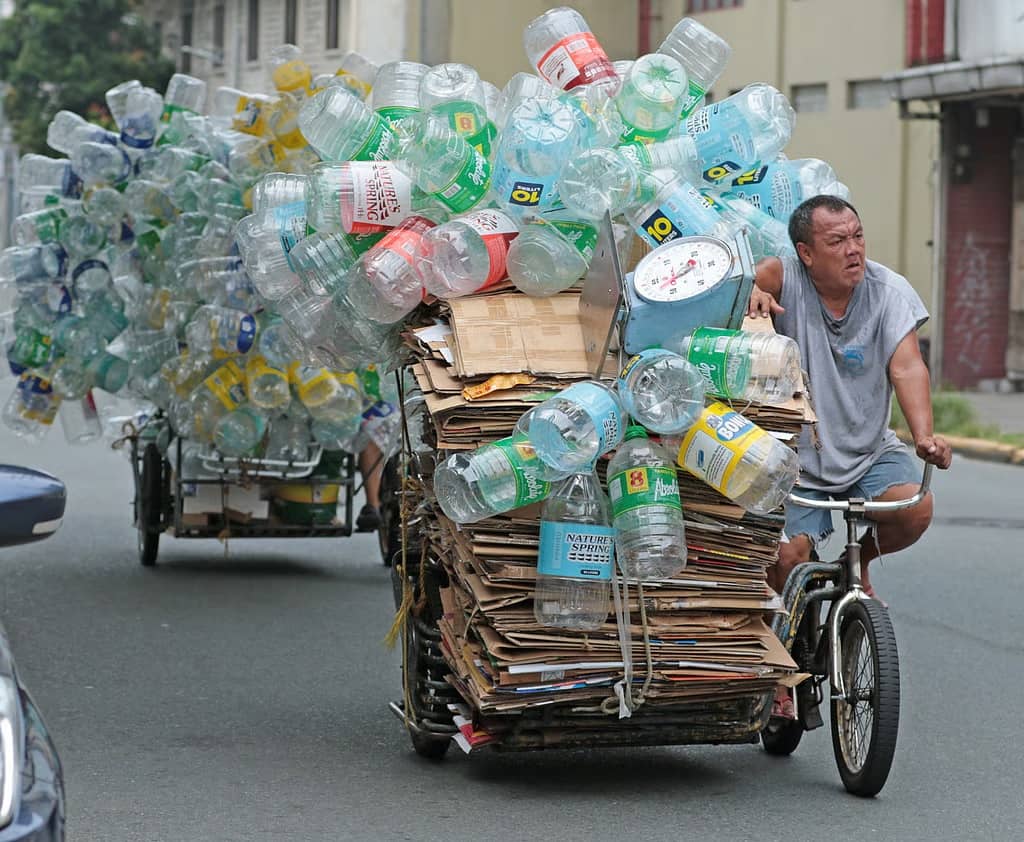
RECOGNIZING waste pickers or basureros as environmental frontliners is critical.
DAILY TRIBUNE FILE PHOTO
Plastic pollution is not just an environmental or hygiene issue — it is both an economic and a climate challenge. Mismanaged waste clogs drainage systems, worsens flooding, contaminates soil and fisheries, and contributes to greenhouse gas emissions when dumped or burned. It also disrupts the carbon-absorbing capacity of our oceans and coastal ecosystems, which serve as vital buffers against climate change.
Uncollected and improperly disposed plastic waste heightens climate risks in the very communities already most exposed to typhoons, droughts and rising sea levels. What we waste today becomes part of the crisis we must manage tomorrow.
The way forward lies in a circular economy — a system that keeps materials in use for as long as possible, designing out waste and pollution while regenerating natural systems. In this model, products are built to last longer, to be reused, repaired, or recycled. Materials are recovered rather than discarded, making our economic system regenerative instead of extractive.
This shift is not only about protecting the environment — it is also about protecting livelihoods and enhancing our collective climate resilience.
According to the Circularity Gap Report 2023, circular strategies can reduce global greenhouse gas emissions by up to 39 percent. The Intergovernmental Panel on Climate Change (IPCC) Sixth Assessment Report similarly underscores that industrial efficiency, resource recovery, and circular material flows are essential to both mitigation and adaptation.
The Philippines already has a strong policy foundation for this transformation. The Ecological Solid Waste Management Act of 2001 (Republic Act 9003) mandates segregation, recycling and responsible disposal. The Extended Producer Responsibility Act of 2022 (Republic Act 11898) requires large companies to take responsibility for the life cycle of their plastic packaging, turning accountability into an opportunity for innovation and greener production.
These laws are reinforced by our Philippine Development Plan (2023–2028), which positions the circular economy as a national development strategy, and by our National Adaptation Plan (2023–2050) and Nationally Determined Contribution (NDC) — which recognize that reducing waste and transforming production systems are vital to achieving the country’s 75 percent greenhouse gas reduction target by 2030.
But even the best policies require shared commitment. Building a circular economy is a whole-of-nation effort — no single sector, company or community can do it alone. Partnerships among government agencies, local governments, the private sector, civil society, and the informal waste sector must translate laws into local action.
Recognizing waste pickers or basureros as environmental frontliners is critical. They are at the heart of material recovery, yet often excluded from formal systems. Strengthening their cooperatives, providing incentives, and integrating them into municipal waste management can help close the loop between policy and practice. Private sector collaboration — through improved packaging design, expanded recovery networks and product innovation — can also drive scalable change.
One urgent area for innovation is the sachet economy. The World Bank (2021) estimates that Filipinos use about 163 million sachets every day, or around 59 billion annually. Sachets made consumer goods affordable but also created an enormous waste problem. Practical community-based solutions — refill stations at the barangay level, discounts for reusable containers, and incentives for returning packaging through sari-sari stores — can reduce plastic waste without burdening consumers who rely on low-cost options.
Digital tools can further enhance efficiency by tracking waste flows, linking collectors to buyers of recyclables, and monitoring compliance with extended producer responsibility. Such innovations not only reduce emissions and improve collection but also empower local communities to adapt and thrive in a changing climate.
Circularity must now become a core climate strategy. It strengthens adaptive capacity by reducing disaster risks like flooding, enhances livelihoods through green jobs, and cuts emissions across the production and consumption chain. It makes climate action tangible — where every bottle reused, every product redesigned, and every community engaged contributes to a stronger, more resilient Philippines.
What we throw away defines who we are as a nation. When waste becomes resource, we turn vulnerability into value and crisis into opportunity. Circularity is not about perfection — it is about direction. It is about reimagining progress: from consumption to conservation, from waste to worth.
The choices we make today — what we produce, what we consume, and what we recover — will determine the legacy we leave behind. A circular Philippines is not only cleaner and more prosperous; it is also more resilient to the climate challenges we face. That is the future we must build — by choice, by design, and by shared responsibility.