




Mushroom material takes on plastic packaging
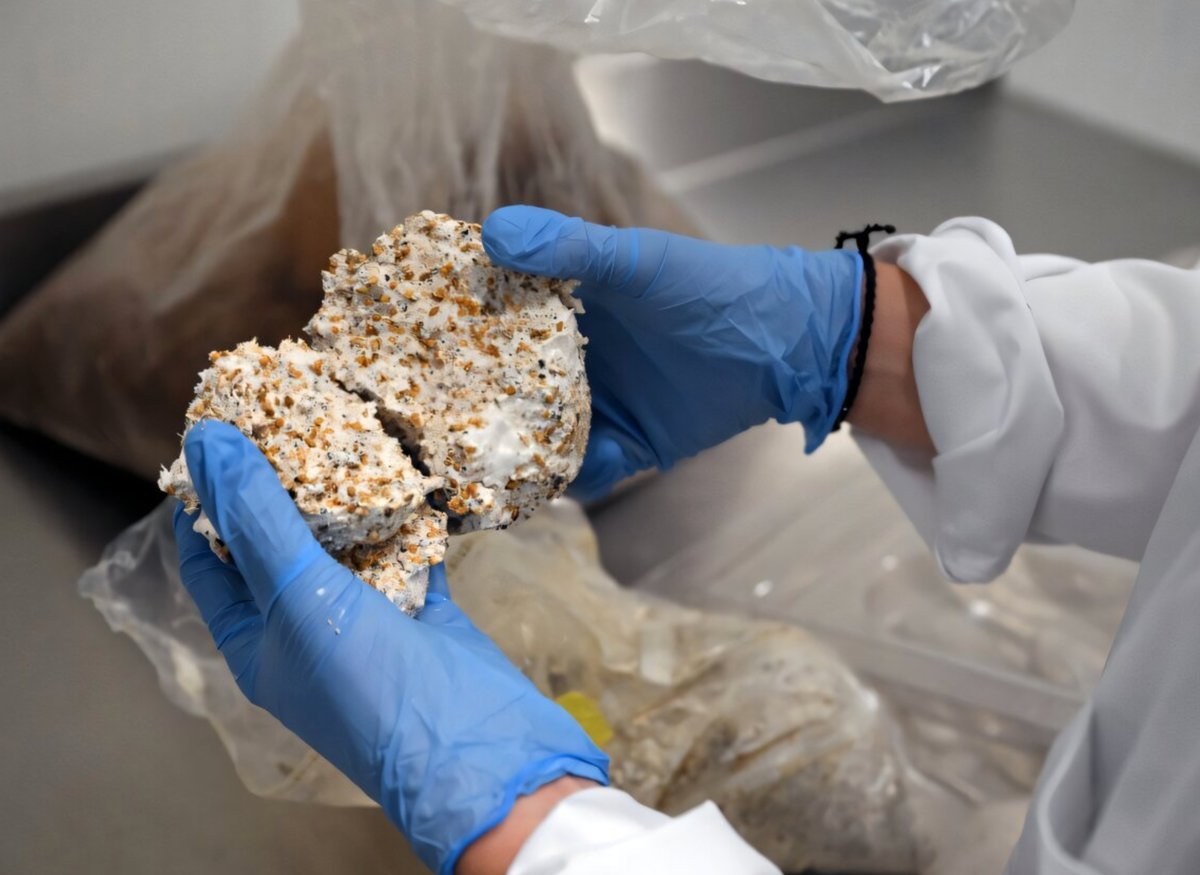
BRUSSELS, Belgium (AFP) — “No more petrochemicals to heat and press,” said Jacquet. “Here, we just watch the mushrooms grow — with help from recycled rainwater and machines that speed up production.”
Solar panels line the roof, and a wooden bike shed adds to the eco-friendly appeal of the project — which aligns with upcoming EU legislation requiring all packaging to be recyclable by 2030.
Permafungi has received two million euros in EU funding, along with regional support.
It also secured one million euros from the Swiss private equity fund Apres-Demain, led by pharmaceutical billionaire Thierry Mauvernay.
On a gleaming new production line in Brussels, Julien Jacquet shows off a row of milky-white soap bar wrappers — made by what is billed as Europe’s first factory for mushroom-based packaging.
Jacquet’s start-up company, Permafungi, pitches its fully biodegradable “myco-material” as a sustainable alternative to polystyrene and other polluting plastics.
“These ones are designed for hotels,” he explained to visitors on a recent tour of the site.
Profitability remains a distant goal: So far, Permafungi operates in a niche market, crafting custom packaging for high-end soap makers.
But the 12-person company has built a reputation on the green economy scene in Brussels by recycling grounds from local coffee shops to grow edible mushrooms over the past decade.
Now, it is looking to shift up a gear — opening a new factory to break into the fiercely competitive packaging sector.
Jacquet is highly critical of conventional packaging, often made from petroleum-based materials and shipped from far-flung corners of the globe.
Three decades after the Marcopper mining disaster devastated Marinduque’s waterways, the province is again pressing the…
Housing is probably the biggest issue affecting people the world over.
Malacañang on Monday called for a more thorough investigation into the questioned flood control projects in Taguig…
The defense on Monday backed the move by senator-judges to exclude a prosecution witness who testified on the firearms…
