
Magalong urges business community to join Baguio’s post-#UwanPH cleanup drive

Baguio City Mayor Benjamin Magalong is appealing to the business sector in the city to help in the clearing of debris and other restoration efforts. In the photo, Barangay officials and workers and other volunteers were at full mobilization in cleaning the roads of their respective areas of responsibility. |Aldwin Quitasol. Photo via Baguio PIO.
BAGUIO CITY — As recovery efforts continue across the Cordillera region following the devastation of Super Typhoon Uwan, local government units and residents are working together to restore their communities through traditional practices such as “Ug-ugfo,” “Ug-ugbo,” and “Binnadang”—all rooted in community cooperation.
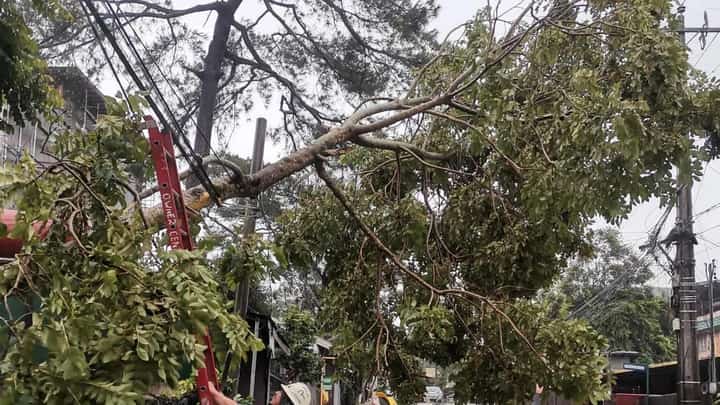
In Baguio City, one of the hardest-hit areas, cleanup operations remain ongoing as the city faces the daunting task of clearing massive debris, fallen trees, and blocked roads.
Mayor Benjamin Magalong has appealed to the city’s business community to assist in the ongoing cleanup and rehabilitation efforts, acknowledging that the city government lacks sufficient resources to handle the scale of the damage on its own.
“We can’t do this on our own. The city government’s resources are limited, and we need the help of our local businessmen to speed up the recovery of our city,” Magalong said, emphasizing the importance of bayanihan amid the crisis.
The mayor urged local businesses to mobilize personnel, equipment, and logistics support to help clear debris—particularly around their establishments, nearby waterways, and public spaces.
Magalong commended establishments that had already launched voluntary cleanup drives or contributed to early relief operations, describing their actions as a reflection of corporate social responsibility and solidarity during difficult times.
“The faster we clear our streets and drainage systems, the quicker our communities can recover. Every helping hand counts,” he said.
Typhoon Uwan battered Baguio with heavy rains and strong winds, toppling trees and utility posts, blocking roads, and leaving behind widespread debris.
Since the storm subsided, city offices under the City Disaster Risk Reduction and Management Council (CDRRMC)—chaired by Magalong—have led clearing and restoration operations. However, additional support from the private sector and civic organizations remains crucial to accelerate the city’s recovery.
Magalong expressed confidence that collective effort between the government, businesses, and residents would enable Baguio to rebuild stronger and more resilient in the wake of the disaster.