
Akbayan bloc files Anti-Dynasty Bill after Speaker Dy’s call for reform

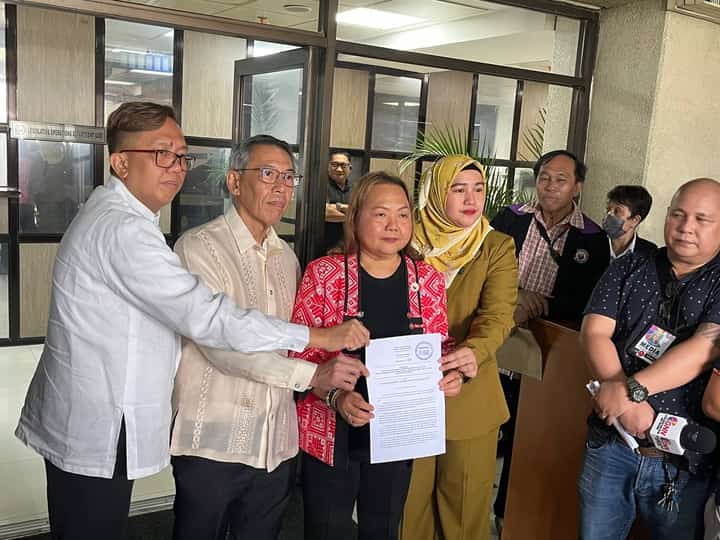
Following the call of House Speaker Faustino “Bojie” Dy III urging fellow lawmakers to support the Anti-Political Dynasty Bill, the Akbayan Bloc lawmakers — Rep. Chel Diokno, Rep. Perci Cendaña, Rep. Dadah Kiram Ismula, and Dinagat Islands Rep. Kaka Bag-ao — filed House Bill 5905 in Congress on Wednesday.
House Bill 5905 seeks to implement Article II, Section 26 of the 1987 Constitution, which directs the State to “guarantee equal access to opportunities for public service, and prohibit political dynasties as may be defined by law.”
During his opening speech at the resumption of the House session, Speaker Dy stated that the chamber would take up the Anti-Dynasty Bill to fulfill its constitutional mandate by clearly defining “political dynasty” to promote fairness, competition, and broader participation in governance.
Akbayan filed the measure amid the continued dominance of political dynasties in the Philippines. The bloc cited Ateneo Policy Center data showing that dynasties increased from 19 percent of all elected positions in 1988 to 29 percent in 2017, adding roughly 170 positions per election cycle.
The Philippine Institute for Development Studies (PIDS) was also cited in the bill, noting that dynasties are most concentrated in the poorest provinces, where they reinforce weak institutions, persistent poverty, and limited economic opportunities.
“Sadly, political dynasties have grown in defiance of that mandate for decades. We should finally put a stop to this by passing this measure so we can end corruption and the rule of the few, giving others the opportunity to serve our countrymen,” Rep. Diokno stated.
Rep. Kaka Bag-ao added that the principle behind the bill is not new, citing her authorship of the Kabataan Reform Law (RA 10742) as precedent.
“We’ve already ensured that SK leadership isn’t inherited. It’s time to do the same across all levels of government,” Bag-ao explained.
Rep. Perci Cendaña emphasized that the Anti-Dynasty Law must be comprehensive and impartial, warning that political dynasties are among the root causes of corruption in the country.
“Political dynasties not only monopolize political power and economic opportunity in the hands of a few, they are also opportunities for corruption,” Rep. Cendaña said.
“It’s like a business cartel; when only a few families monopolize power, it becomes an opportunity to amass money instead of serving the nation. If the mayor is corrupt, how can the vice mayor and the councilors watch over him if they are his wife, child, or cousin?” he added.
Meanwhile, Rep. Dadah Kiram Ismula shared the same view, saying that “public office is meant for service, not family inheritance.”
Rep. Ismula added that passing the bill would pave the way for progress in Mindanao once the rule of dynasties comes to an end.
“In Mindanao, provinces controlled by political dynasties suffer from decades of inequality and injustice. If we end the rule of dynasties, we can unlock development in Mindanao,” Rep. Kiram Ismula explained.