




BBM’s calamity order draws conflicting views
‘What matters now is that this declaration truly hastens the protection of lives, as well as the delivery of relief, repair, and rehabilitation for affected communities.’

Text size
‘What matters now is that this declaration truly hastens the protection of lives, as well as the delivery of relief, repair, and rehabilitation for affected communities.’
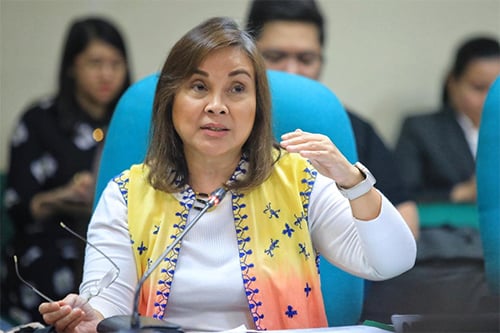
Senator Loren Legarda and urban planner Felino “Jun” Palafox Jr. on Monday gave contrasting views on President Ferdinand “Bongbong” Marcos Jr.’s declaration of a one-year state of national calamity following the devastation caused by recent typhoons “Tino” and “Uwan.”
Legarda, a long-time climate advocate, said the declaration could be a crucial step toward accelerating relief and rehabilitation efforts and safeguarding vulnerable communities.
“It is well within the power of the executive to declare a state of calamity,” she said. “What matters now is that this declaration truly hastens the protection of lives, as well as the delivery of relief, repair, and rehabilitation for affected communities.”
The senator emphasized the need to go beyond short-term relief and focus on strengthening disaster risk reduction and climate resilience. She noted that while the Philippines consistently ranks among the highest in the World Risk Index, natural hazards need not always turn into disasters if the country reduces its vulnerabilities.
“We must restore our ecosystems and strengthen local resilience so that typhoons do not continue to result in the tragic loss of life and livelihood,” Legarda stressed.
She urged the government to implement nature-based, science-driven measures such as restoring forests, mangroves, wetlands, and watersheds that are natural shields against storm surges and flooding.
Legarda also called for an end to illegal logging, for the planting of native tree species in upland and watershed areas, the strict enforcement of no-build zones, the regulation of quarrying in geohazard-prone areas, and the clearing of rivers and drainage channels to prevent urban flooding.
“These are science-based, cost-effective, and community-centered measures. We already have the laws. What is required now is full, consistent, and sustained implementation —from national agencies to LGUs to communities,” she said.
However, Palafox, a renowned architect and urban planner, warned that the yearlong declaration could create opportunities for corruption, particularly in infrastructure projects that are exempted from regular bidding procedures during a state of calamity.
“We might have a bonanza of corruption again. Members of the media should watch out for these contractors,” he said in a phone interview with Daily Tribune.
Still, Palafox expressed confidence that with Public Works Secretary Vince Dizon at the helm, irregularities would be minimized. He lauded Dizon’s clean record during his time in the Department of Transportation and urged the government to adopt modern technologies to ensure transparency.
“It’s about time to use AI and blockchain in budgeting, planning, and implementation of all infrastructure projects,” he said. “If we used that, implementation would be traceable forever. Unlike now when the investigation of the Independent Commission for Infrastructure is having a hard time with the paper trail.”
President Marcos signed Proclamation 1077 on 5 November placing the entire country under a state of national calamity for one year to fast-track relief, recovery, and rehabilitation after typhoon “Tino” battered the Visayas and parts of Mindanao.
The proclamation authorizes both national and local governments to release funds for disaster response and rehabilitation, allows the use of calamity funds, and mandates coordination among government agencies, the private sector, and international partners.
Law enforcement units and the Armed Forces of the Philippines are tasked to maintain peace and order in the hardest-hit areas.
According to the President, the declaration would enable the government to act swiftly. “That gives us quicker access to some of the emergency funds. Secondly, it speeds up our procurement so we can immediately assist the victims,” he said.
Following typhoon “Tino,” the Office of the President allocated a total of P760 million in financial assistance to affected local government units:
a) P50 million each to Cebu, Capiz, Surigao del Norte, Iloilo, Bohol and Negros Occidental;
b) P40 million each to Eastern Samar, Surigao del Sur, Southern Leyte, Antique and Aklan;
c) P30 million each to Leyte and Masbate;
d) P20 million each to Guimaras, Agusan del Norte, and Dinagat Islands;
e) P10 million each to Biliran, Camarines Sur, Sorsogon, Misamis Oriental, Negros Oriental and Palawan;
f) P5 million each to Albay, Romblon, Batangas, Northern Samar, Siquijor, Quezon, Samar, Agusan del Sur, Laguna, Zamboanga City, the City of Manila (for stranded passengers), Camiguin, Occidental Mindoro, Camarines Norte, Zamboanga del Norte and Iligan City.
The one-year declaration aims to speed up the rehabilitation of storm-hit areas. But as Legarda’s and Palafox’s differing perspectives reveal, the challenge lies not only in the swift use of the funds but in ensuring that rebuilding is done transparently, sustainably, and with lasting resilience in mind.
Housing is probably the biggest issue affecting people the world over.
Malacañang on Monday called for a more thorough investigation into the questioned flood control projects in Taguig…
The defense on Monday backed the move by senator-judges to exclude a prosecution witness who testified on the firearms…
