
In Tino’s wake, ‘Uwan’ casts darker clouds


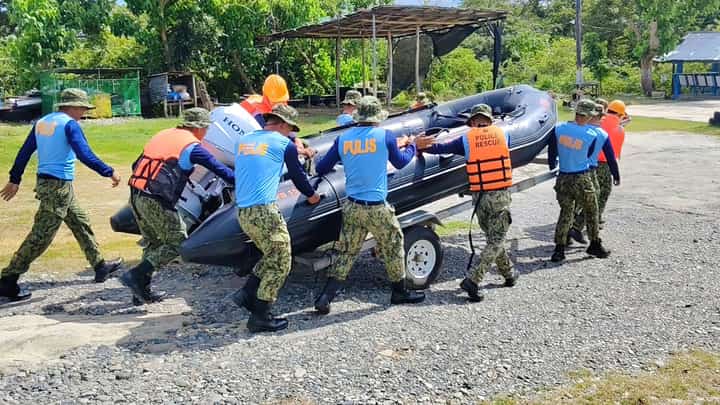
Hard lessons learned Forced evacuations have been carried out in Catanduanes and Misamis Oriental as the country braces for super typhoon ‘Uwan.’ Government agencies have mobilized massive preparations to meet the impending disaster on the heels of the Cebu debacle caused by typhoon ‘Tino.’
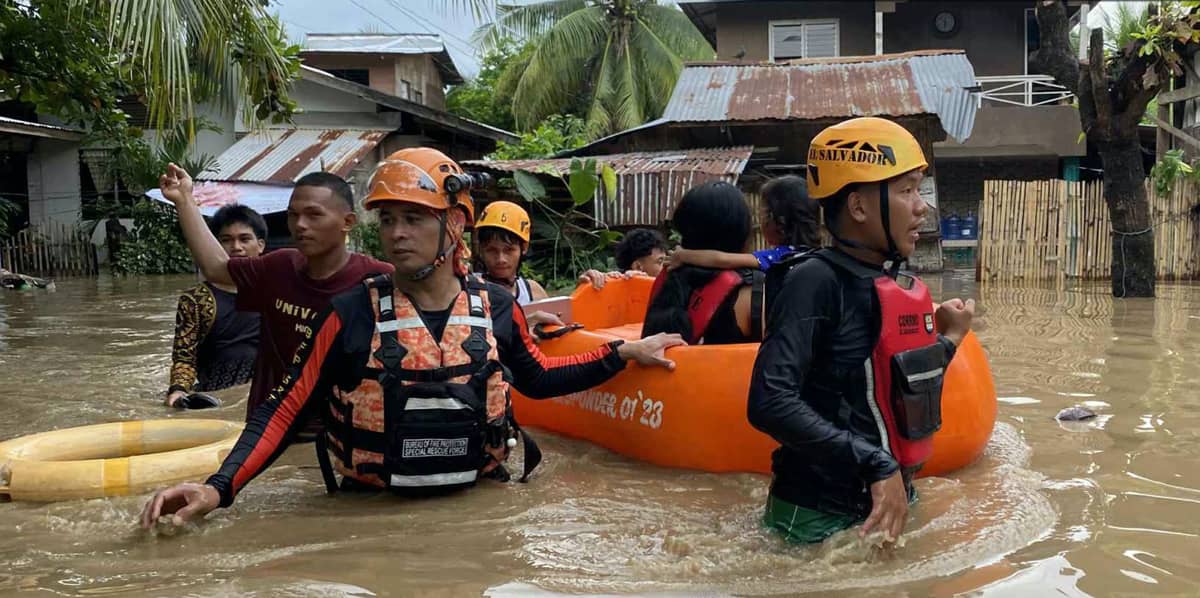
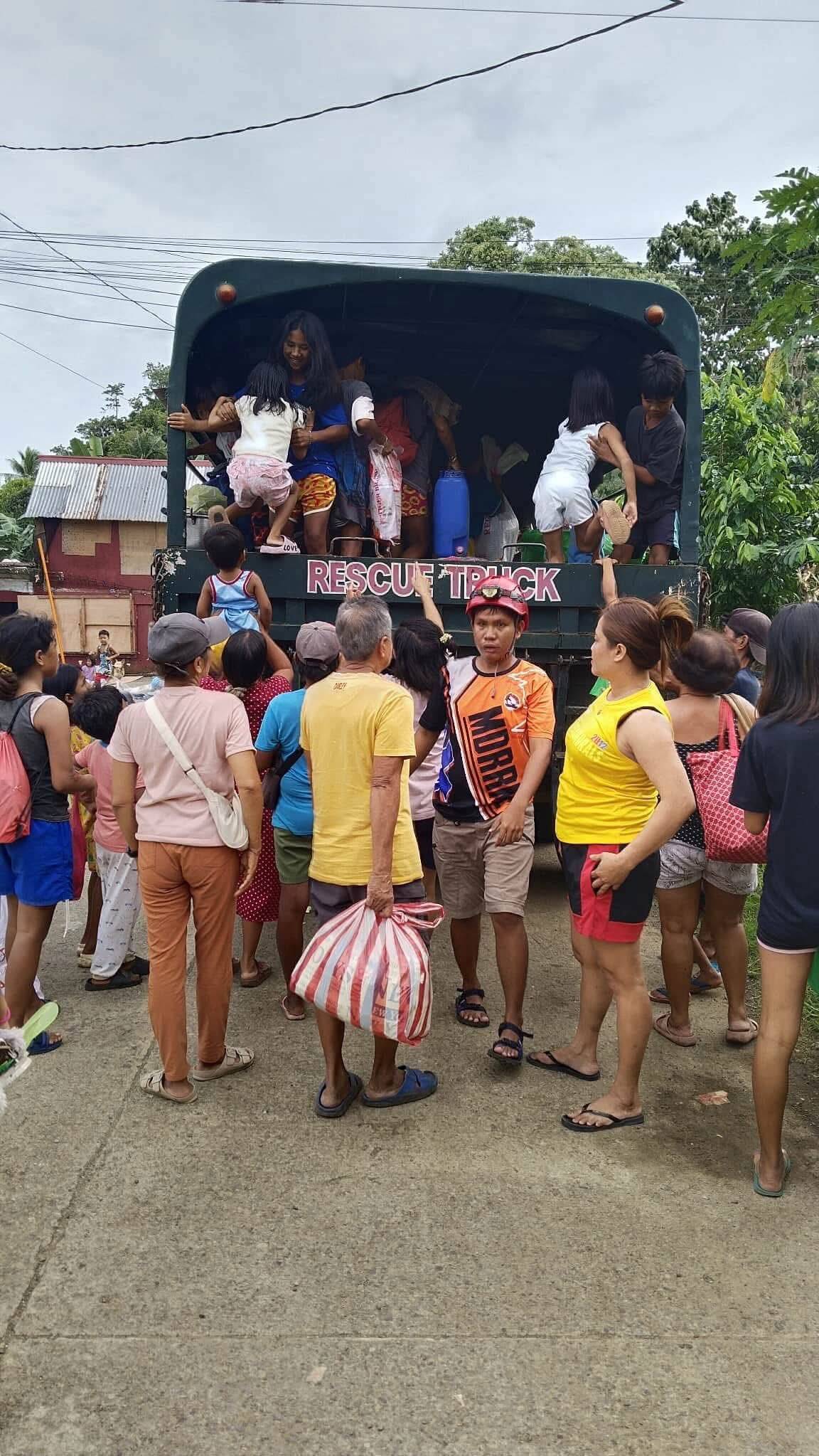
Photographs courtesy of PRO-CAR, El Salvador City and Catanduanes LGUS
With Cebu province still reeling from the effects of typhoon “Tino” that left 204 dead and scores missing, the government has called for pre-emptive evacuation in areas of incoming giant typhoon Uwan’s track.
Satellite imagery and advisories from the Philippine Atmospheric, Geophysical and Astronomical Services Administration (PAGASA) show a bigger monster of nature compared to typhoon “Yolanda” in 2013, one of the deadliest storms in the country’s history.
While “Yolanda” appeared smaller on satellite images, it was a mighty cyclone, packing sustained winds of up to 315 kilometers per hour and central pressure of 895 hPa.
Its compact yet intense core generated catastrophic storm surges — up to five meters — which inundated coastal communities in Eastern Visayas. Yolanda left more than 6,300 dead and displaced over four million, making it one of the most devastating natural disasters in the Philippines’ recent history.
Uwan, in contrast, is physically much larger in diameter.
PAGASA reported that its strong wind radius extends up to 780 kilometers from the center, making its circulation wide enough to influence weather across practically the entire archipelago.
Initial data show sustained winds of 110 kph, with gusts up to 135 kph. Forecasts indicate “Uwan” may intensify to typhoon strength, potentially reaching up to 185 kph as it approaches Northern and Central Luzon.
‘Yolanda’ packed bigger punch
The comparison, however, highlights a critical concept in tropical cyclone science: size does not directly determine destructive strength.
Yolanda’s smaller footprint resulted in a catastrophic, localized impact due to extreme wind speeds and storm surges. Uwan’s wider structure may generate broader — but potentially less concentrated — impacts, including widespread heavy rain, flooding, and storm surges across multiple regions.
PAGASA estimates that at least 8.4-million people may be affected as Uwan moves across northern Luzon. Local governments have begun implementing preemptive measures, including evacuation plans and flood prevention measures in flood-prone areas.
“We have been preparing for Uwan for the past several days, as it could become a super typhoon per PAGASA’s forecast. We are preparing basically the entire northern Luzon island and the Visayas for the impact,” Rafael Alejandro IV, Office of Civil Defense (OCD) assistant secretary, said.
“We’re urging local government units to enforce pre-emptive and even forced evacuations until Sunday, especially in flood and landslide-prone communities,” he added.
In a press briefing hosted by the OCD, the Department of Social Welfare and Development (DSWD) said predictive analytics as of Saturday indicated Uwan could impact 8.4 million individuals across the following regions: Ilocos (Region 1), Cagayan Valley (Region 2), Central Luzon (Region 3), Cordillera Administrative Region (CAR), Calabarzon (Region 4A) and Bicol (Region 5).
The typhoon’s extensive rainbands may also affect Western Visayas, Negros Island region, Central Visayas and Eastern Visayas, areas still reeling from Tino’s impact.
Of those potentially affected, 5.7 million live in coastal communities, with around 466,000 low-income families among the most vulnerable, particularly in CAR, Ilocos Region, and Cagayan Valley.
PBBM urges calm
President Ferdinand Marcos Jr. has ordered all agencies to be on full alert to ensure the safety of the people.
“The DoTr and LTFRB have deployed buses and trucks for evacuation, while the DSWD, DPWH, AFP, and Coast Guard have positioned rescue vehicles, lifeboats, and relief goods in areas that the typhoon could hit,” Marcos said in his message.
The implementation of highway toll fees is suspended for emergency convoys and responders traveling towards Northern and Central Luzon.
“We have designated special lanes to facilitate faster access to high-risk areas. The MMDA and local governments are cleaning waterways and removing obstructions from roads. Several malls and buildings have opened their parking areas for residents in flood-prone areas,” Marcos said.
“I remind everyone to remain calm and not to be complacent. Follow your LGU’s instructions and evacuate immediately if you live in a dangerous area. Prepare your basic needs and stay tuned to official announcements,” he said.
“Let’s unite. Every second counts,” he added.
Assistant Secretary Leo Quintilla of the Disaster Response Management Group (DRMG) reported to the OCD that the DSWD has more than two million family food packs prepositioned at different hubs, spokes, and last-mile warehouses across the country.
Quintilla, the concurrent officer-in-charge of the DSWD’s National Resource and Logistics Management Bureau (NRLMB), said the department’s disaster response teams are on full alert and will closely monitor updates on the super typhoon.
LGU execs must stay put
The Department of the Interior and Local Government (DILG) has ordered all local officials to stay in their areas of concern as foreign travel was suspended from 9 to 15 November to ensure pre-disaster preparations, response, and recovery operations.
DILG Secretary Jonvic Remulla emphasized that governors, mayors, barangay captains, and other local officials must lead on the ground in accordance with the declaration of a state of national calamity.
The DILG reminded local leaders that under the Local Government Code of 1991 and Republic Act 10121, the regional executives head their Local Disaster Risk Reduction and Management Councils and must be physically present during all phases of disaster management — preparation, response and recovery.
LGUs are also urged to assist affected communities, reactivate Local Price Coordinating Councils to prevent overpricing, and coordinate with Regional and Provincial DRRMCs and DILG Regional Offices for timely and unified action.