




'In the Hands of God'
“They should invent a way to save your mother.” “They should invent a mother who wants to be saved.”


Text size
“They should invent a way to save your mother.” “They should invent a mother who wants to be saved.”
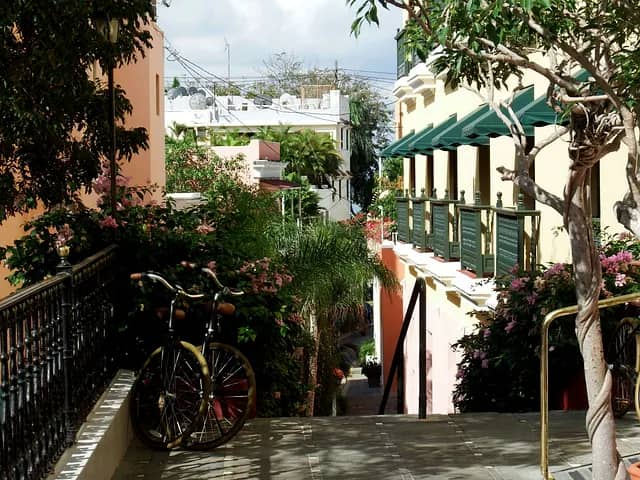
Photo by Nikita Castro on Unsplash
When I open my eyes, I find myself in front of my mother’s childhood home. A wooden house, elevated from the ground, with an open yard of dry, hard soil. Potted plants are scattered all around, vibrant green and yellow in the orange glow of the sun. There is an outdoor stove whose smoke smelled of charred banana leaves and wood. I look around, and I expect to see her in this setting, young and free, with missing teeth and wearing a dress that is well-kept and neatly ironed, despite the yellowing patches of age.
In this timescape, I am yet to be a spark in her belly or even a dream in her young mind. I know what I must do. I meet her just as she is leaving home for the market before she goes to school. The top of her head barely reaches the middle of my torso. She is so unfamiliarly small. She looks up at me and smiles, unafraid. It is as though she already knows me when she slips her tiny hand into my bigger one. I am a stranger, yet she skips merrily enough as I walk with her, helping her carry the bilao that her Nanay had asked her to bring. I draw her to my side, away from the street filled with passing jeepneys and tricycles. She kicks rocks along the street, making a game of it, and she tells me of her dreams.
She dreams of going to the beach. She hasn’t been yet, because she is too busy with school and helping her Nanay at the palengke. What a simple dream it is, and my heart clenches as I look at her big eyes and her chubby cheeks. She tells me she dreams of better times where she won’t have to sell vegetables under the sun and rain. The way she speaks of these mundanities, it would seem like she was dreaming of candy castles in the sky. Her greatest dream is a childhood spent playing, wearing proper shoes instead of tsinelas, and better dresses that aren’t hand-me-downs from older, more well-off cousins. I stop to kneel and hug her, and the way she hugs me back tightly reminds me of my task. This is my one chance to get it right, to save her where no one has, not even her God, before. So I let her bony arms circle my neck. I tell her that she is free to do as she pleases, free to make her life her own. She doesn’t have to live for anyone, save anyone, except for herself. I kiss her forehead, and I stand and tug her to the sorbetero. Her eyes sparkle with excitement. I buy her an ice cream cone with three scoops instead of just one. As I watch her devour the sweet treat, I know that she will be everything she wants and more. I will make sure of it. Her grin is my wonderful reward, sweeter than any ice cream I can buy.
When we reach the market, I shoo her off to her waiting Nanay, waving goodbye. I am happy and content to watch this little seedling of a girl bloom into a wonderful specimen of grit and determination. It is only right. She has given me so many seeds of her hopes and dreams to the point she has none for herself. The thought makes my chest ache with both gratitude and resentment. But now, I have returned them to where they rightfully belong. I watch her live the life she never got to live. I slowly disappear until the only sign I was even here is the smoke clinging to my silhouette. Where I used to stand, there is only now simply a space in that busy market. Other people mill around, caught up in the petty dailies, unaware that someone not from their time has been here minutes before. They all continue in that orange Lucena sun, with the barking of dogs and vendors accompanying the jeepneys’ horns.
She, that little girl, will forget about me even as she finishes her ice cream. As she counts the money from the vegetables that her Nanay had sold, she will not remember me, who bore her smile and her eyes. But I am sure that she will remember my words, the seeds of hopes and dreams I have returned to her. Her life will change drastically. For the better, for good. Without me.
My mother often told me that she would never change a thing in her life, if it meant that she would have me. She’d gladly endure everything again and again—from the hard days at the palengke selling vegetables in both sun and rain, to not going to law school so she could instead provide for me after my deadbeat father left us. She said that I made her complete; that without me, something would always be missing in her life. And what a burden of responsibility it is for a little girl, to be her mother’s reason for living, to be the anchor that tethers her mother to this cruel, suffering world. I no longer go to church, but I still wear the burden of guilt better than most penitentiaries. I hide my resentment and guilt by telling her with a light-hearted tone that she only said these things because she already knew me in this life. She would never know what she was missing if she never had me. Perhaps, if she never had me, she could be a girl and a woman instead of a mother. And every time I say that, she would hug me and kiss my forehead. She would tell me that she knew me in every life. She would choose me and find me in every other universe. I struggle to believe that, like how I struggle to believe in God and my mother.
Perhaps this disbelief is less a rejection of God and my mother, but a rejection of myself. Who am I to deserve that kind of love? What have I done to deserve it, when all I’ve done is be a sinner, a load to carry, a chain around the ankle? When I bring up this topic to my mother, always insisting that she should have chosen a life without me to drag her down, it wasn’t just because I wanted better for her. I wanted so badly to never have been born for me, too. I never asked to be born. Never asked her to suffer for me. And yet the guilt remains the same, seeing her lose herself to make me. But I suppose leaving this unsaid is better, if only to preserve her image of me and herself. In her eyes, we are mother and daughter. A holy tandem. I am a child who is selfless for her mother the way her mother is selfless for her child. She’d never realise that my bringing up this conversation isn’t as noble as I make it out to be. She’d never realise that her daughter, whom she sacrificed everything for, is capable of this ultimate and wretched selfishness.
She created me. She gave me life. She is my God. And if I am broken beyond repair, what does it say about her? What does it say about this woman who formed me with her own body, who counted my fingers and toes, and kissed my cheek? She knew my name before I even breathed my first gulp of air. How can someone like me tell someone like her that her decision to create me was a mistake? How can I say something like that without showing her that I’ve lost my faith, that I believed there was no way of saving me? My God, my mother herself, cannot save me. How do I seek absolution from a God whose flaws mirror and even rival my own? I want to beg her for forgiveness. I want her to beg me for mine.
So when I opened my eyes and saw that portal of a golden afternoon life, I stepped in with no wavering breath and shaking knees. I had only a few tiny seeds of hopes and dreams left, seeds that I inherited from her, and seeds that I will see that they return to where they rightfully belong. My mother will never take them back. She has long since given them up for me. But in this timescape, that little girl is not my mother yet. She will take them. She has to. There is nothing left for me. There is no saving me. These seeds I have itch and dig into my palm, trying to water themselves with my blood, only prolonging my inevitable descent. What can hope do but make the march to hell a little bit more bearable? I’d still end up in hell. But she, this tiny slip of my not-yet-mother, has more of a chance at paradise. After all, her act of choosing to have and love me has always been her downfall and greatest sin. So I am going to make sure that she will be saved.
So I meet her and cross the street. We talk. I tuck her fly-away hairs from her face and behind her ear. She looks at me with big doe eyes sparkling in the sun. I kiss her on the forehead, I count the missing gaps in her front teeth and the dimples on her cheeks. I hold her sticky hands as we walk, transferring my last seeds of hopes and dreams into her palms. And when I start to disappear from that busy marketplace, I expect to see her smiling child’s face one last time. And then nothing after.
But when I open my eyes again, I turn to see God sitting at our table, waiting for me. She is as still as a marble statue. We are back in that studio apartment, where I had snapped at her and yelled at her that she shouldn’t have been my mother, when I really meant was, “I am the reason you are suffering.” The apartment is too tiny to hold her larger-than-life frame. In the dim overhead lights, her face catches the dance of shadows, a myriad of expressions on her otherwise stoic face. For a while, I do not know what to do. I squirm in my seat. I was caught doing something I should not have done.
She remains unmoving, eyes fixed on a nowhere gaze. I stare dumbly, almost afraid to blink lest she disappear as suddenly as she came. I almost want to believe that this isn’t her sitting next to me but perhaps just a stone figure. Lifeless. Inanimate. An altar to what I had sacrificed. Perhaps this is the monument to what that little girl would have grown to be had I not returned those seeds of hopes and dreams in her hand. Perhaps this is my last chance to look at my mother, my God, before I disappear into nothingness and she turns into her new form. In the new what-if, she will drink from the fountain of youth. She will retain the sparkle in her eyes. No longer crucified by the nails and thorns that bear my name.
But a drop falls from one eye, two eyes, and the tears keep coming on and on until rivers flood her cheeks. Still, God remains unmoving. I can barely breathe in anticipation and uncertainty, one hand suspended mid-air, reaching out to touch her and dry her tears, yet stopping halfway through. I wallow in more self-hatred and guilt. Even my attempt to save her has ended up with me hurting her. Again. I retract my hand. I do not want to taint her even more with my imperfection. Besides, what can I, a simple sullen girl, do to comfort my crying God?
I wait.
Then, she speaks. “It hurts.”
I can only nod, mouth dry and lips in a grim line. I echo it back. “Yes, it hurts.”
After a few seconds of continuing silence, God finally cranes her face toward me in such a slow, painstaking motion that I fathom the creaking of rust and heavy stone and steel. She puts her hands up and shows me her palms. On them are wounds, red, irritated, and swollen. The wounds are open. A piece is missing in each hand, and her painful gaze refuses to yield. You did this, her eyes seem to say. You took a piece of me, and now I will not stop bleeding.
She looks me in the eye, and I cannot hold her gaze. Her eyes are too much—beauty and ugliness and pain and life and sublime and holy and flawed and—I look at my hands on my lap instead. My fingers are covered in wounds and inflamed, itchy skin. My wrists sport healing and healed wounds in various lengths and thicknesses. Red. Pink. Light brown. Attempts at carving her out of me before I tried to carve myself out of her.
Focus. Listen.
“It hurts,” God repeats. She tilts her body until her forehead touches mine. She puts her arms around me, and I fall limp like a ragdoll. She pets my hair, and I cannot help but wonder why she keeps doing it when I know it must make the holes in her hands hurt more. She makes a humming sound in her throat, almost a plea instead of a commandment, and so I slowly put my arms around God’s shoulders too.
We are one. Mother and child. God and creation. Saviour and saved. Damner and damned. What is one without the other? How can one play their role with no one to act the other? She holds me tighter. I reciprocate. We breathe as one. She hurts. I hurt. And I feel the guilt rush in once more—only this time, I am now unsure if it is mine or hers or both.
“You don’t deserve to hurt,” I whisper, my eyes tearing up as well. But I choke back the tears because my job is to serve her, and it will not do for the comforter to be the one being comforted. “You don’t deserve this,” I insist, voice steadier. Sure and angry. “You’re God.”
“I’m your God,” she replies.
“Yes,” I agree. “You made me in your likeness. But I am tainted and angry and broken and imperfect and sullen. So what does that say about you, too? You’re God. You’re supposed to be more than this, aren’t you? You shouldn’t be hurting. You don’t deserve to hurt.”
My tears fall. I cannot hold them back any longer. God looks at me, really looks at me, and she understands. Finally. All those conversations and arguments we had in the past come rushing back to her—voices yelling, doors slamming, tears falling. She finally understands.
I say one last time, “You deserve to be free. You deserve to be a girl and a woman instead of an unwilling God to a wretched child.”
She laughs then, a throaty rumble, and I hear thunder and music in that brief second. I stare at her powerful hands in my small and frail ones. She caresses my palm comfortingly. “Who told you that my freedom of pain means being free of you?”
Placing her wounded palms on both sides of my cheeks, I feel my tears start to stain her hands. But she pulls them back, and I watch as blood, muscle, and skin start to weave back together, oozing sickly sweet. She kisses my forehead, and I feel seeds of hope bloom.
She closes my eyes with her fingers. The warm orange light envelops me again, and then I am back, standing in the market. God is across the street, her hair in the ponytail I helped her into, the almost-finished cone in her hand. She waves me over. I go to her, unable to refuse her call. The little girl sits me on a plastic chair, and she drags another one to sit next to me. With one last messy bite, she finishes the cone, and she wipes away the ice cream on her lips and chin with a floral handkerchief. She rumples the hankie like I do, and she shoves it in her pocket.
I help her sell vegetables. Her Nanay flits in and out of our little bubble, seemingly unaware of the strange woman she’s never met and will never meet who is with her little girl, helping out with the stall. God’s eyes flit every so often to her Nanay, her gaze full of adoration and guilt — a familiar look that I have seen in the mirror when I think of my own mother. Then, God and I take turns counting money and putting vegetables in plastic bags for the customers. She kicks her backpack from underneath her chair and she fishes out a big notebook. The pages are mismatched; they are all taken from other notebooks and sewn into this one. She flicks through messy scribbles and doodles, and she tells me the story of her dreams.
She will go to law school, she says. She will travel to America, to France, to Italy. She will work in a high-rise, air-conditioned firm instead of under the scorching sun or the harsh rain. All this she draws and writes in an empty page of the notebook. I smile sadly at the fantasy, and I refuse the tears that threaten to reappear.
Then, she surprises me. She turns a new page. She tells me she will grow up to study accounting. She won’t go to law school. It’s too expensive, and it will take too much time. She will travel to Bahrain, to Thailand, to Malaysia. She will live in a modest studio apartment, not too big, not too small.
She turns another page. She will not finish school at all. She will choose to continue selling vegetables. She will inherit the stall from her Nanay, and it will grow in income and size. She will not work under the sun anymore because she will transfer the store to a building with industrial fans. She will sit on a nice metal chair with soft padding instead of the plastic ones she used to sit on. She will travel to Batangas, to Manila, to Cebu. Her childhood home will be renovated from being a wooden kubo to a two-storey house with vinyl floors and unpainted concrete walls.
I sit and watch her flip through pages and pages. Different versions of her story weave from her sticky, ice cream-stained fingers. Fabrics of time and space are designed with a little graphite pencil with chew marks on the eraser tip. Life is made and done with messy scribbles, stick drawings, and incorrect spellings. When she finishes her game of creation, she turns the notebook to me. I see missing pieces on each page she made. With a smile, she taps her pencil on my forehead, and I watch in wonder as my name gets carved into each missing piece, completing the stories of her lives.
When I look back at her, her young face is set with the deep, haunted eyes of the woman I grew to know as my mother.
“Don’t you see?” God-mother-little girl-hardened woman asks me.
She drops the pencil and the notebook to the dusty ground, and she scoots her chair over to me before climbing into my lap. God tucks her chin on my shoulder, her little fingers playing with my hair. She inhales my familiar scent with a contented sigh. The colours seem more vivid. I can smell the sweetness of the watermelon that her Nanay is cutting up for customers. I can hear the crispness of the lettuce leaves as the vegetable is placed on the weighing scale. I can hear the barking of vendors and dogs alike as a jeepney passes by.
I know then that in my other lives, I will choose her to be my God again. And again. And again. I will be born from her body. I will run from her, and I will run to her. I will grow up in a townhouse, in a tiny studio apartment, in a concrete house with vinyl floors. I will travel with her to Spain, to Thailand, to Batangas. I will love her. I will hurt her. I will resent her and adore her and more. And I will always want to return the seeds of hope she has given me, hoping that she will wake up in a better reality. But she will always bring me with her. Or maybe I will bring her with me. The line becomes blurry.
Until then, she and I sit under the Lucena sun. I wipe away the stickiness from her hands. She wipes away the tears from my face. I count her tiny fingers, laugh at her bitten nails. She counts my scars, laughing and marvelling that I am still with her despite all.
We embrace. When we fall away from each other, our tears fall onto the dirt. A jasmine plant blooms. A customer interrupts us, and I stop her from standing up. Instead, I tell her I’ll take care of it, and she could spend the rest of the afternoon drawing or playing. She smiles at me, and I smile back, our hands touching before I turn away. The rest of the day will progress this way — in the hands of God.
Early-stage cancer can be more easily treated than in the later stages. That is why doctors recommend regular cancer…
‘As far as I recall and based on the record, there is no showing.’
President Ferdinand Marcos Jr. is flying to Singapore for a five-day working visit upon the invitation of Singaporean…
