




Puentevella: We don’t dope

Text size
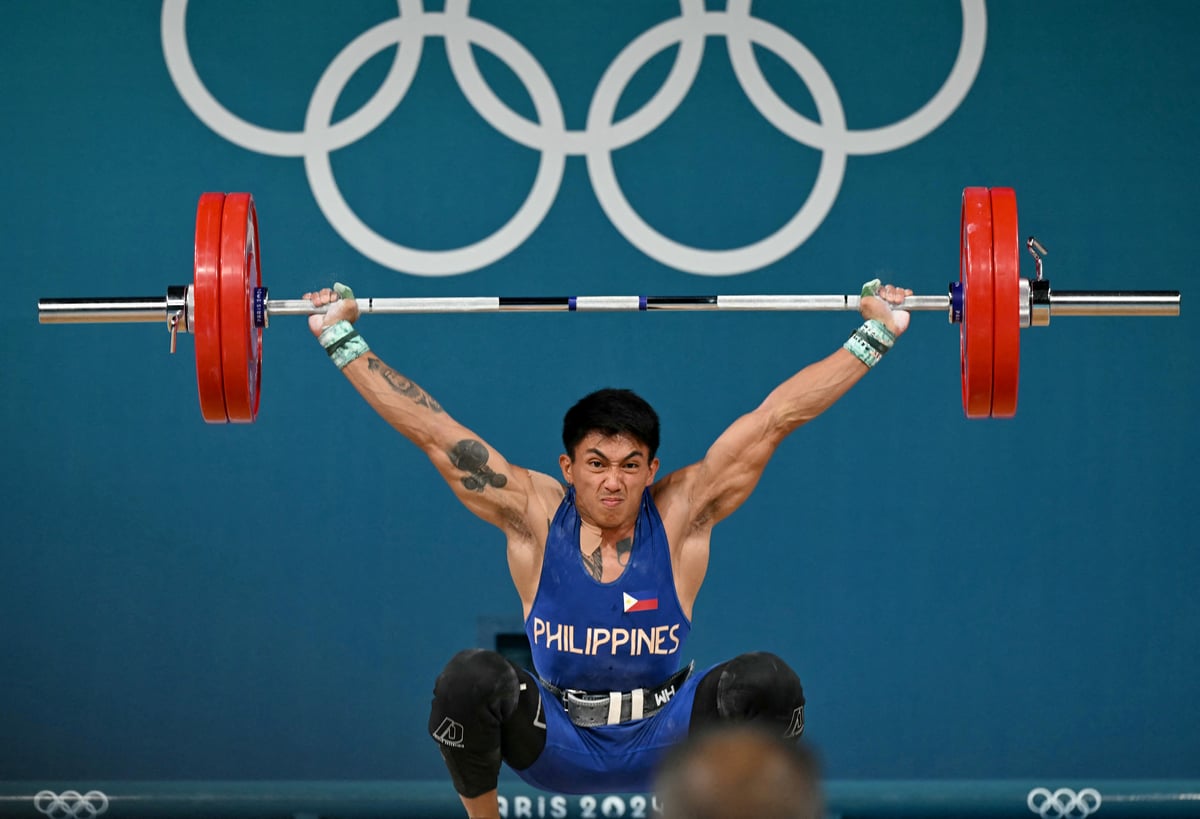
Samahang Weightlifting ng Pilipinas (SWP) president Monico Puentevella clarified that the anti-doping violation committed by Olympian John Fabuar Ceniza has nothing to do with the use of any performance-enhancing drugs.
In a telephone conversation on Saturday morning, the seasoned sports executive revealed that Ceniza is no longer reporting to the national team since his forgettable performance in the Paris Olympics. With that, the Montreal-based International Testing Agency (ITA) failed to locate him, which led to a two-year suspension due to an anti-doping violation.
His case is similar to that of his fellow Olympian, Vanessa Sarno, who was also slapped with a two-year ban after failing to report her whereabouts to the ITA for a period of 12 months. Sideliners claim that Sarno had already quit the national team after giving birth so she no longer bothered to inform the ITA her location for mandatory drug testing.
Puentevella said Ceniza and Sarno made some “personal choices” and the federation has nothing to do with their suspensions.
“As an athlete, it is your responsibility to report to the ITA your whereabouts at least every three months so that it can easily locate you for surprise doping tests,” Puentevella told DAILY TRIBUNE.
“But both of them made some personal choices of quitting the national team and not submitting themselves to the ITA. So whatever the penalty is, it’s up to them. The federation has nothing to do with it.”
The SWP has been a consistent medal-producer in major international tournaments.
In fact, it delivered the country’s first gold medal with Hidilyn Diaz ruling the women’s 55-kilogram category in the Tokyo Olympics in 2021. Prior to that, the SWP had supported Diaz starting when she competed in the 2007 Southeast Asian Games in Thailand up to the Beijing Olympics in 2008, London Olympics in 2012 and the Rio de Janeiro in 2016, where she copped a silver medal.
Aside from Diaz, the SWP also has a solid pipeline of talents who can deliver in the next editions of the Summer Games in Los Angeles in 2028 and Brisbane in 2032.
Vanessa Sarno, Rosegie Ramos, and Elreen Ando are all making their presence felt while Princess Jay Ann Diaz, Alexsandra Ann Diaz and Jay-r Colonia are lining up to become the next generation of outstanding Filipino weightlifters.
“Our track record is clean. We don’t dope,” said Puentevella, recalling an incident in Mexico City when officials accused Ramos of doping after they decided to eat their own food.
“The closest thing we got to doping was when Rosegie was accused of doping after we refused to eat the food being served in a tournament in Mexico. They thought that Rosegie was on a ‘special diet’ that’s why she’s not eating Mexican food. We just explained that our athlete couldn’t eat their food because it’s too spicy for her.”
“Later, they realized their mistake and apologized to us.”
“Again, we don’t dope. We won everything fair and square.”
Housing is probably the biggest issue affecting people the world over.
Malacañang on Monday called for a more thorough investigation into the questioned flood control projects in Taguig…
The defense on Monday backed the move by senator-judges to exclude a prosecution witness who testified on the firearms…
