




More and Becket: Remembering the martyred Thomases of England

Text size

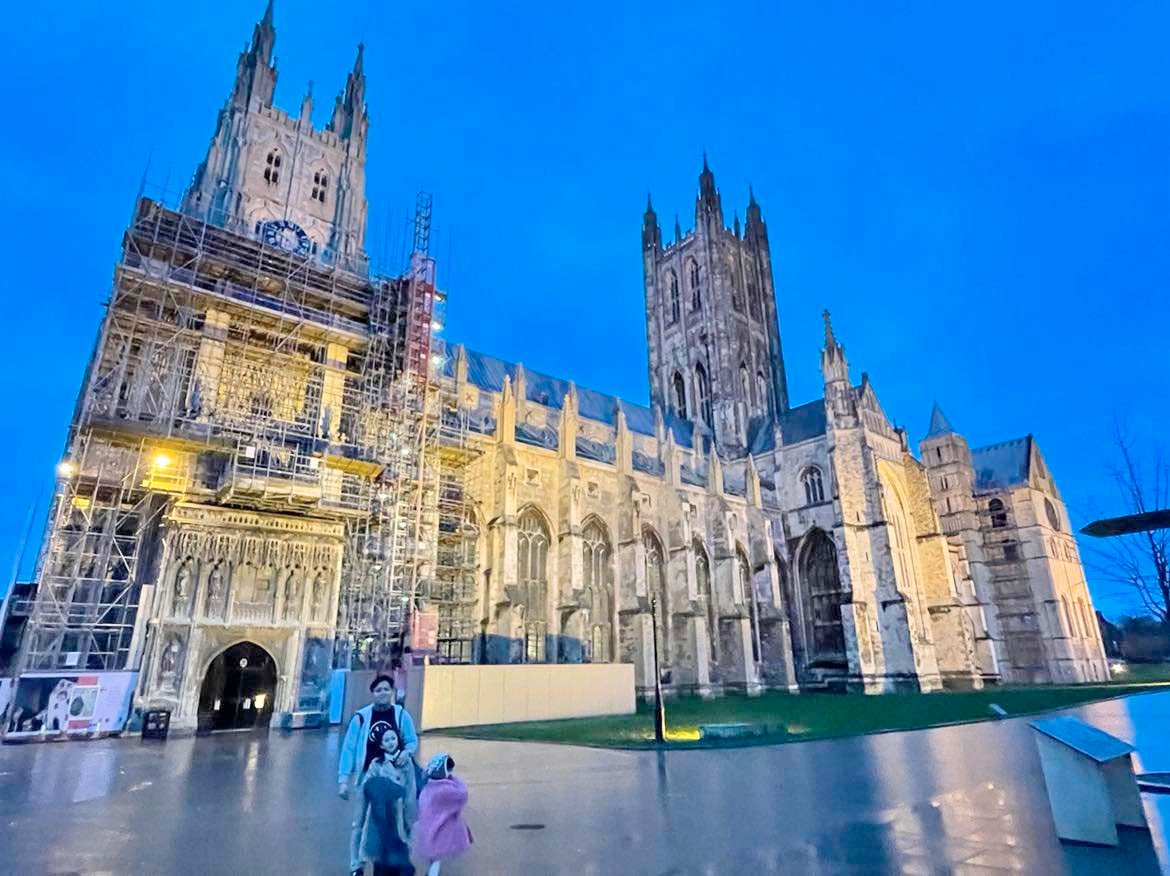
Site where Pope John Paul II prayed with the Archbishop of Canterbury, the spot where St Thomas Becket was murdered.
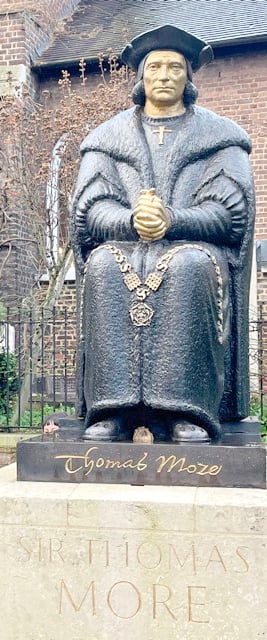
St Thomas More’s statue in London.
If the Philippines has the GomBurZa — Filipino Catholic priests Mariano Gomes, Jose Burgos and Jacinto Zamora who were executed by the Spanish in 1872 for charges of subversion — the United Kingdom has the likes of saints Thomas More and Thomas Becket who were martyred for their unwavering faith.
Born on 7 February 1478, St. Thomas More was an English theologian, judge, lawyer, author, social philosopher, statesman and notable Renaissance humanist. As Lord Chancellor under King Henry VIII, he opposed the king’s separation from the Catholic Church to found the Church of England. He also vetoed the annulment of the king’s marriage to Queen Catherine of Aragon.
Refusing to take oath to acknowledge and swear allegiance to the king as supreme leader of the Church of England, More was beheaded. Before his execution, St. Thomas More’s last words reportedly said: “I die the king’s good servant, and God’s first.”
His head now lies in a chapel, together with the remains of one of Henry VIII’s wives, Anne Boleyn, in the Tower of London.
In 1935, More was canonized as a martyr by Pope Pius XI, while in 2000, Pope John Paul II declared More the patron saint of politicians and statesmen.
“It can be said that he demonstrated in a singular way the value of a moral conscience… even if, in his actions against heretics, he reflected the limits of the culture of his time,” Pope John Paul II, now also a saint, said during his declaration.
In 1982, Pope John Paul II visited the Canterbury Cathedral and famously knelt in prayer with Dr. Robert Runcie, then the Archbishop of Canterbury, at the site where St. Thomas Becket was murdered. The gesture has been regarded as “a significant ecumenical moment” that symbolizes the unity between the Catholic Church and the Church of England.
In 1170, Becket, who was the only one who did not sign King Henry II’s Constitutions of Clarendon that sought weaker connections with Rome and less clerical independence, was murdered by the supporters of the king.
A traditional dish called zongzi is served during China’s Dragon Boat Festival, which falls in June. It is a rice…
Divina credited the firm’s achievements to its members, thanking them for their ‘hard work, dedication, teamwork, and…
‘Sec. Vince Dizon, please explain how this finding of your own team should not be flagged as a ghost project in Taguig.’
