
DSWD implements Free Funeral Services Act under AICS

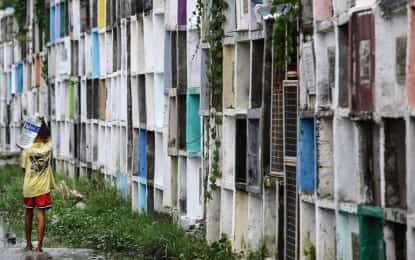
The Free Funeral Services Act will serve as the basis for the Department of Social Welfare and Development (DSWD) to provide standard burial aid to poor families and those in crisis under its Assistance to Individuals in Crisis Situation (AICS) program.
Director Edwin Morata of the DSWD’s Crisis Intervention Program (CIP) said the department will determine the standard amount of burial assistance under Republic Act No. 12309, also known as the Free Funeral Services Act of 2025, after the issuance of the law’s Implementing Rules and Regulations (IRR).
“For RA 12309, sinasabi dito dapat mayroon na po tayong templated amount o standard amount. But as to standard amount po kung magkano ang package, ito pa lang po ang pag-uusapan natin in the crafting of the IRR because DSWD is the lead in the crafting of the implementing rules and regulation,” Director Morata told reporters during the DSWD Thursday Media Forum on 30 October at the Crisis Intervention Unit (CIU) satellite office in Paragon Place along Commonwealth Avenue in Quezon City. (“For RA 12309, this says we should already have a templated or standard amount. But the exact amount of the package is still being discussed in the crafting of the IRR because DSWD is leading the process.”)
Morata emphasized that the most important thing for poor and indigent families who have lost loved ones is to have a decent funeral and burial.
“Gusto po talaga naming makita ngayon ano ba talaga ang package of services na magbibigay ng decent internment sa isang Filipino family," he said, as he listed the free funeral services for poor families, which will cover expenses for funeral parlors, funeral chapels, transportation, cremation, and burial. (“We really want to see what the package of services will provide for a decent internment for a Filipino family.”)
Morata explained that even before the Free Funeral Services Act became law on 28 September, the DSWD, through its AICS program, has been giving burial assistance through Guarantee Letters (GLs) to Filipinos seeking help from the department.
Data from the DSWD’s CIU showed that from 2014 to September 2025, the department assisted bereaved families of 1,439,160 individuals, releasing a total of P10,985,450,785.32 in funeral aid through the AICS program.
As of the third quarter of 2025, the bereaved families of 140,321 individuals were given funeral assistance under AICS, with the CIU disbursing P1,648,355,678.99.
Morata said the IRR of the Free Funeral Services Act will include the standard and maximum burial aid amounts, as well as safety guidelines to prevent abuse of funds.
The department is also coordinating with local government units (LGUs) nationwide, the Department of Trade and Industry (DTI), and some 807 partner funeral homes on crafting the IRR.
Aside from indigent families, Filipinos of any social status affected by calamities or emergencies who cannot afford dignified funeral services can avail of the program.
"Masaya po kaming makuha itong balita kasi, actually we've been pushing for AICS to be institutionalized. But I think for this particular progress, mare-recognize na yung AICS na isang malaking parte ng buhay ng DSWD. Dito po sa RA 12309, ang sinasabi po dito ay libre na ang funeral services," Morata said.
(“We are happy to hear this news because we have been pushing for AICS to be institutionalized. I think this progress recognizes AICS as a major part of DSWD’s work. Under RA 12309, funeral services are now free.”)
To avail of burial assistance under AICS, bereaved families or their designated representatives must present a valid ID, the deceased’s death certificate, and the funeral contract. A social case study report prepared by a social worker is also required.
"In terms of the result of the application, it will be given within the day as long as dala nila ang kumpletong requirements. We don't want to send the people to their respective homes ng wala makukuhang assistance," Morata pointed out.
(“If they bring all the required documents, the application will be processed within the day. We do not want to send people home without assistance.”)