
Lacson questions DPWH over ‘leadership fund,’ lawmakers’ early role in budget process

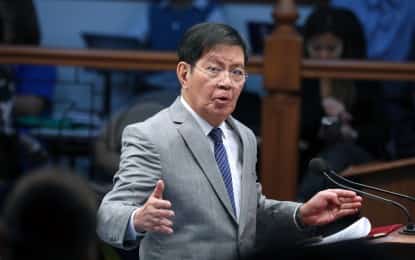
Senate President Pro Tempore Panfilo Lacson on Tuesday raised concerns over what he described as a “leadership fund” within the Department of Public Works and Highways (DPWH) — a mechanism he claimed allows lawmakers to influence infrastructure allocations even before the proposed national budget reaches Congress.
In an interview with DZBB, Lacson recalled former DPWH Secretary Manuel Bonoan admitting that the department had consolidated project requests from legislators into the National Expenditure Program (NEP) — effectively giving them early access to the budgeting process.
“Budget preparation is the job of the executive branch. So why are some lawmakers already intervening before it even reaches Congress?” Lacson said, emphasizing that such involvement undermines the constitutional separation of powers.
Lacson explained that the national budget undergoes four stages — preparation, authorization, execution, and accountability — all designed to ensure transparency and proper checks and balances. Legislative participation during the preparation phase, he warned, compromises that process.
According to Lacson, the alleged system enables certain lawmakers to insert projects that benefit favored contractors, turning what should be a development-driven process into one “fueled by kickbacks.”
“From the testimonies of DPWH personnel, it appears public funds have become nothing more than a toy for corrupt officials,” he said.
He cited instances where DPWH reportedly replaced approved project requests — such as substituting P1.5 billion worth of multipurpose building proposals with only P600 million in flood control projects — suggesting a preference for ventures with higher profit margins and faster returns for select contractors.
“Projects included in the NEP should come from local development plans endorsed by regional development councils,” Lacson added. “But when insertions are made, they become contractor-driven because the focus shifts from community needs to kickbacks.”
Lacson said these revelations will form part of the ongoing Senate Blue Ribbon Committee investigation into alleged irregularities in flood control and other infrastructure projects.
He warned that systemic corruption within the DPWH would persist unless the national budgeting process is fully insulated from political influence.
The Blue Ribbon probe, which initially looked into ghost and substandard flood control projects, has reportedly uncovered irregularities in both the preparation and implementation of the agency’s budgets.
Lacson earlier disclosed that handwritten memos from civilians had been sent directly to the DPWH secretary’s office, bypassing formal channels — an indication, he said, of how “outsiders” may be exerting undue influence over public infrastructure spending.