




Fuse runs short
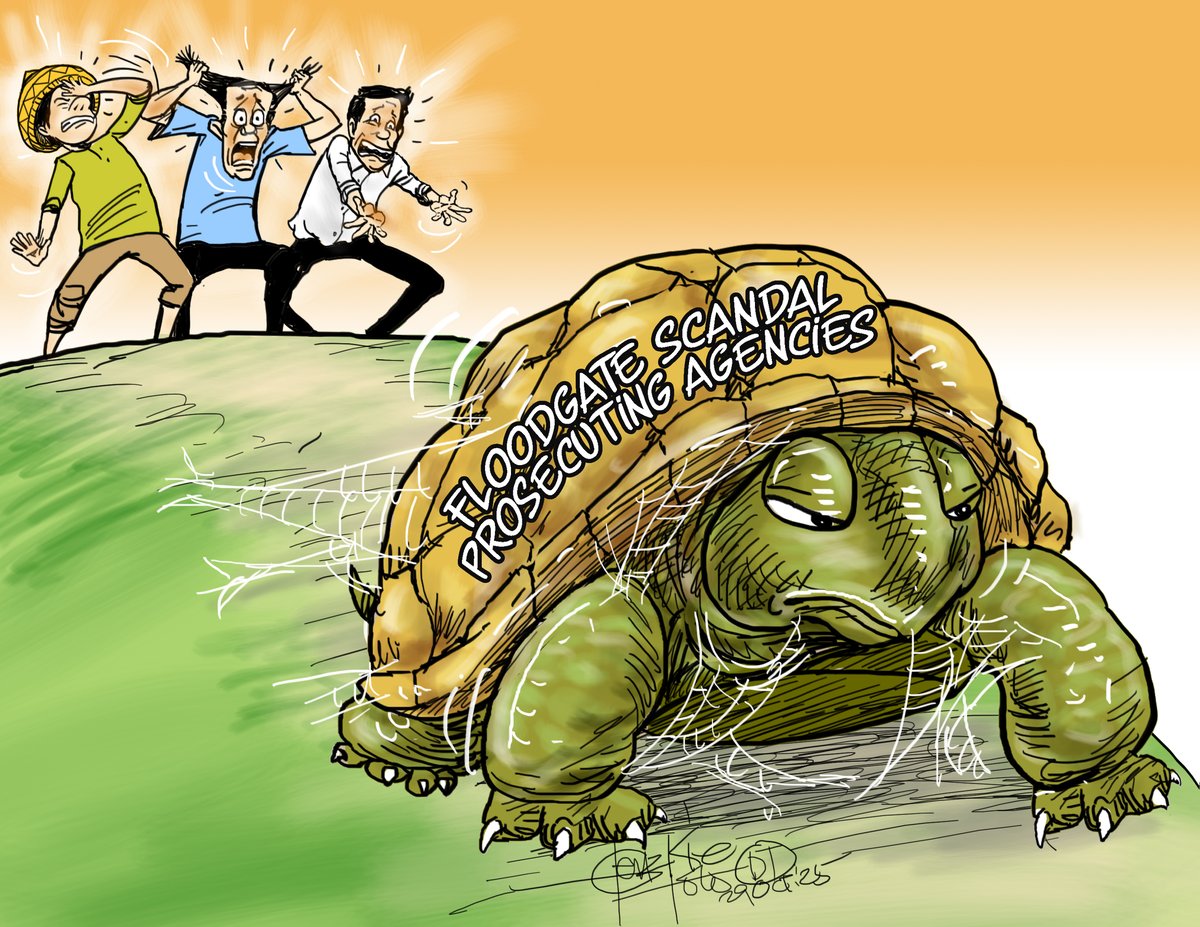
With the scale of the scandal, the groups said swift action was expected from the government, yet indications point to foot-dragging.

Text size
With the scale of the scandal, the groups said swift action was expected from the government, yet indications point to foot-dragging.
Impatience is mounting over the corruption scandal and the token actions only meant to buy time and shield powerful allies in Congress.
The prosecution agencies should act fast. The recent episode with Senator Joel Villanueva, whom Ombudsman Conchita Carpio-Morales had found administratively liable for the misuse of his Priority Development Assistance Fund, revealed the cunning of those who allegedly stole the people’s money.
Villanueva got away courtesy of his peers in the Senate mafia and belatedly produced an Ombudsman’s acquittal that reversed the Carpio-Morales decision.
Today, several senators and representatives have been implicated in the flood control scandal, but not one has yet been taken to court.
The Independent Commission for Infrastructure (ICI), tasked with investigating the flood control and other infrastructure project anomalies born of the manipulation of the national budget to create a pork barrel, is not contributing to the restoration of public confidence as it conducts its hearings in secret.
The frustration on a nationwide scale was the subject of a letter that business and labor groups wrote to President Ferdinand Marcos Jr.
Labor and management rarely find themselves on the same side, which is why the country’s leaders must pay attention when they do.
“The people’s money to build classrooms that were never constructed, health centers that never opened, farm-to-market roads that were never paved, and flood control projects that were never built or never worked” were the irregularities that they brought up to the President.
The groups recognized Mr. Marcos’ consistent stand against corruption, highlighted by his State of the Nation Address and his outburst, “mahiya naman kayo,” directed at the corrupt.
Subsequent investigations and revelations exposed several senators and representatives who benefited from multibillion-peso flood control projects that were either substandard or were never built.
With the scale of the scandal, the groups said swift action was expected from the government, yet indications point to foot-dragging.
“Instead of hold-departure orders, we are told to be content with immigration lookout bulletins for now. Instead of criminal charges, we are fed daily promises of cases soon to be filed,” the groups wrote.
“Instead of open, transparent hearings, we get closed-door investigations whose direction remains unknown. Instead of going after the most guilty, we are led on political detours, chasing the less guilty, depending on who sits where and who stands with whom,” their letter stated.
The list of actions suggested by the group, which should have been taken by the government from the outset, exposed the blatant stalling.
The proposals include broad public participation in the budget process to make it transparent.
If the administration is serious about stamping out corruption, it cannot afford to overlook these basic steps.
Aside from seeing the crooks hauled off to prison, the public wants a commitment that the campaign against corruption will go beyond political alliances and personal relationships.
Public distrust is at its highest, and actions that reinforce it contribute to the dangerous buildup of outrage.
Speed up the process, or face the consequences of a public that has lost confidence in the government.
Three decades after the Marcopper mining disaster devastated Marinduque’s waterways, the province is again pressing the…
Housing is probably the biggest issue affecting people the world over.
Malacañang on Monday called for a more thorough investigation into the questioned flood control projects in Taguig…
The defense on Monday backed the move by senator-judges to exclude a prosecution witness who testified on the firearms…
