




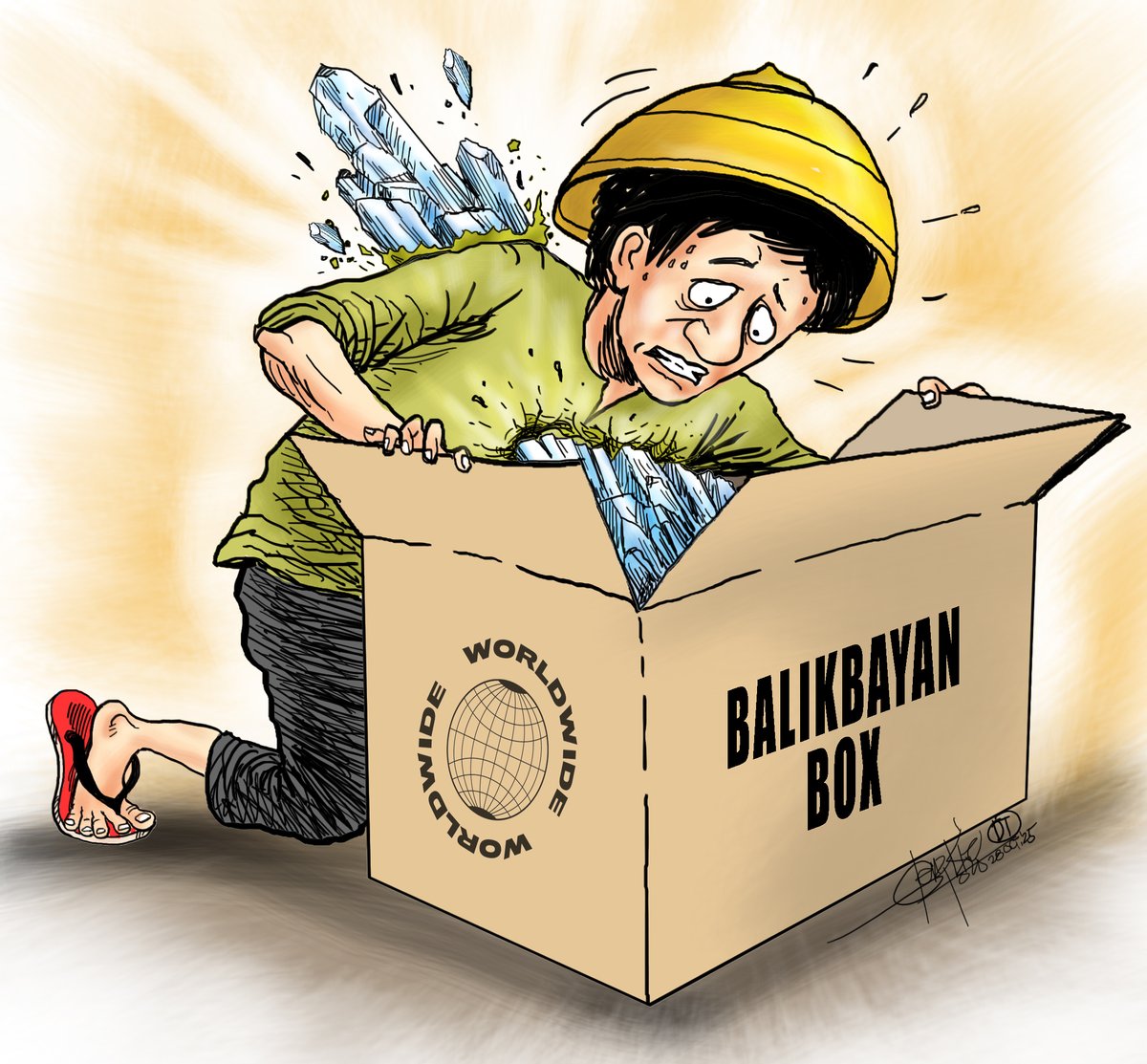
Boxes full of betrayal
LBC owes the public far more than silence, as its business is not merely to move packages, but also to protect the integrity of what passes through its hands.

Text size
LBC owes the public far more than silence, as its business is not merely to move packages, but also to protect the integrity of what passes through its hands.
For millions of Filipino families, the arrival of a balikbayan box is a small celebration. It is the love of an overseas Filipino worker (OFW) made tangible: chocolates stacked beside towels, toys squeezed in between cans of corned beef. Every box is a promise that distance has not erased affection. Any threat to this tradition, therefore, strikes at the heart.
Drug syndicates know this, and they exploit the political sensitivity of balikbayan boxes, aware that the government hesitates to intrude too deeply into something so sentimental. They hide in that trust. And now recent revelations show how deeply they have dug.
The seizure of P749.63 million worth of methamphetamine hydrochloride or shabu, concealed inside balikbayan boxes marked for LBC, is both criminal smuggling and a violation of national trust. When a major courier, one that promotes itself as the most trusted bridge between OFWs and their families, becomes the very channel through which illegal drugs enter the country, accountability cannot be optional.
LBC, therefore, owes the public far more than silence, as its business is not merely to move packages, but also to protect the integrity of what passes through its hands. Due diligence is not just a corporate responsibility; in cases like this, it is a frontline defense against national harm. A company that proudly trades on emotion must accept that the emotions involved may now include outrage. Trust is their product, and that product has been compromised.
That said, this is not only a corporate failure. Our own systems have long provided the cracks through which contraband flows. Customs Commissioner Ariel Nepomuceno, to his credit, did not sweep this under dusty files.
Nepomuceno, in a roundtable with DAILY TRIBUNE editors, exposed the scale of the problem and accepted the political backlash that comes with touching balikbayan boxes. He has been frank about the realities: outdated scanners, pressure to speed up releases, limited visibility into shipments that arrive half-legitimate and half-illicit.
The BoC chief is not wrong to say that syndicates exploit our leniency. We treasure balikbayan boxes because we treasure the people who send them. Criminals have turned that affection into a smokescreen. While the commissioner has taken the necessary step of bringing this issue into the open, the challenge now lies in ensuring the entire system responds with equal resolve.
Behind the 22,000 boxes currently awaiting release at ports are families who already feel punished. Overseas workers pay up to $120 per box; some consolidators overseas pocket the money, fail to settle port charges, and abandon the shipments. Boxes sit stranded, and those who are waiting blame Customs first — while questionable firms continue to operate due to loopholes in monitoring and enforcement.
Then there’s the diplomatic element that cannot be ignored. When the Bureau of Customs alerted the US Homeland Security to the shipment’s origins, this was followed, perhaps coincidentally, by a US report branding Philippine Customs as among the most corrupt institutions.
Nepomuceno had wondered out loud if that report wasn’t a payback of sorts for the BoC blowing the whistle on the inspection lapses at American ports.
But rather than fanning defensiveness, incidents like this should push both sides toward genuine cooperation. Smuggling is international and solutions must be too. As the holiday season approaches, port congestion will worsen. More boxes will arrive, each packed with joy that can quickly turn to despair if lost, delayed, or worse, contaminated with contraband.
Reform cannot wait for Christmas crises to recur annually like clockwork. Nepomuceno’s push for digitization, transparency, and modern scanning equipment must be supported with urgency and a fixed timeline.
The Department of Trade and Industry must enforce accreditation rules with real consequences. Courier companies, especially giants like LBC, must tighten controls and open their processes to scrutiny — because a trusted name must also be a responsible one.
The balikbayan box is more than cardboard and tape. It is trust — the purest kind. And trust, once betrayed, is not restored by press releases. Filipinos deserve to know that what arrives at their doorstep is what was lovingly packed overseas: joy, nostalgia, a piece of home. Not misery disguised as a gift.
Housing is probably the biggest issue affecting people the world over.
Malacañang on Monday called for a more thorough investigation into the questioned flood control projects in Taguig…
The defense on Monday backed the move by senator-judges to exclude a prosecution witness who testified on the firearms…
